Rare Velvet Anthurium: The Ultimate 2026 Guide to Anthurium Crystallinum x Magnificum
Few plants stop collectors in their tracks the way a rare velvet anthurium does. The deep, tactile foliage, the dramatic silver-white veins, the leaves that shift from glittering red to burnished bronze to rich forest green — it is unlike anything else in the houseplant world. And among all the velvet anthuriums available to collectors today, one hybrid stands above the rest: the Anthurium Crystallinum x Magnificum.
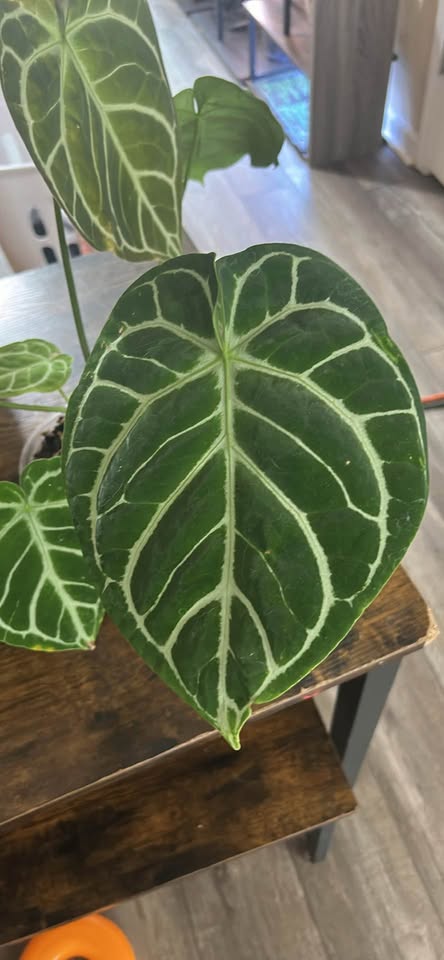
With its velvety, heart-shaped leaves adorned with bright white veins, this hybrid offers a captivating look that many collectors dream of owning. This guide covers everything you need to know — its origins, what makes it the finest rare velvet anthurium available, how to identify it correctly, full care instructions, propagation, and where to find one in 2026.
What Is a Velvet Anthurium?
The term “velvet anthurium” refers to a group of Anthurium species and hybrids whose leaves are covered in microscopic surface hairs that give the foliage a soft, matte, fabric-like texture. Run your finger across a healthy leaf and it feels closer to velvet cloth than plant material.
This tactile quality, combined with dramatic venation — usually bold silver or white lines tracing across deep green — is what makes velvet anthuriums so prized. They are rare, slow to propagate, and deeply satisfying to grow well.
The most coveted rare velvet anthuriums among collectors include:
- Anthurium Crystallinum — the classic silver-veined velvet species
- Anthurium Magnificum — larger, more architectural, with squared petioles
- Anthurium Clarinervium — heart-shaped with bold white venation
- Anthurium Forgetii — tearddrop leaves with no sinus, hauntingly elegant
- Anthurium Crystallinum x Magnificum — the hybrid that combines the best of Crystallinum and Magnificum in a single, more vigorous plant
Anthurium Crystallinum x Magnificum — The Ultimate Rare Velvet Anthurium
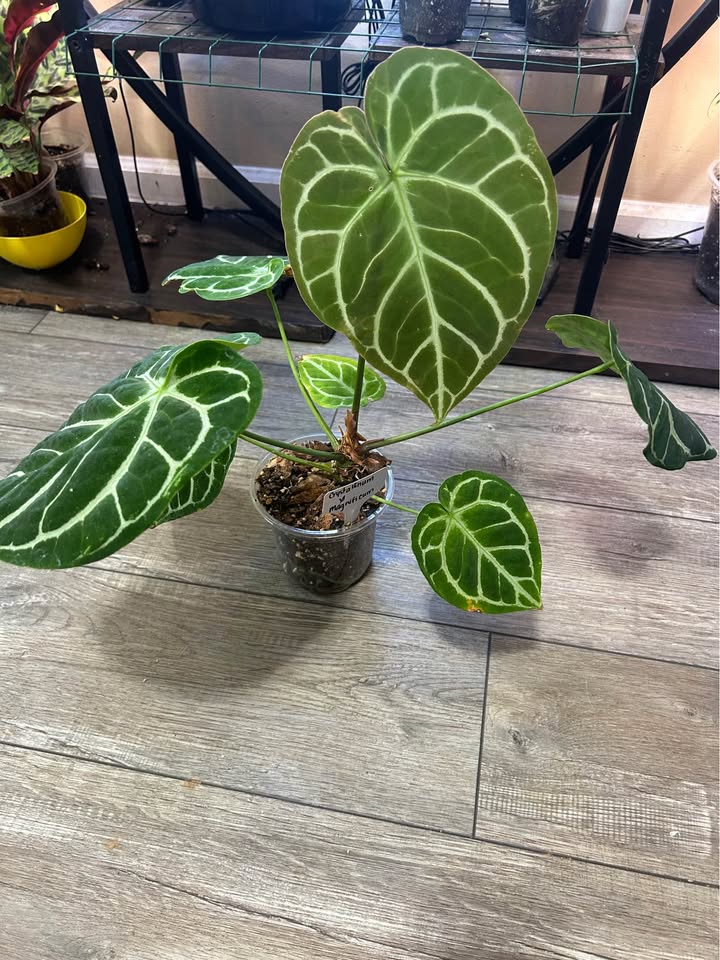
Of all the rare velvet anthuriums available to collectors, the Anthurium Crystallinum x Magnificum is the most compelling argument for owning a hybrid over either pure parent.
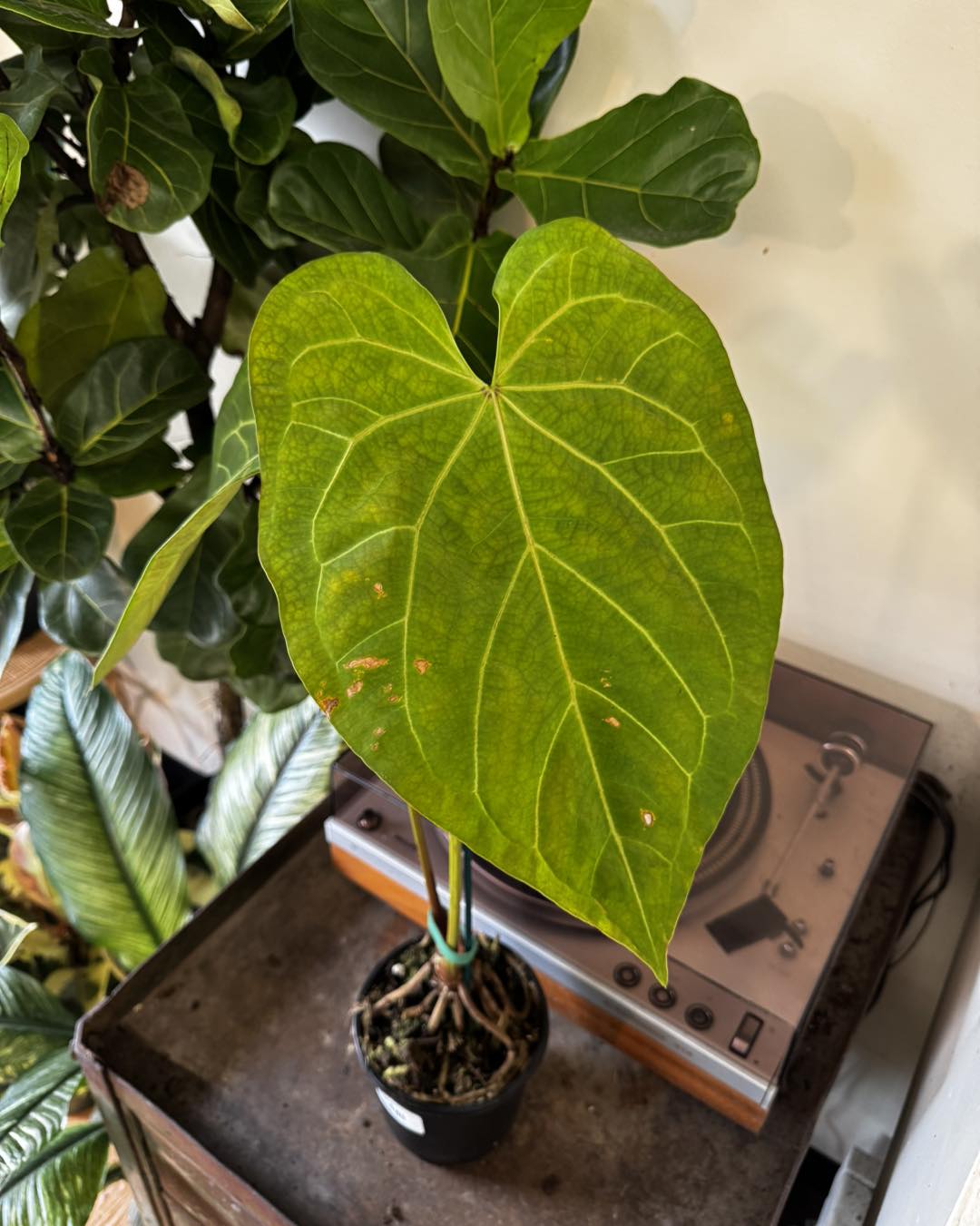
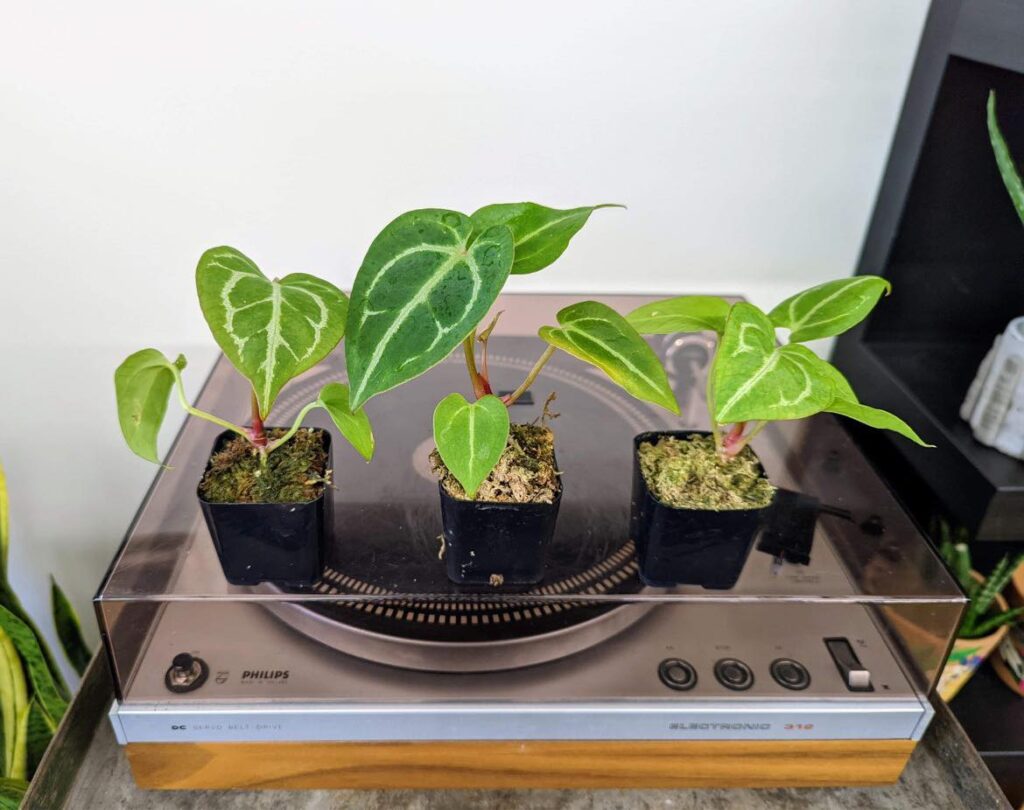
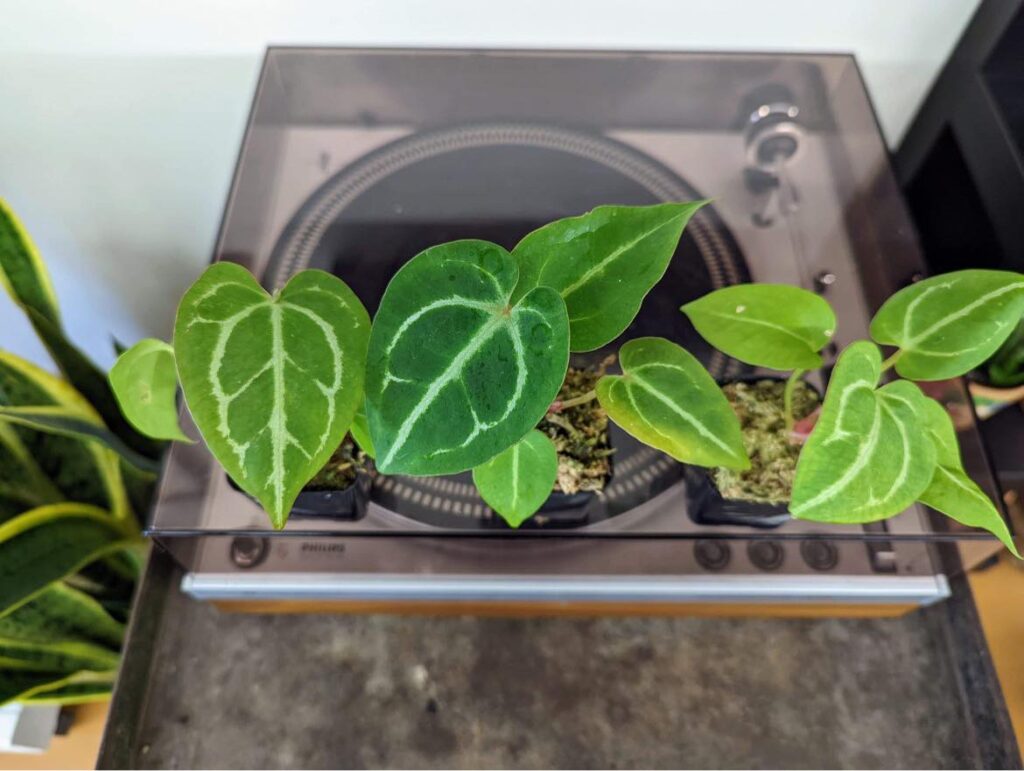
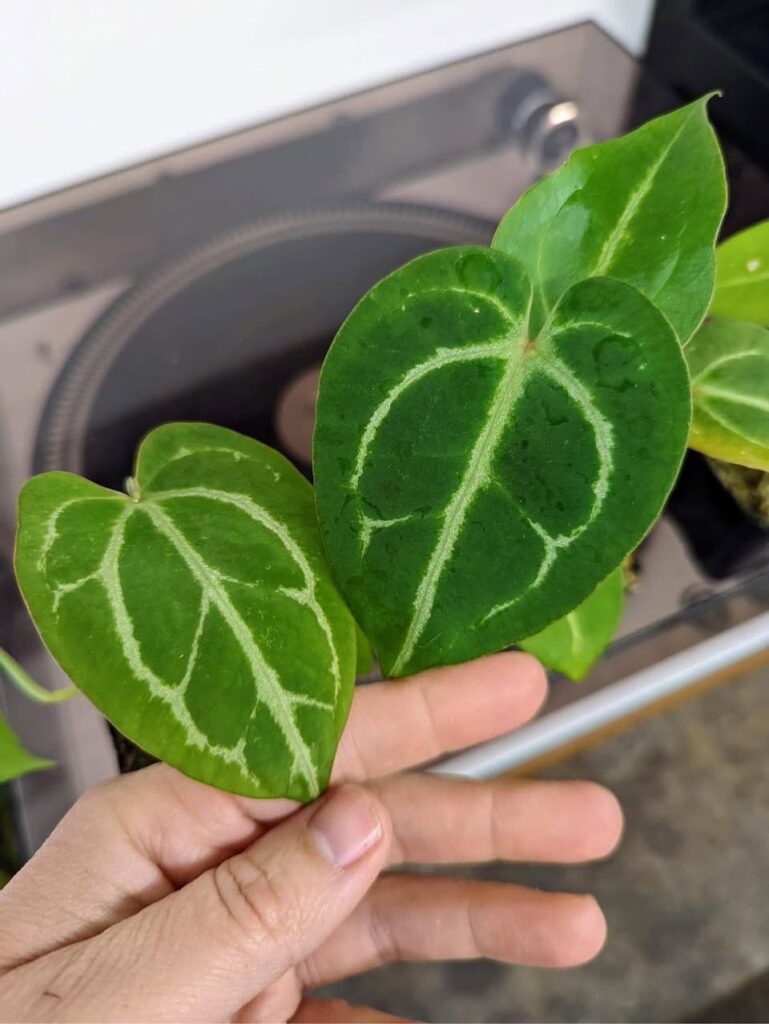
It is a cultivated hybrid combining the striking features of its two parent species — renowned for its large, velvety, heart-shaped leaves adorned with prominent white venation. As a cultivated hybrid, it does not occur naturally in the wild.
The result is a plant boasting the elegant white-veined pattern of Crystallinum on bigger, thicker leaves inspired by Magnificum — this combination gives it greater durability and easier care compared to pure Crystallinum, while maintaining the exquisite aesthetic collectors crave. Each leaf is uniquely patterned, making every specimen one-of-a-kind. The hybrid vigor from combining these species means it often grows faster and is more resilient — an attractive bonus for indoor gardeners.
The Parent Species — Where the Magic Comes From
Anthurium Crystallinum
Anthurium Crystallinum contributes its prominent velvety, dark green leaves with striking white venation — enhancing the hybrid’s visual appeal significantly. It is an epiphytic climber native to the rainforests of Colombia and Peru, growing on tree trunks in deep shade at high humidity. Its petiole is round and smooth — a key identification feature that distinguishes it from both Magnificum and the hybrid.
As a standalone rare velvet anthurium, pure Crystallinum is stunning but demanding — highly sensitive to low humidity and inconsistent watering. The hybrid inherits its beauty without its fragility.
Anthurium Magnificum
Anthurium Magnificum imparts its larger leaf size and robust growth habit to the hybrid, resulting in a more vigorous plant overall.
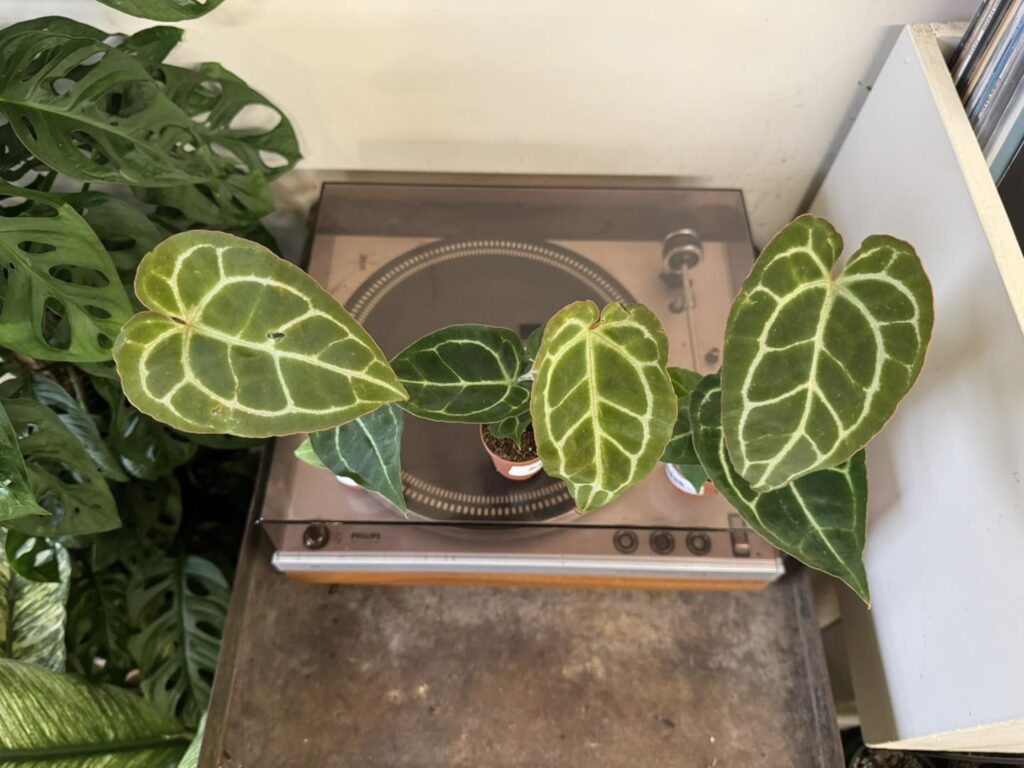
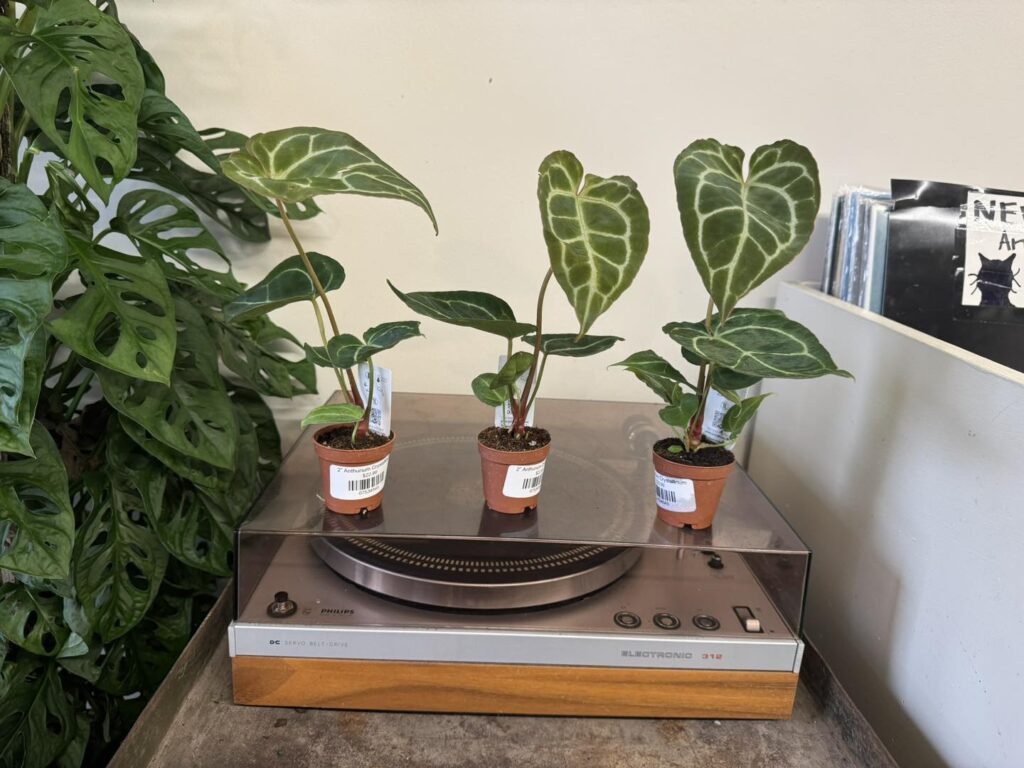
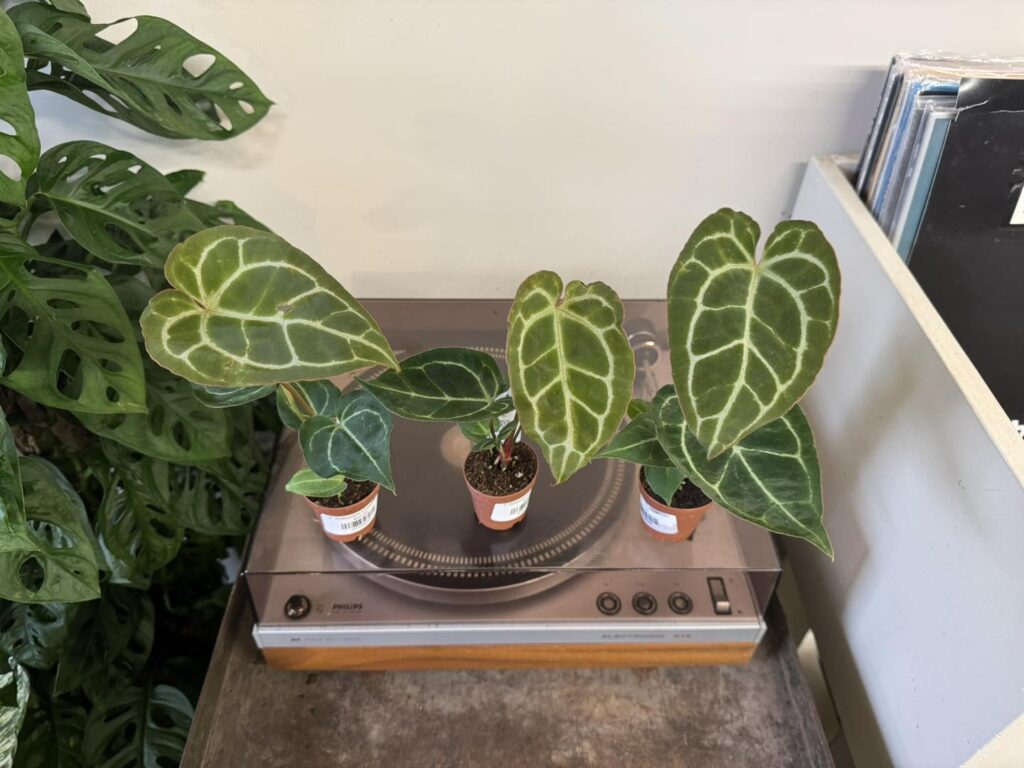
Magnificum is terrestrial — growing in the ground rather than on trees — with golden-colored or light green new growth that turns dark or medium green with age. It features deep white veins, prominent basal lobes, a velvety texture, and its most distinctive feature: a distinctly winged, squared petiole that contrasts sharply with the smooth, circular petiole of Crystallinum.
This squared petiole is passed directly to the hybrid — and is the single most reliable way to identify this rare velvet anthurium correctly in the market.
How to Identify It — And Why It Matters
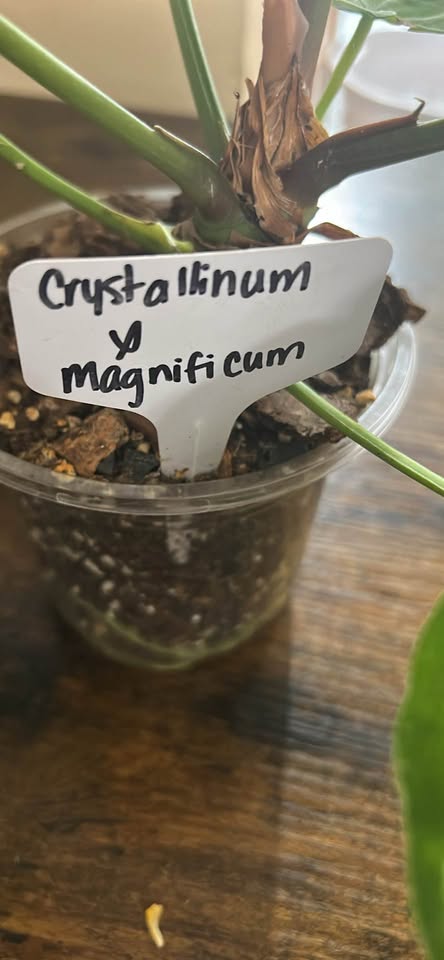
Correct identification matters because many plants sold as pure Anthurium Crystallinum are actually this hybrid. The easiest way to tell the difference is the petiole — Crystallinum x Magnificum has a square, winged petiole inherited from Magnificum, while pure Crystallinum has a round, smooth petiole.
The square and winged petioles suggest predominant Magnificum parentage, and the elongated leaves with strong silver veining indicate the presence of Anthurium Crystallinum.
Additional identification markers for this rare velvet anthurium:
- New leaves emerge vivid red, not green
- Upright, self-heading growth rather than climbing
- Venation is bolder and more silver-white than pure Magnificum
- Leaf surface is densely velvety — not leathery or glossy
Also worth noting: this hybrid is sometimes marketed under invented names like “Anthurium Magnificum Silver” — this is not a distinct species, simply a label used by some growers as a marketing tactic. If you encounter that name, you are almost certainly looking at this hybrid.
The New Leaf Color Journey
One of the most extraordinary qualities of this rare velvet anthurium — and a feature that distinguishes it from most other velvet species — is the dramatic color transformation every new leaf undergoes.
New leaves emerge with a vibrant red tone, gradually transitioning through rich bronze before settling into a deep, lush green as they harden. This dynamic color shift adds an element of visual intrigue that makes this hybrid especially sought-after among collectors seeking unique and decorative houseplants. Wikipedia
The hybrid enjoys the color play of both parents, showcasing red, bronze, and green hues throughout its growth cycle — a weeks-long living color show that neither parent produces in quite the same dramatic way.
Complete Care Guide for Anthurium Crystallinum x Magnificum
Getting the care right is what separates a thriving, consistently beautiful rare velvet anthurium from a struggling one. Here is everything you need:
Light
This rare velvet anthurium prefers bright, indirect light — near an east or north-facing window. Avoid harsh direct sun, which can burn the delicate veins and damage the velvety leaf surface irreversibly. In lower light, growth slows and new leaves emerge smaller with less vivid venation. Wikipedia
Watering
Allow the top inch of soil to dry out between waterings — the hybrid thrives in conditions that are consistently moist but not waterlogged. Careful monitoring is needed to prevent root rot, which is the primary cause of failure in cultivation.
In summer, expect to water every 5–7 days. In winter, every 10–14 days. Always check the soil rather than following a rigid schedule.
Humidity
High humidity of 70–80% is required for peak health — this is the single most important environmental condition for any rare velvet anthurium. Below 50%, the velvety surface degrades, leaves lose their lustre, and spider mites appear.
Best humidity solutions:
- Plant cabinet — the gold standard for serious velvet anthurium collectors
- Humidifier placed near the plant
- Grouping with other tropical aroids to create a natural microclimate
- Humidity tray with pebbles and water beneath the pot
Soil
A well-draining, aerated substrate enriched with organic matter is essential — never allow the roots to sit in waterlogged conditions. A reliable mix: 40% quality potting soil, 30% orchid bark, 20% perlite, 10% worm castings. Chunky and breathable is the goal.
Temperature
Both parent species originate from Colombia and Ecuador, thriving on shaded Andean forest floors at elevations of 800–1,500 m with constant warmth of 18–24°C (65–75°F) year-round. Keep well away from cold drafts, air conditioning vents, and temperatures below 15°C (59°F).
Fertilizing
Feed with balanced liquid aroid fertilizer every 4–6 weeks during spring and summer. Reduce to once every 8 weeks in autumn and winter. Avoid high-nitrogen feeds which push soft, weak growth more vulnerable to pests.
Potting
This rare velvet anthurium maintains a compact, self-heading growth habit — standard pots with excellent drainage are ideal. Always ensure the crown sits at or above the soil line — burying it in damp soil is the fastest route to crown rot.
Common Mistakes Velvet Anthurium Owners Make
Overwatering — the most common cause of decline. When in doubt, wait one more day. The plant will show slightly drooping leaves before roots suffer — use this as your signal.
Low humidity — below 50%, the velvet surface quality degrades rapidly and spider mites colonize fast. A hygrometer next to your plant is a worthwhile investment.
Burying the crown — always keep the crown above the soil line. This applies to every rare velvet anthurium you grow, not just this hybrid.
Direct sun exposure — even an hour of harsh midday sun can bleach and permanently damage the white veins, the most prized feature of the plant.
Buying mislabeled plants — many plants sold as pure Anthurium Crystallinum are actually this hybrid, and some sellers charge Crystallinum prices for what is effectively a more common hybrid. Check the petiole — square means hybrid, round means true Crystallinum.
Propagation
Patience is critical — rushing or overwatering during propagation phases can lead to failure. Maintain consistent humidity and warmth during rooting, and use sterile tools to prevent infection when dividing or cutting.
The most reliable propagation method for this rare velvet anthurium is division at repotting — separating offset plantlets that have developed their own root system from the base of the mother plant. Each division should carry at least 2–3 leaves and a visible root system before separation.
Stem cuttings with a node are possible but slower to root than Philodendron or Monstera cuttings. Root in moist sphagnum moss inside a humidity dome at 22–25°C (72–77°F) with consistent warmth and patience.
Frequently Asked Questions
What makes this the best rare velvet anthurium to own? The combination of Crystallinum’s elegant white-veined pattern on the bigger, thicker leaves of Magnificum gives it greater durability and easier care than pure Crystallinum, while maintaining the exquisite aesthetic collectors crave. It is the most forgiving, most vigorous, and most visually complete rare velvet anthurium available.
How fast does it grow? Hybrid vigor means it often grows faster and is more resilient than either parent alone. Under good conditions expect one new leaf every 4–6 weeks in the growing season.
Is it good for beginners? It is one of the more accessible rare velvet anthuriums — more forgiving than pure Crystallinum — but it still requires attention to humidity and watering. Anyone with intermediate houseplant experience will find it very manageable.
Is it toxic to pets? Yes — like all Anthuriums, it contains calcium oxalate crystals and is toxic to cats, dogs, and humans if ingested. Keep out of reach of children and animals.
Where can I buy a genuine Anthurium Crystallinum x Magnificum? One reason this rare velvet anthurium commands a premium price is its limited availability — unlike common houseplants, it is not mass-produced and requires skilled propagation and care. Always buy from a specialist rare plant seller who can confirm provenance and show you real photos of your exact plant.
Own the Finest Rare Velvet Anthurium Available
The Anthurium Crystallinum x Magnificum is the rare velvet anthurium that delivers everything — dramatic silver venation, velvety tactile foliage, a stunning color journey on every new leaf, and greater resilience than either pure parent. It is the centrepiece plant for any serious aroid collection.
👉 Buy Anthurium Crystallinum x Magnificum here 👉 Browse all rare Anthuriums 👉 Shop all rare collector aroids