
Monstera Albo vs Thai Constellation: The Ultimate 2026 Guide
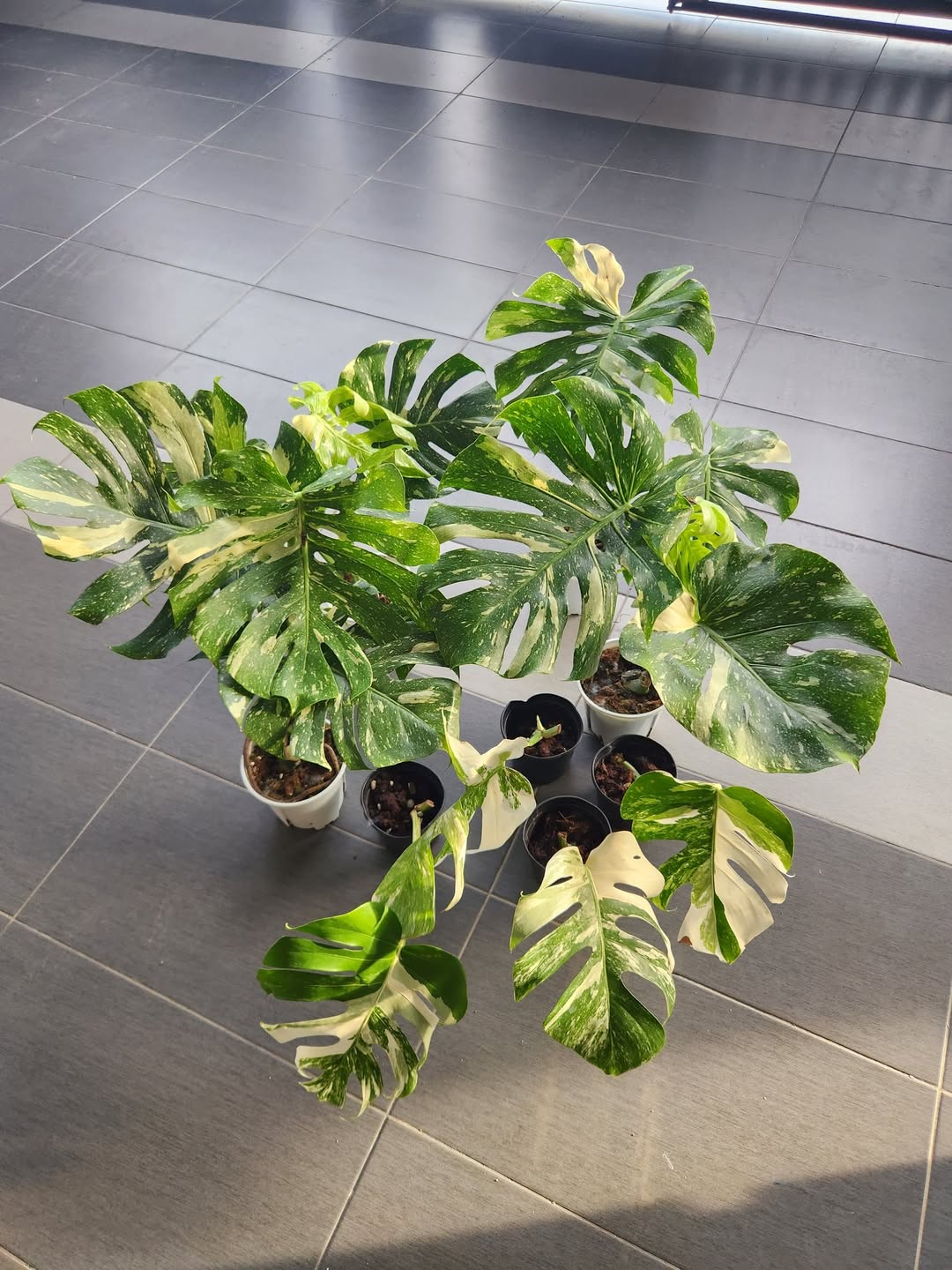
If you’ve spent any time in the rare plant world, you already know the Monstera Albo vs Thai Constellation debate is one of the most discussed topics in the hobby. Both plants are breathtakingly beautiful, both command serious prices, and at first glance they can look remarkably similar. But they are genuinely different plants — different origins, different variegation, different growth habits, and different implications for collectors.
This guide covers everything. By the end, you’ll know exactly which one belongs in your collection.
What Are They? The Basics
Both plants are members of the Monstera deliciosa family — the same species as the classic Swiss Cheese Plant found in every garden center. The Monstera Albo Borsigiana and the Monstera Thai Constellation are two popular varieties known for their variegated leaves — variegation caused by a mutation, which makes these plants harder to find and more expensive than non-variegated Monsteras.
That’s where the similarities start to end.
The Most Important Difference Between Monstera Albo vs Thai Constellation: Where the Variegation Comes From
This is the single biggest distinction between the two plants — and it affects everything from price to propagation to long-term care.
Monstera Albo Borsigiana — Natural Genetic Mutation
The Albo’s beautiful marbled or half-moon pattern is due to a rare natural genetic mutation. Because of this, the leaves have lower chlorophyll levels.
The mutation is unstable — meaning it does not always appear consistently in new leaves or propagations. The Albo’s variegation comes from a genetic mutation that does not always appear in new stems or leaves, making the variegation unstable. This is why managing green reversion (when a stem starts pushing all-green leaves) is part of owning an Albo — you prune back to a variegated node to encourage patterned growth to return.
Monstera Thai Constellation — Lab-Created Tissue Culture
The Thai Constellation is easier to produce, as the variegation is produced in a lab (in Thailand originally, hence the name) through working with tissue culture. In this case, the variegation is not based on a genetic mutation — this makes the variegation stable.
Because the Thai Constellation is genetically stable, it is a more reliable, robust, and generally easier plant to care for. Every cutting will produce variegated leaves — no reversion risk, no pruning strategy needed.
The bottom line: The Albo’s unpredictability is part of its magic — and its mystique. The Thai Constellation offers consistency and ease. Neither is better; they satisfy different collectors.
Variegation: Color, Pattern & Appearance
This is what most people notice first — and the differences are more significant than they appear in photos.
Albo Borsigiana Variegation
The leaf markings are very varied. You might get sectoral variegation (large patches of white), half-moon (half of the leaf can be completely variegated), or mottled and marbled (random splashes of variegation). This means every plant — and every leaf — can be different.
The white parts contain no chlorophyll, so they are unable to photosynthesize. This gives the leaves a striking contrast between the solid green parts and the paper-white sections.
The Albo is almost always bright white — a stark, bold contrast against deep green. Generally, the variegation on the Albo is more brilliant white, whereas the colors on the Thai Constellation have a more creamy white or even yellow outlook.
Thai Constellation Variegation
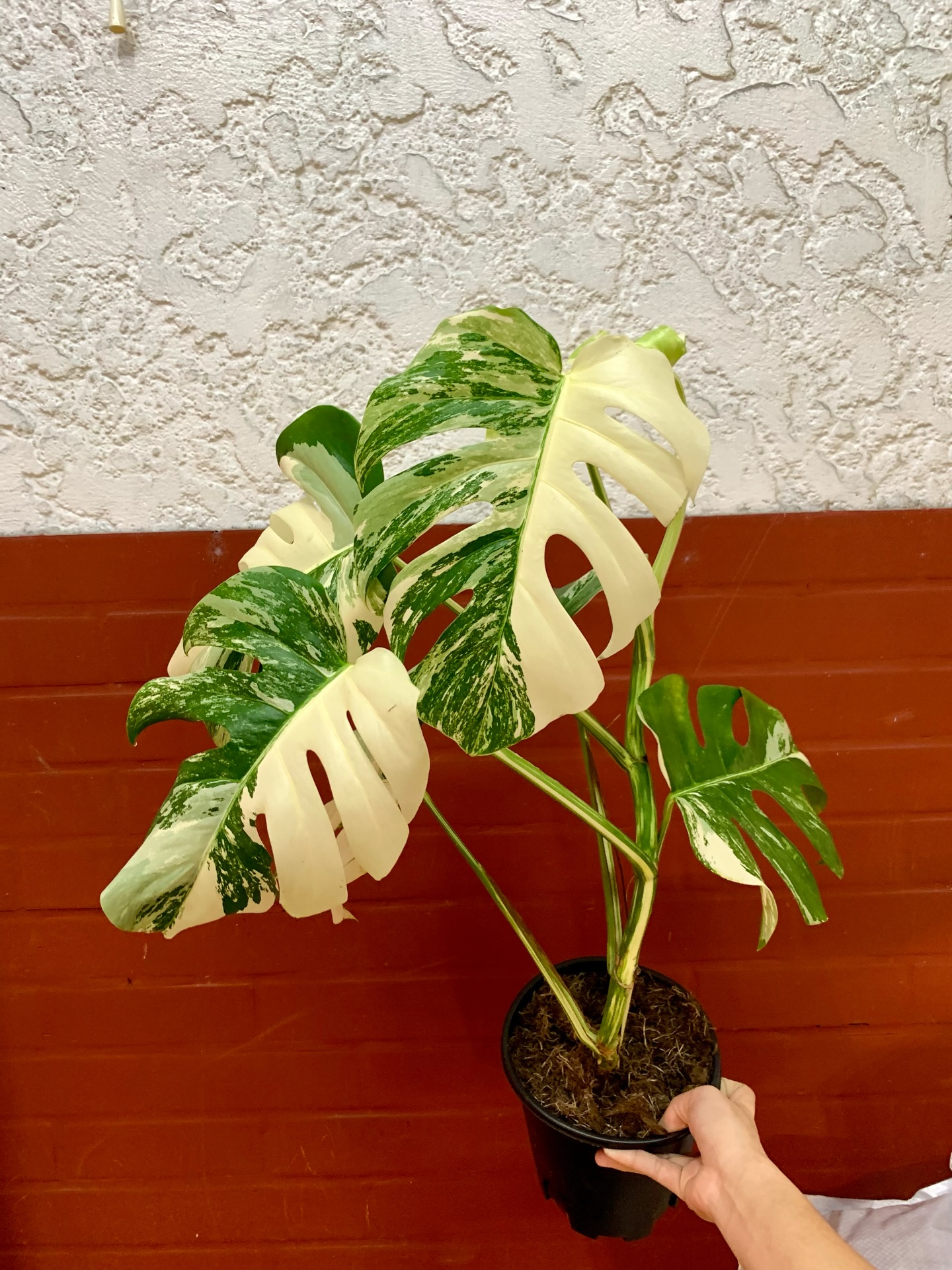
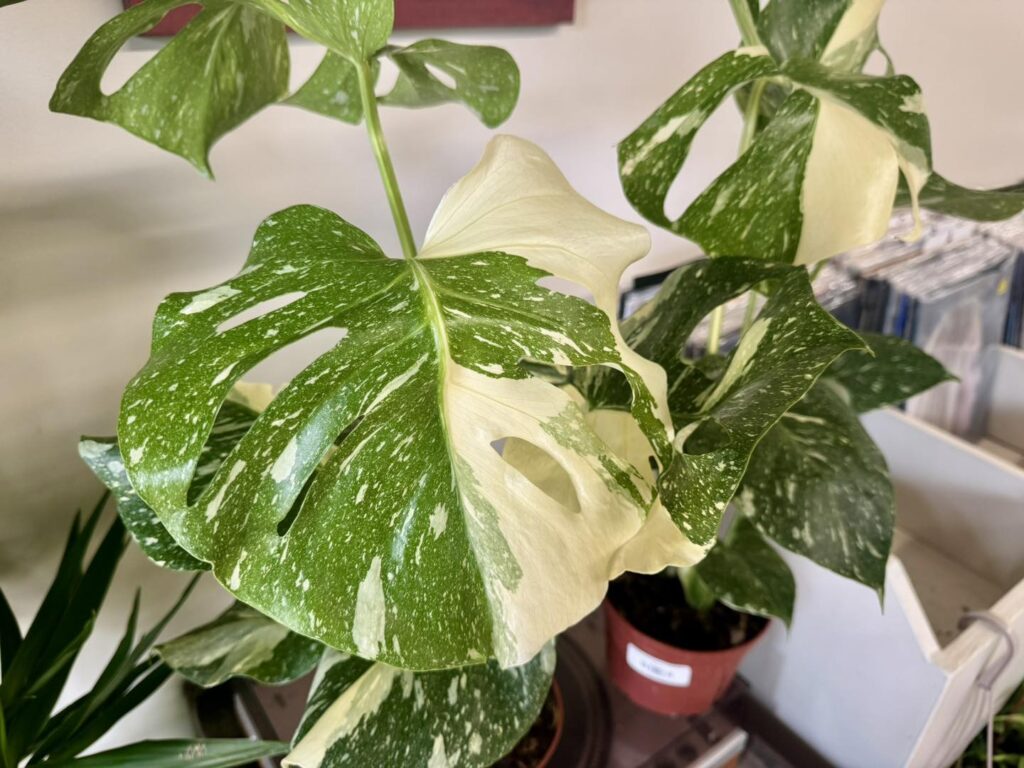
Monstera Thai Constellation displays more stable variegation and can be colored yellow-green or white-green. In terms of leaf variegation, it exhibits yellow speckles or stripes uniformly scattered across the green leaf — consistent and does not change completely to green or yellow.
The pattern found on the leaves often resembles the night sky with stars — hence the name “Constellation.” The overall effect is softer, more diffuse, and more uniform than the dramatic white blocks of the Albo.
The yellow parts contain some chlorophyll, allowing limited photosynthesis — this is part of why the Thai Constellation is considered more stable and easier to grow.
Size, Shape & Growth Habit
Monstera Albo Borsigiana
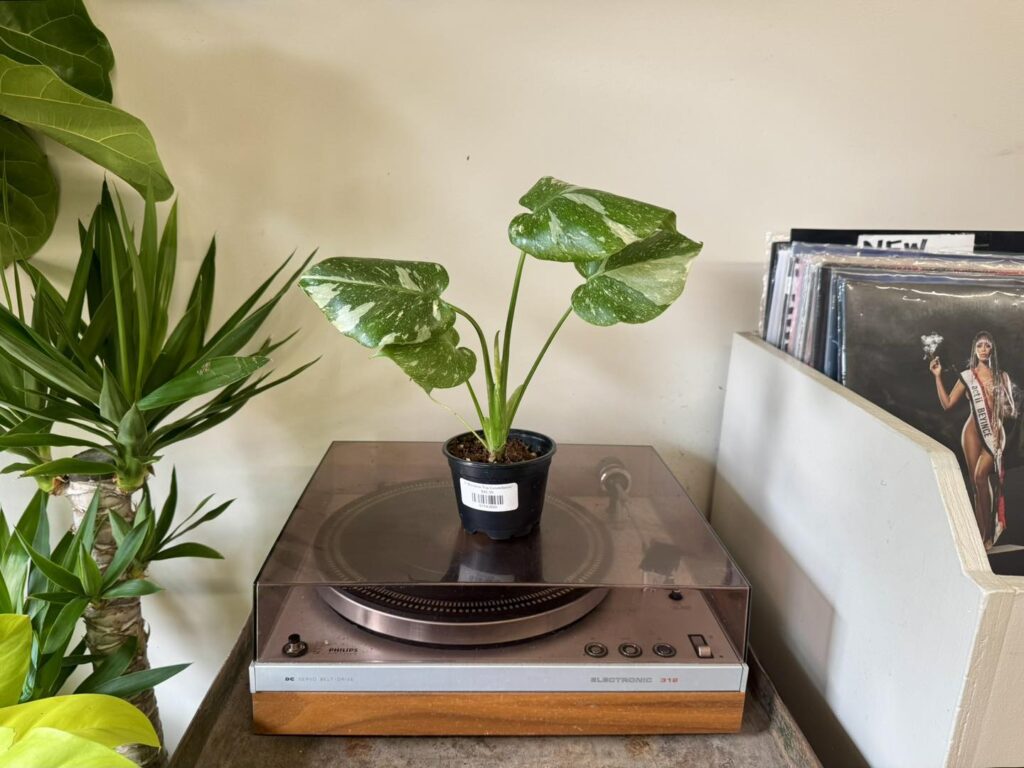
A fast-growing, vining plant with longer internodes that create a flexible climbing structure and smooth petioles. It produces bold, sectoral variegation earlier and more consistently than the larger, self-heading form.
Monstera Albo Borsigiana’s nodes are around 6 inches apart, leading to a more elongated form that looks and behaves like a climber. This makes it ideal for moss poles, trellises, and vertical growing — it will reach upward given the chance and rewards you with increasingly large, fenestrated leaves as it matures.
Monstera Albo’s leaves typically do not surpass 12 inches in length.
Monstera Thai Constellation
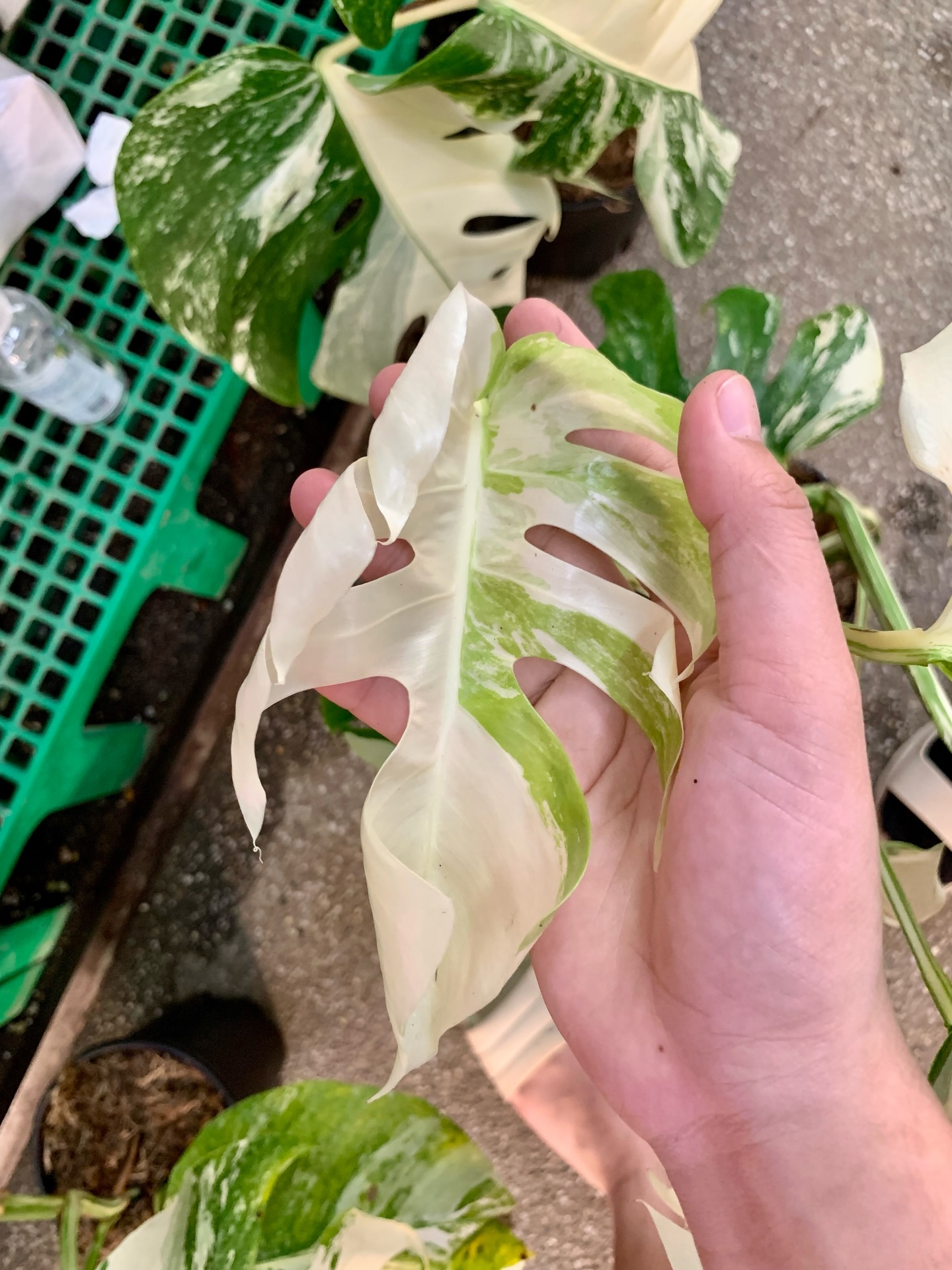
The Thai Constellation has shorter internodes with a bushier appearance that spreads out because of its large leaves.
The Thai Constellation’s leaves are larger, reaching up to two feet or more. It is a more self-heading, statement floor plant — commanding in presence, slower to climb, and naturally wider in its spread.
The Thai Constellation is known to grow a little faster than the Monstera Albo due to its shorter internodes and bushier form.
Propagation
This is a crucial practical difference — especially if you plan to grow your collection or share cuttings.
Albo Borsigiana — Easier to Propagate
The Albo can be easily propagated with the help of a stem cutting. The gaps between the leaf nodes (internodes) are sufficiently long, making it easier to cut the stem correctly as there is enough space between the nodes.
The challenge is variegation retention — not all cuttings will carry the same level of white patterning. Selecting cuttings from a highly variegated section of the plant gives the best chance of passing that pattern on.
Thai Constellation — Harder to Propagate, But More Reliable
The Thai Constellation’s gap between the nodes on the main stem is quite short. Leaves grow almost next to each other, so there is not enough space to properly cut the stem for propagation — removing a sufficiently long cutting can be quite tricky.
The upside: because its variegation is stable, every new cutting will produce variegated leaves. No guesswork on whether the pattern will carry through.
Care Requirements: Are They Different?
In most respects, the care for both plants is very similar — they share the same Monstera deliciosa parentage and the same tropical origins.
| Care Factor | Albo Borsigiana | Thai Constellation |
|---|---|---|
| Light | Bright indirect, 6–8 hrs | Bright indirect, 6–8 hrs |
| Watering | Top 1–2 inches dry between waterings | Top 1–2 inches dry between waterings |
| Humidity | 60–80% preferred | 60–80% preferred |
| Temperature | 18–27°C (65–80°F) | 18–27°C (65–80°F) |
| Soil | Chunky aroid mix | Chunky aroid mix |
| Support | Moss pole highly recommended | Optional — self-supporting |
| Variegation management | Prune green reversions | Not required |
| Propagation ease | Easier | More difficult |
The one meaningful care difference is variegation management on the Albo. The Albo’s unstable variegation necessitates the removal of green leaves to avoid them dominating and turning the whole plant green — however, eliminating all the green leaves may result in chlorophyll deficiency and plant death. The balance between removing green growth and preserving enough chlorophyll for the plant to survive is an art form that experienced Albo growers master over time.
Here’s a guide on how to care for monstera plants
Price: Which Is More Expensive?
Both plants sit at the premium end of the houseplant market, but their pricing reflects different factors.
The Albo Borsigiana commands high prices because of its natural rarity, propagation difficulty, and the unpredictability of its variegation. Small plants often sell for several hundred dollars. Highly variegated specimens — especially half-moon leaves — can fetch significantly more.
The Thai Constellation is produced through tissue culture, which means supply can theoretically be scaled. However, the size of the plant (larger leaves, slower to propagate) and consistent demand keep prices elevated. It tends to be slightly more accessible than a premium Albo but is still firmly in collector territory.
Which One Should You Buy?
Choose the Monstera Albo Borsigiana if:
- You want the most dramatic, unpredictable white variegation possible
- You love the idea of a climbing, vining plant on a moss pole
- You enjoy the challenge of managing and maintaining variegation
- You want a plant with natural, authentic genetic character
- You prefer a more compact leaf size with an elongated, elegant form
Choose the Monstera Thai Constellation if:
- You want consistent, reliable variegation without reversion risk
- You prefer a large, bushy statement floor plant
- You want something slightly easier to maintain long-term
- You love the softer, speckled “starry sky” pattern over bold white blocks
- You want a plant that’s straightforward to care for from day one
The honest answer for serious collectors: own both. They complement each other beautifully — the Albo’s bold white drama next to the Thai Constellation’s soft, starry elegance is one of the great pairings in the rare plant world.
Frequently Asked Questions
Is Monstera Albo the same as Monstera Borsigiana? Not exactly — Borsigiana refers to the subspecies (a smaller, faster-climbing form of Monstera deliciosa), while Albo refers to the white variegation. Monstera Albo Borsigiana is the variegated form of the Borsigiana subspecies specifically.
Can the Thai Constellation revert to green? No — because its variegation is lab-created and genetically stable, Thai Constellation does not revert to solid green the way the Albo can.
Which is rarer — Albo or Thai Constellation? The Albo is generally considered rarer in terms of natural occurrence, since its variegation is the result of an unstable genetic mutation. Thai Constellation can be produced in greater quantities through tissue culture.
Are both plants toxic to pets? Yes — both are toxic to cats, dogs, and humans if ingested, as with all Monstera species.
Can I grow either plant outdoors? Both can be grown outdoors in tropical or subtropical climates (zones 10–12). Avoid direct midday sun and protect from cold temperatures below 10°C (50°F).
Which is better for beginners? The Thai Constellation edges it for beginners due to stable variegation and no reversion management required. That said, the Albo is not a difficult plant — it just requires slightly more attention to variegation health.
Ready to Add One to Your Collection?
Both the Monstera Albo Borsigiana and rare Monstera varieties are available at Variegated Plant Shop — fully rooted, personally inspected, and shipped worldwide with care.
👉 Buy Monstera Albo Borsigiana here 👉 Browse all rare Monstera varieties 👉 Shop all rare collector plants