
Alocasia Dragon Scale Care Guide: The Ultimate 2026 Guide to the Jewel Alocasia
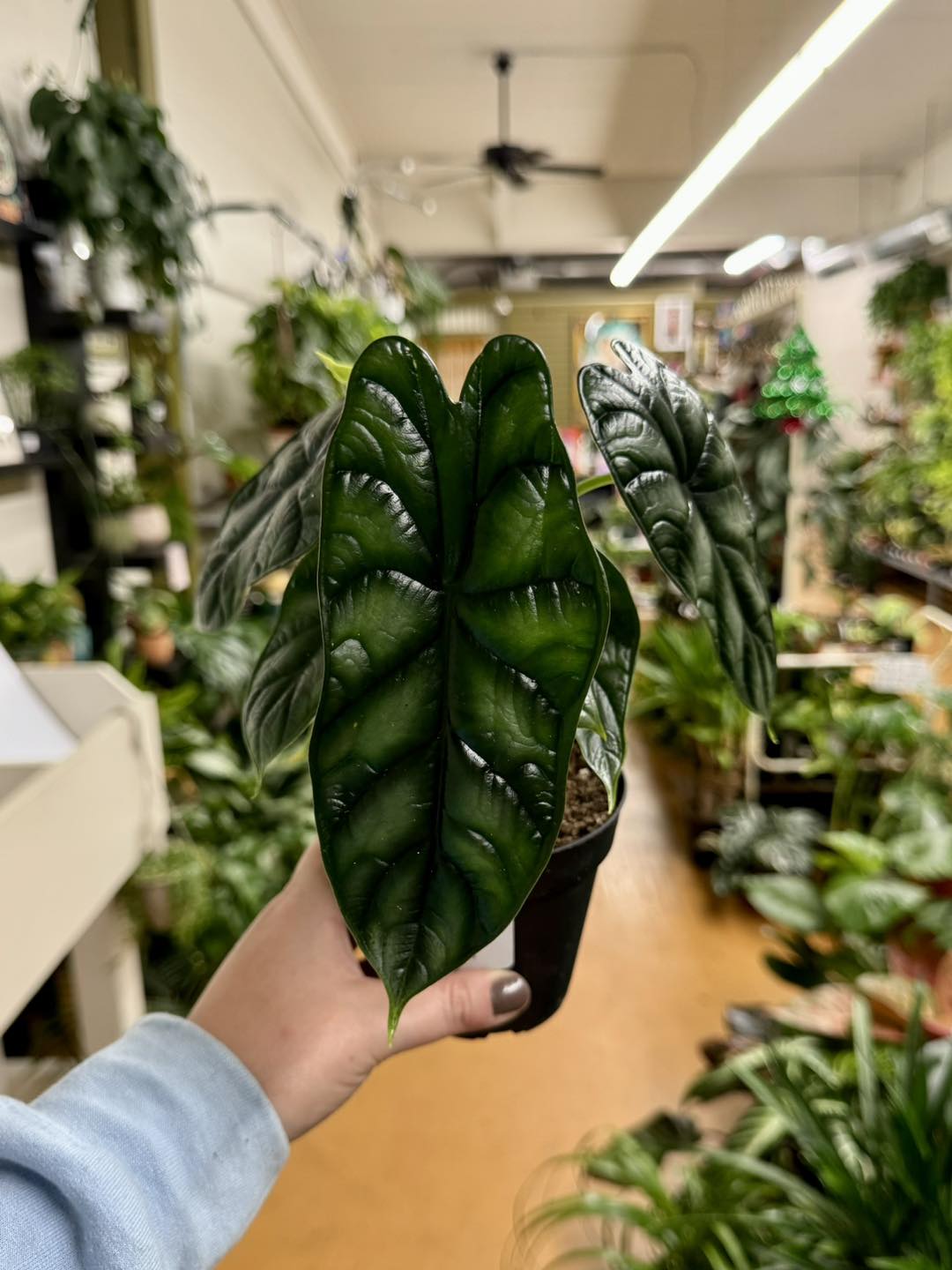
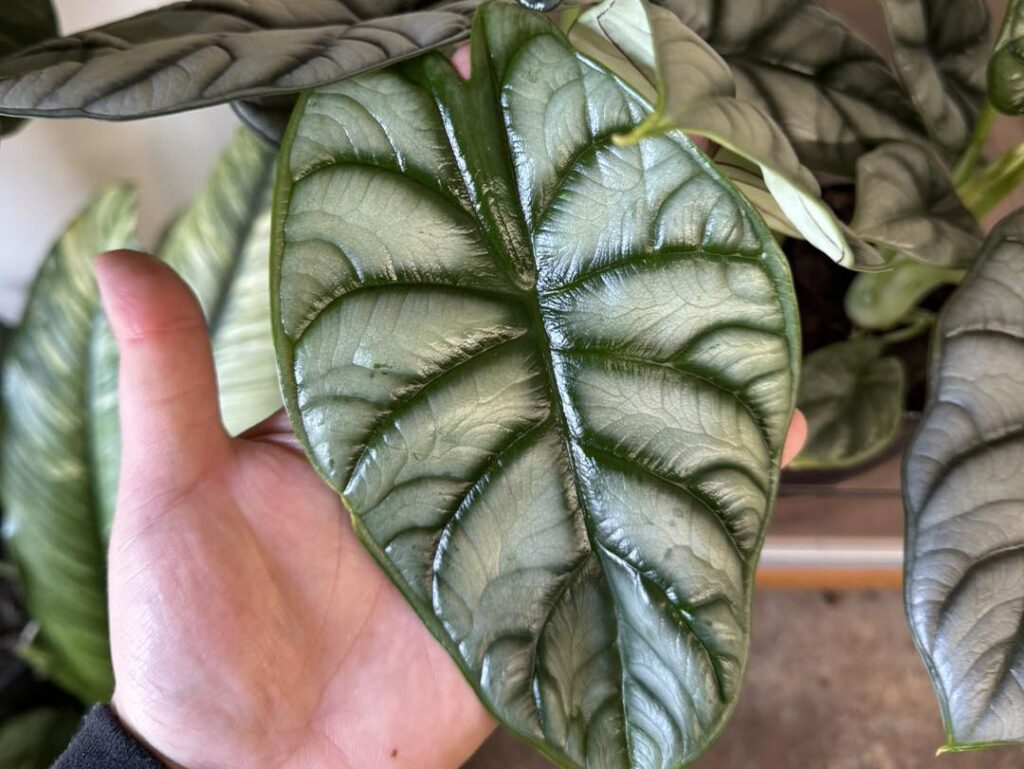
If you are looking for a houseplant that looks like it was designed by a fantasy artist rather than evolution, Alocasia Dragon Scale is your answer. Each leaf is deeply bullate — meaning the surface between the veins is raised and puckered — creating a three-dimensional scale-like texture that gives the plant its name. The color shifts from dark emerald at the center of each cell to a lighter silver-green at the edges, with a subtle metallic sheen that intensifies in good light.
The silvery-green leaves with dark green veins seem to come straight out of a storybook — reminiscent of dragon armor, robust, refined, and mystical at the same time.
This is the complete Alocasia Dragon Scale care guide for 2026 — covering everything from its Bornean origins and leaf anatomy to full environmental requirements, dormancy, propagation, and where to find a genuine specimen.
What Is Alocasia Dragon Scale?
Alocasia Dragon Scale, formally named Alocasia baginda ‘Dragon Scale’, is a cultivated variety of Alocasia baginda — native to the tropical forests of Borneo. It is one of the beautiful jewel Alocasias, a group of special rainforest specimens with exacting needs.
More specifically, it is native to the lowland rainforests of Kalimantan (Borneo), growing as a terrestrial plant in the understory of mixed dipterocarp forest at elevations between 50–250 metres, rooted in rocky clay or lateritic soils under filtered light and constant humidity.
Based on the general location and preference of related species, Alocasia baginda is believed to be adapted to the calcium carbonate rich limestone regions of Borneo — a clue for growers who want to replicate native conditions as closely as possible.
The cultivar ‘Dragon Scale’ exists exclusively in cultivation and does not occur in the wild — it has become available to enthusiasts worldwide through tissue culture and division.
The Anatomy of a Dragon Scale Leaf
Understanding what makes each Alocasia Dragon Scale leaf so extraordinary helps you provide the right care to maintain it at its best.
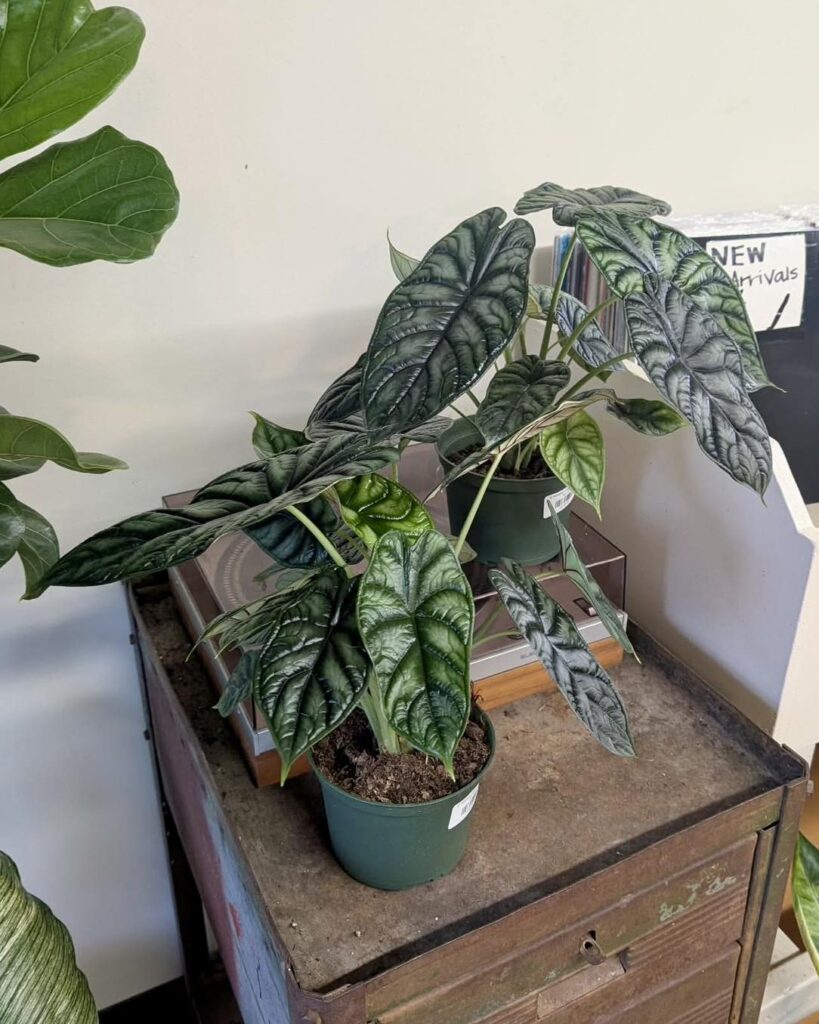
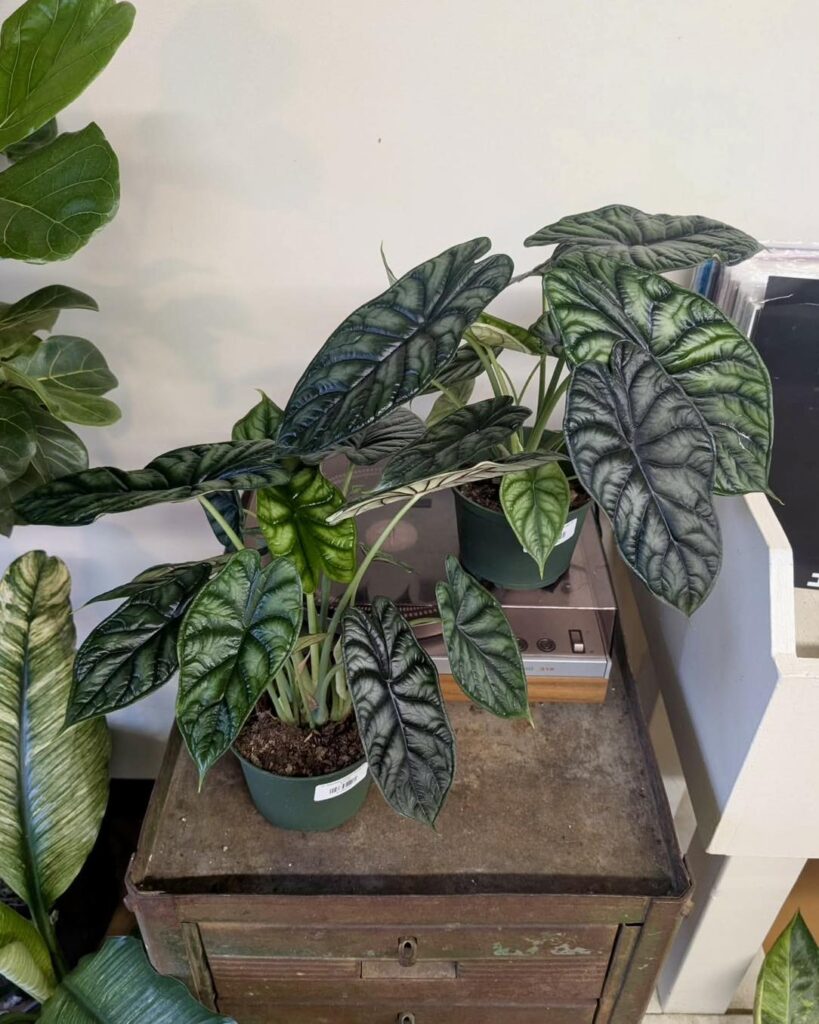
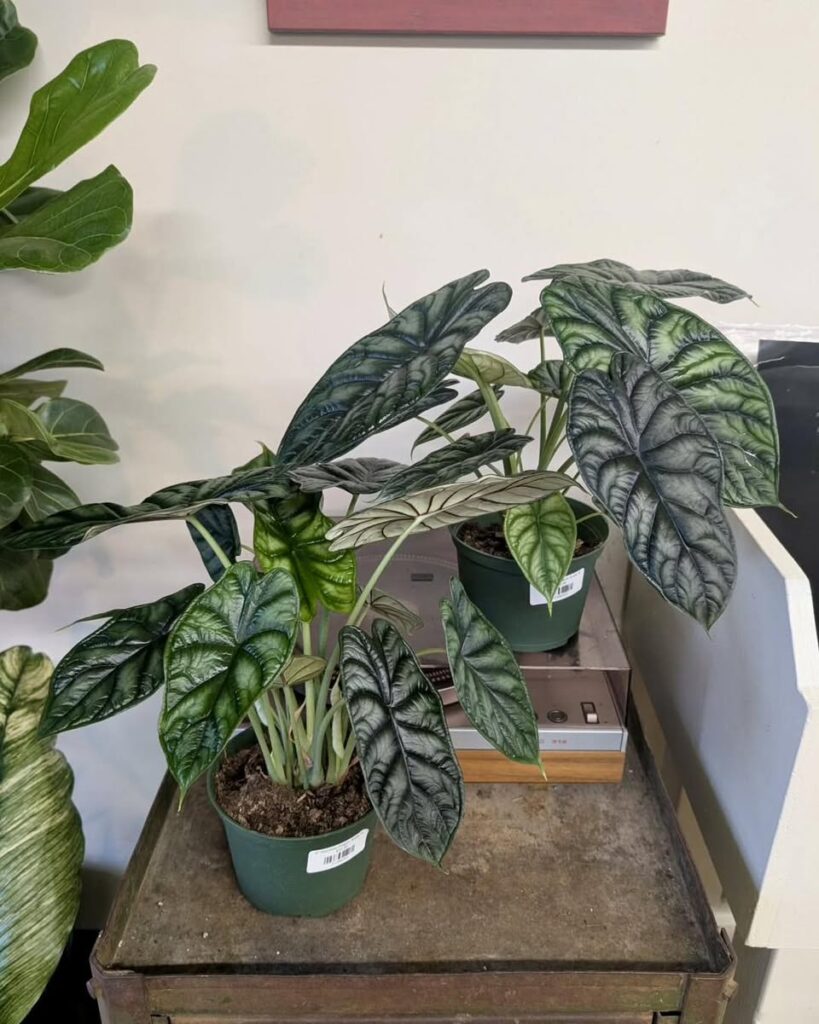
Each leaf is deeply bullate — meaning the surface between the veins is raised and puckered, creating the three-dimensional scale-like texture that gives the plant its name. The color shifts from dark emerald at the center of each cell to a lighter silver-green at the edges.
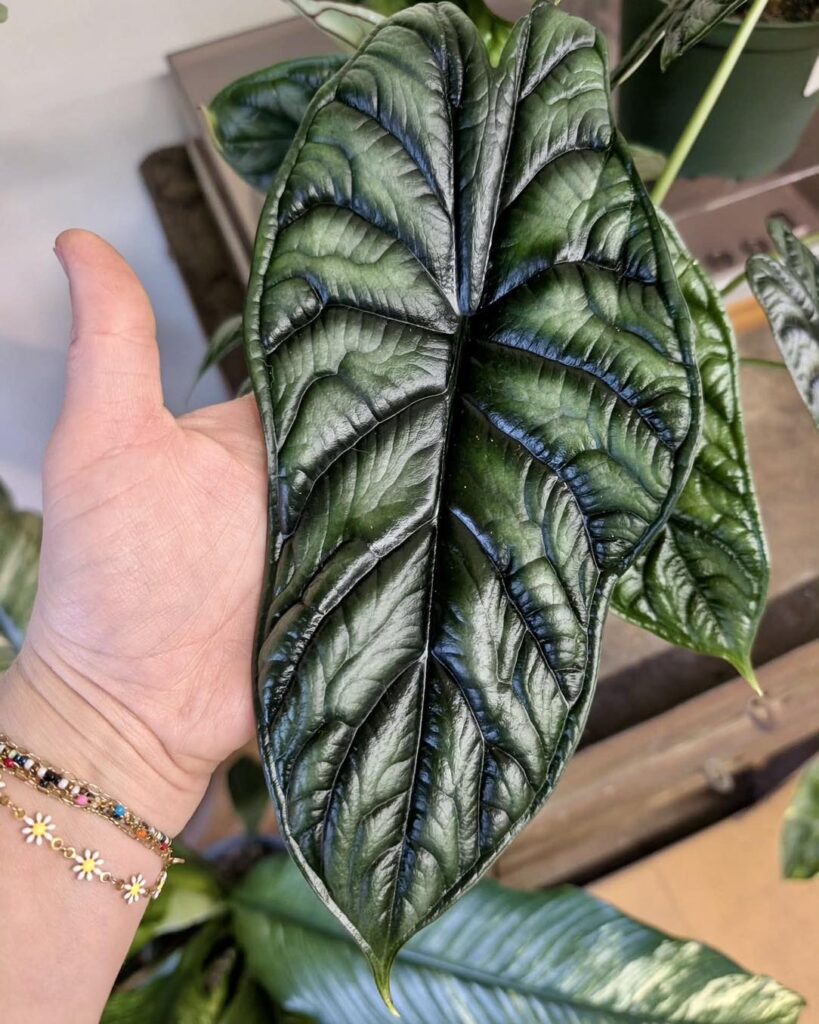
The silvery-green surface is darker towards the center, giving the lighter shade a luminous tone. The undersides are pale cream, with vibrant maroon veins — and the coloration on young leaves deepens dramatically with maturity.
The metallic sheen intensifies in bright indirect light — one of the most important reasons that correct lighting is central to Alocasia Dragon Scale care. Plants in low light produce flatter, less metallic, less textured leaves that fail to show off the full extraordinary character of this species.
Dragon Scale vs Silver Dragon vs Green Dragon — What Is the Difference?
Alocasia ‘Dragon Scale’, ‘Silver Dragon’, and ‘Green Dragon’ are three variants of the same species — Alocasia baginda. It is a terrestrial species native to Eastern Borneo where conditions are hot, humid, and moist.
The differences come down to coloration and dominance of silver versus green tones:
Dragon Scale features silvery-green leaves with a dark center and pronounced emerald veins — the deepest contrast and most dramatic coloration of the three. The underside is pale cream with vivid maroon veining.
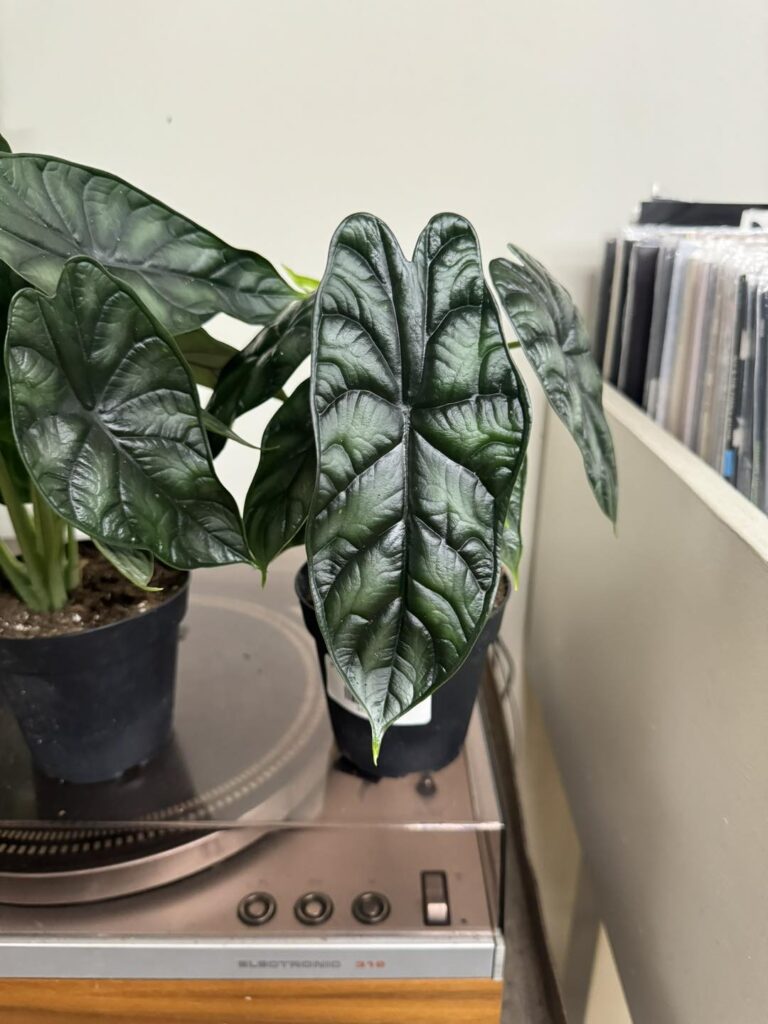
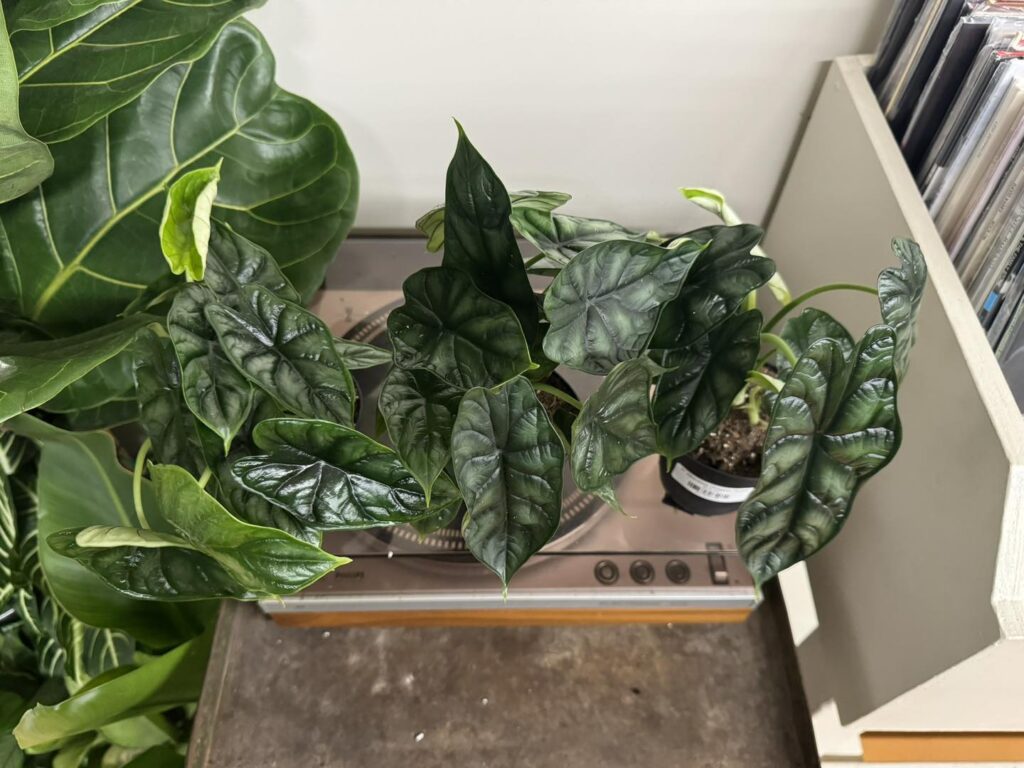
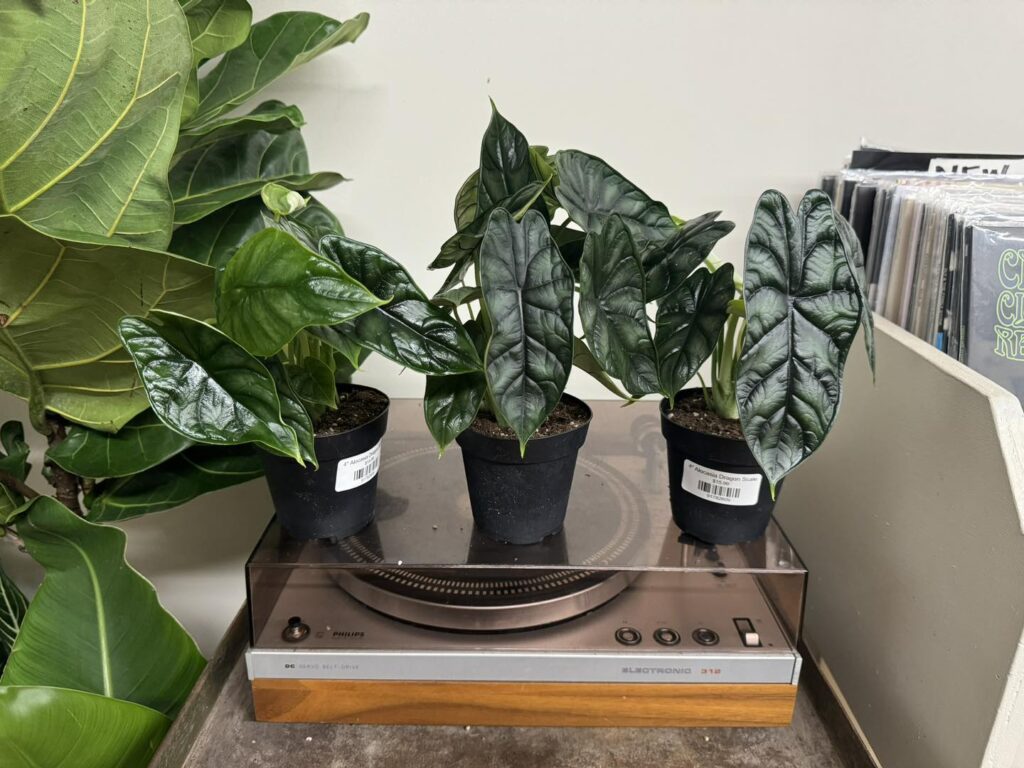
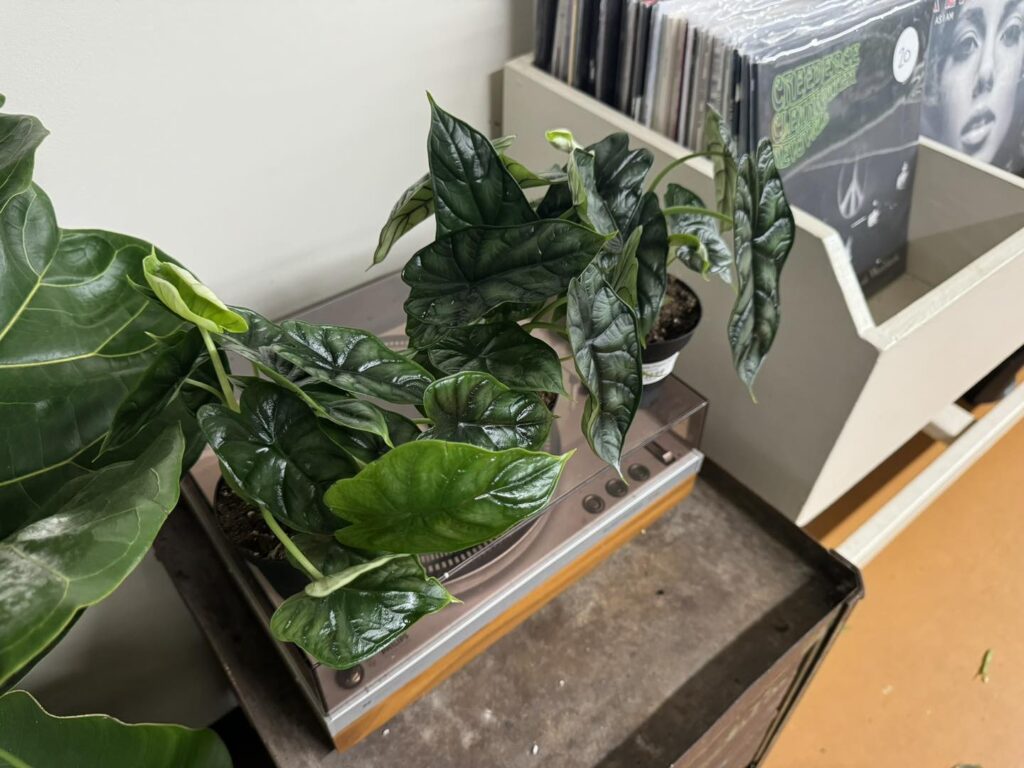
Silver Dragon — the silvery-grey counterpart to Dragon Scale, with thick leathery leaves that are almost luminescent and deeply etched in a network of dark green veins. Where Dragon Scale has mottled green foliage, Silver Dragon has silver markings dominant on the leaves.
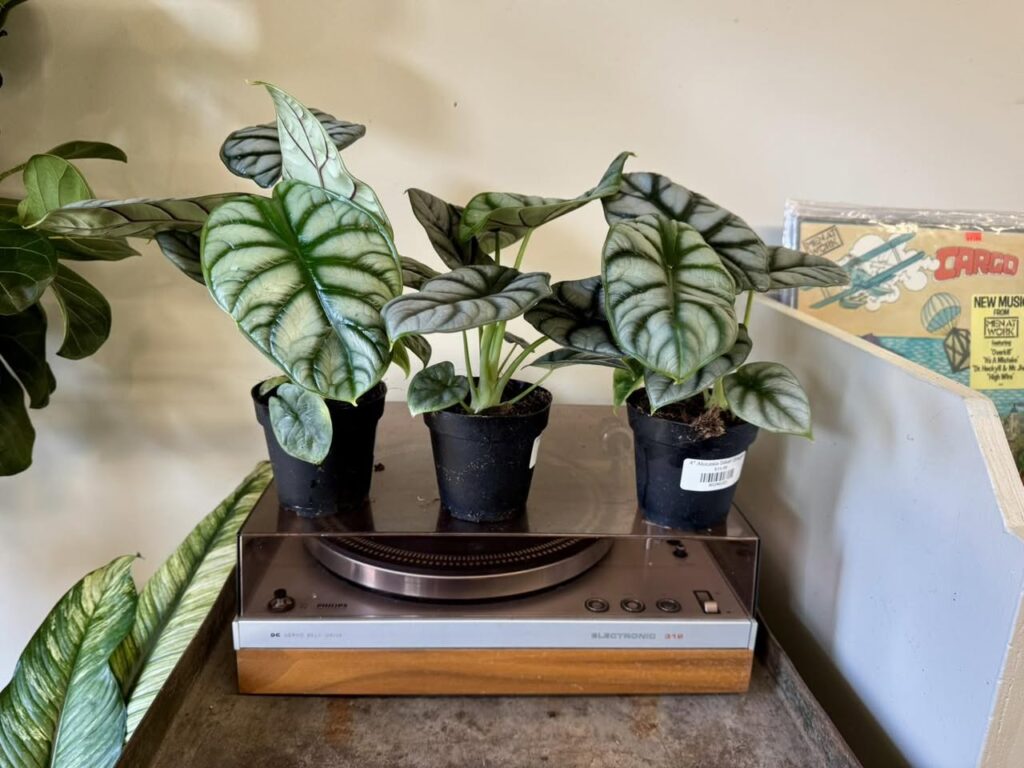
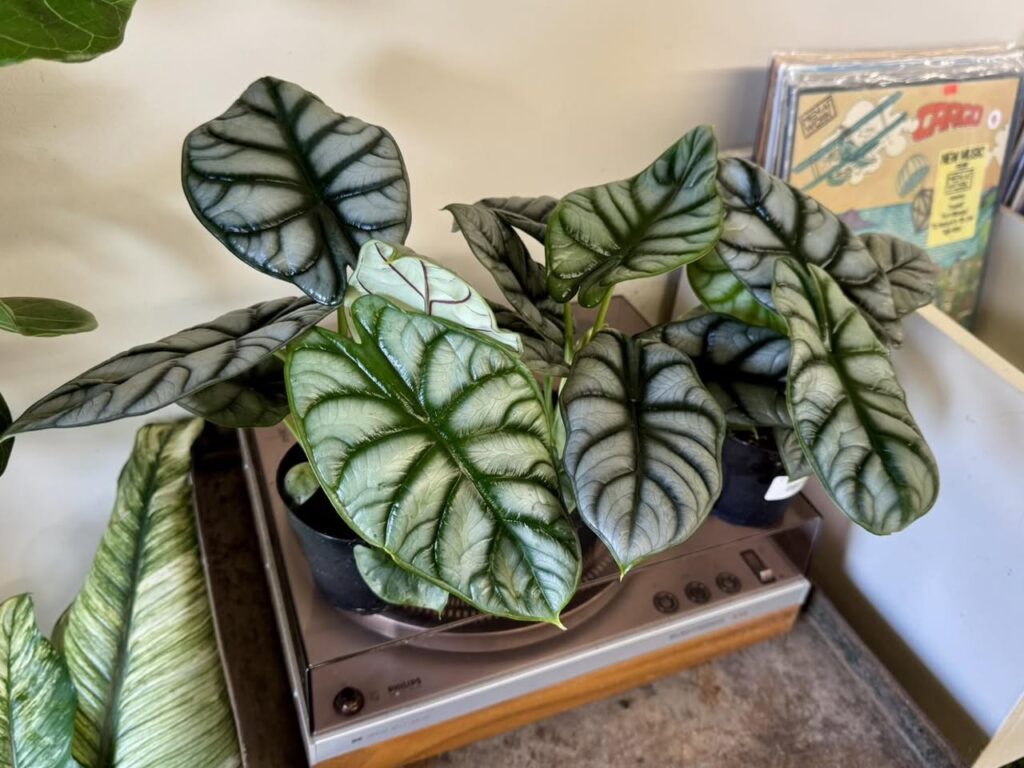
Green Dragon — a less commonly discussed variant with more mid-green coloration and lower metallic sheen, favored by collectors who prefer a subtler presentation.
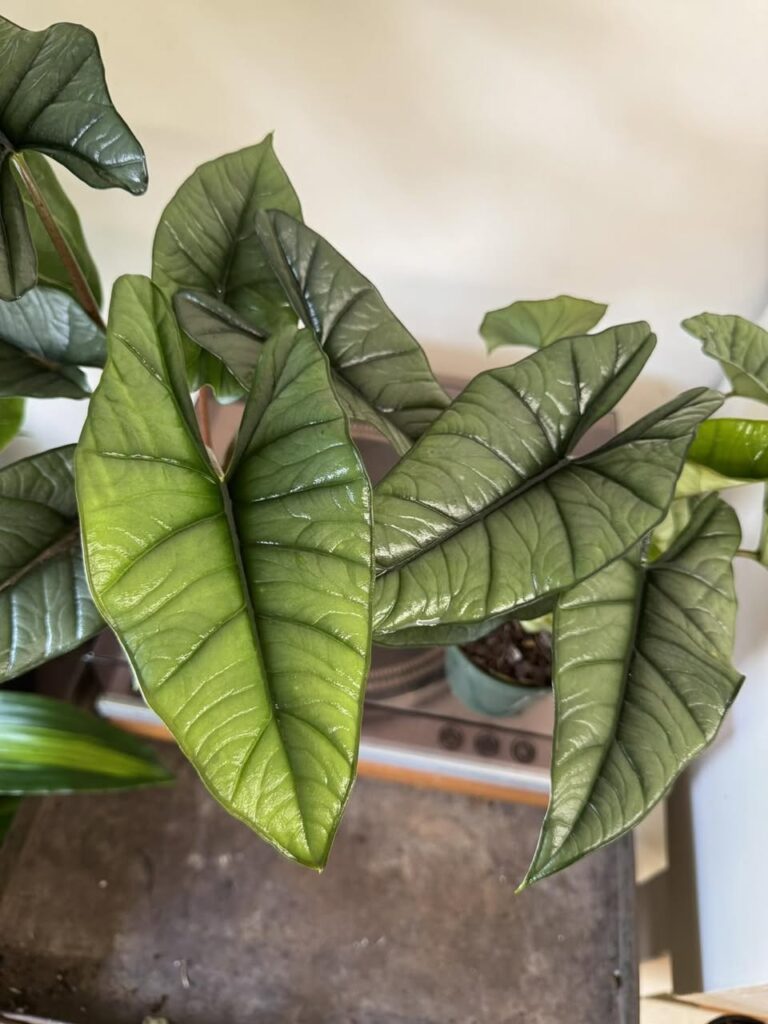
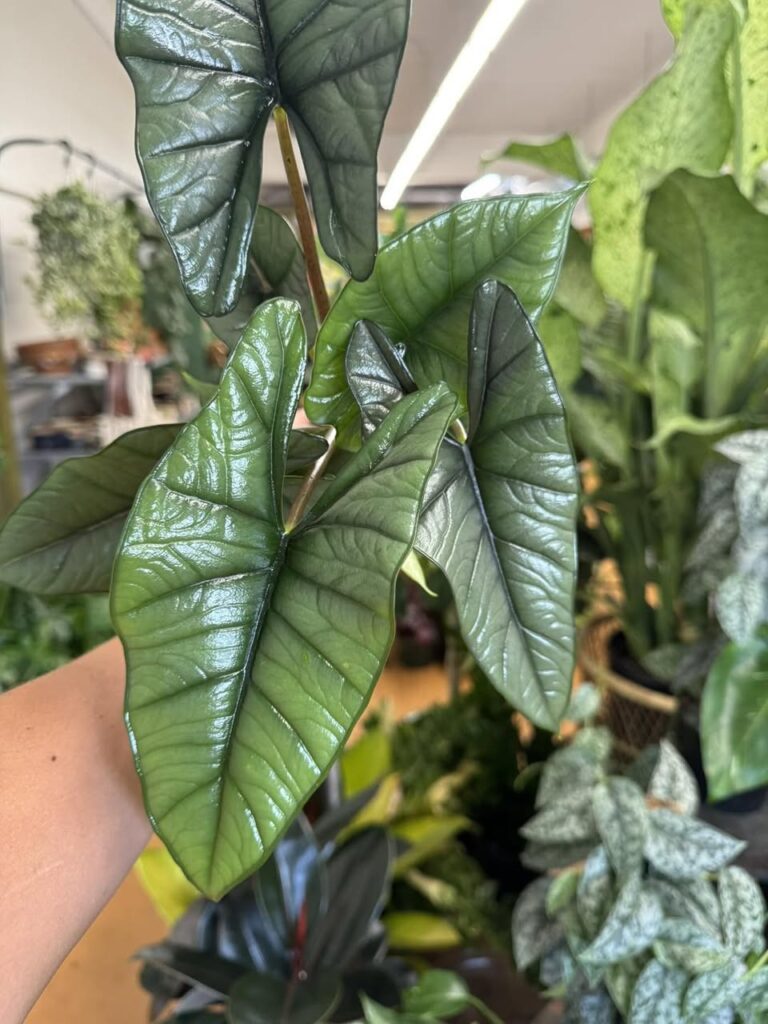
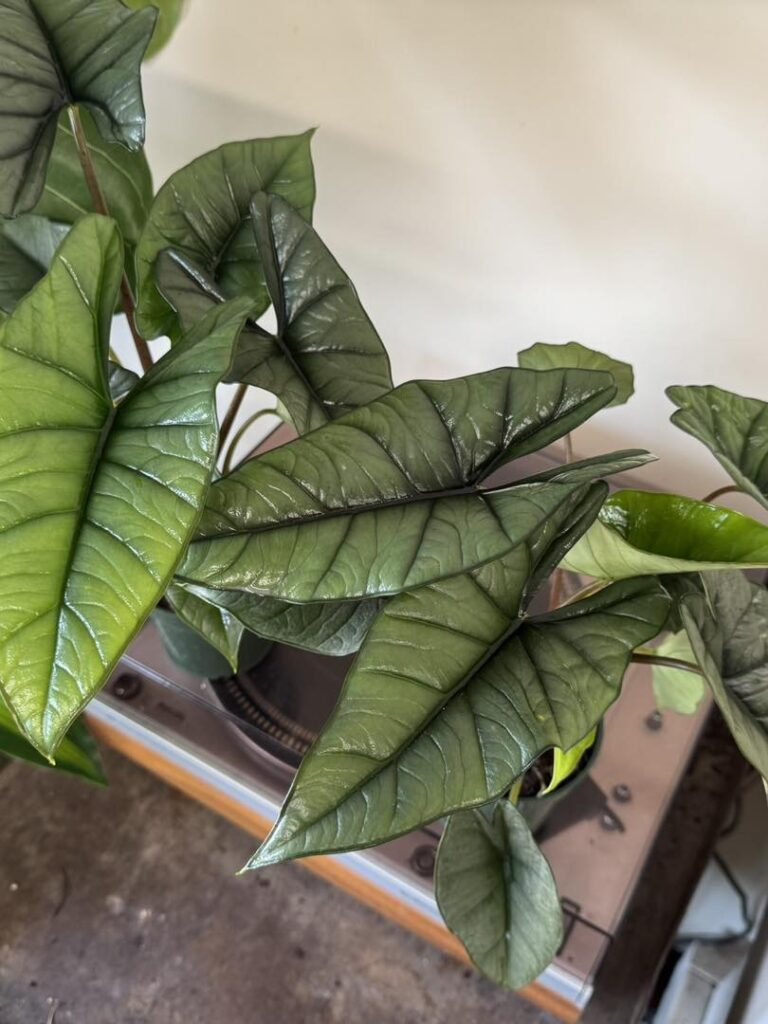
For most collectors, Dragon Scale is the starting point — its balance of deep color, metallic sheen, and bullate texture makes it the most visually complete of the three.
Complete Alocasia Dragon Scale Care Guide
Correct Alocasia Dragon Scale care comes down to replicating the conditions of its native Bornean rainforest understory — consistent warmth, filtered light, high humidity, and excellent drainage.
Light
Alocasia Dragon Scale prefers bright indirect light — an east or west-facing window is ideal, where it can get plenty of light without direct sun, which can burn its delicate leaves. If not getting enough light, it may become leggy or growth may slow down significantly.
The metallic sheen that defines Dragon Scale is most vivid in good indirect light. The metallic sheen intensifies in bright indirect light — this is one of the most important practical rules for Alocasia Dragon Scale care. Under-lit plants produce flat, dull, disappointing leaves. Well-lit plants produce the full three-dimensional, light-reflecting drama the species is known for.
Watering
Alocasia Dragon Scale likes its soil to stay moist but not waterlogged — water when the top 1–2 inches of soil are dry. Drooping leaves signal thirst and will perk up quickly once you give them a drink. Be careful not to overwater as this leads to yellowing leaves and root rot. These plants are also sensitive to tap water — using distilled or rainwater is a good idea.
The Dragon Scale likes to quickly absorb water as it drains immediately from the soil — the general recommendation is to allow the top 2–3 inches to dry before rewatering, adjusting to fit your specific plant.
Soil
Avoid heavy soils that hold too much moisture, creating waterlogged conditions and harming the roots. The Dragon Scale Alocasia likes its soil consistently moist but not soggy.
A reliable Alocasia Dragon Scale care mix: 40% quality potting soil, 30% perlite, 20% orchid bark, 10% horticultural charcoal. Adding a small amount of crushed limestone or dolomite lime replicates the calcium carbonate rich limestone environment of its native Borneo habitat — a small detail that experienced growers report produces noticeably stronger growth and more vivid coloration.
Humidity
60–80% humidity is the ideal range for Alocasia Dragon Scale care. The metallic sheen and bullate texture are most pronounced and most beautiful in consistently high humidity. Below 50%, leaf edges may brown and the textured surface can dry out.
Alocasia Dragon Scale is an excellent candidate for terrarium growing — the enclosed environment maintains consistent high humidity automatically, making it one of the finest jewel aroids for this setup.
For non-terrarium growing: a dedicated humidifier, grouping with other tropical plants, or a pebble tray with water beneath the pot all help maintain adequate humidity for correct Dragon Scale care.
Temperature
Temperatures of 55–80°F (13–27°C) suit Alocasia Dragon Scale care well. Avoid sudden temperature drops, cold drafts, and air conditioning vents. Alocasia enjoys warmth — ideally between 18°C and 24°C for consistent, healthy growth.
Fertilizing
Feed once per month at half strength when actively growing. In winter the plant may go into a dormant state and stop putting out new leaves — if no new leaves are growing, it does not need to be fertilized.
Over-fertilizing is a common Alocasia Dragon Scale care mistake — the excess salt buildup damages roots and causes tip browning. Always dilute to half strength and never fertilize a stressed or recently repotted plant.
Repotting
Select a new pot only slightly larger than the current one with drainage holes — use fresh well-draining soil and carefully place the plant avoiding damage to the roots.
Dragon Scale prefers slightly snug conditions — a pot much larger than the root ball holds excess moisture and dramatically increases root rot risk. Repot every 1–2 years or when roots visibly outgrow the container.
Dormancy — What to Expect
One of the most important aspects of Alocasia Dragon Scale care that catches new owners off guard is dormancy. Like all Alocasias, Dragon Scale can enter a rest period — typically in winter or during periods of low light — during which it stops producing new leaves and may drop one or more older ones.
This is completely normal and not a sign of failure. During dormancy: reduce watering significantly, stop fertilizing entirely, maintain humidity above 50%, and keep the plant in its warmest position. New growth will resume when light levels and temperatures increase in spring.
As plants mature they seasonally produce an abundance of offsets — referred to as Alocasia corms or bulbils — typically around the end of summer to early fall. These can be harvested and propagated once they develop a visible shoot.
Propagation
Alocasia Dragon Scale is propagated primarily through two methods:
Division — at repotting time, gently separate offset plantlets that have developed their own roots from the base of the mother rhizome. Each division should have at least one leaf and a visible root system. Pot into fresh aroid mix and maintain high humidity during establishment.
Corm propagation — mature plants seasonally produce an abundance of corms or bulbils around the end of summer to early fall. Harvest these small nodules from the base of the plant, place in moist sphagnum moss inside a humidity dome at 22–25°C, and wait for shoots to develop. This is slower than division but produces more plants from a single mother plant.
Common Alocasia Dragon Scale Care Mistakes
Overwatering — the primary cause of Dragon Scale decline. Always check the top 2 inches of soil before watering and never allow the pot to sit in standing water.
Low humidity — below 50% the metallic sheen fades, leaf edges brown, and spider mites appear. A hygrometer is essential equipment for serious Dragon Scale care.
Too much direct sun — even one hour of harsh direct sunlight can cause irreversible leaf bleaching and scorch. Always filtered or indirect light only.
Tap water sensitivity — these plants are sensitive to tap water — distilled or rainwater produces visibly better results over time, particularly in hard water areas where mineral buildup causes tip browning.
Potting too large — oversized pots retain too much moisture around the roots. Always choose a pot only slightly larger than the current root ball.
Ignoring dormancy — continuing to water and fertilize at full rate during dormancy causes root rot. Reduce everything when the plant stops actively growing.
Pests
The main pest threats for Alocasia Dragon Scale are spider mites (thrive in low humidity — prevention is maintaining 60%+ humidity consistently), mealybugs (check leaf undersides and crevices around new growth), and thrips (look for silvery streaking or stippling on new leaves). Treat early with neem oil spray or systemic insecticide at the first sign of infestation.
Frequently Asked Questions
Is Alocasia Dragon Scale good for beginners? It requires regular care and attention — new plant owners might want to try easier Alocasia types like Alocasia amazonica or Alocasia ‘Polly’ before attempting Dragon Scale care. That said, anyone with intermediate houseplant experience who can provide consistent humidity and bright indirect light will find it very manageable.
Why is my Dragon Scale losing its metallic sheen? The most common causes are insufficient light and low humidity. The metallic sheen intensifies in bright indirect light — move the plant closer to an east or west-facing window and increase humidity above 60%.
How do I tell Dragon Scale from Silver Dragon? The easiest way is leaf color dominance — Silver Dragon has silver markings dominant on the leaves, while Dragon Scale has mottled green foliage with a silvery-green tone. The underside maroon veins on Dragon Scale are also a reliable identifier.
Can Alocasia Dragon Scale grow outdoors? Yes — in tropical or subtropical climates (zones 10–12) it thrives outdoors in dappled shade with consistent moisture. In cooler climates it is a strictly indoor plant, brought outside only in warm summer months.
Is Alocasia Dragon Scale toxic to pets? Yes — it contains calcium oxalate crystals and is toxic to people, cats, and dogs if ingested. Keep out of reach of children and pets.
Ready to Own One?
Alocasia Dragon Scale is the jewel aroid that rewards careful attention with foliage unlike anything else in the houseplant world — three-dimensional, metallic, ancient-looking, and genuinely extraordinary from every angle.
👉 Buy Alocasia Dragon Scale here 👉 Browse all rare Alocasias 👉 Shop all rare collector aroids