
The Ultimate 2026 Guide to the Eastern Cape Blue Cycad
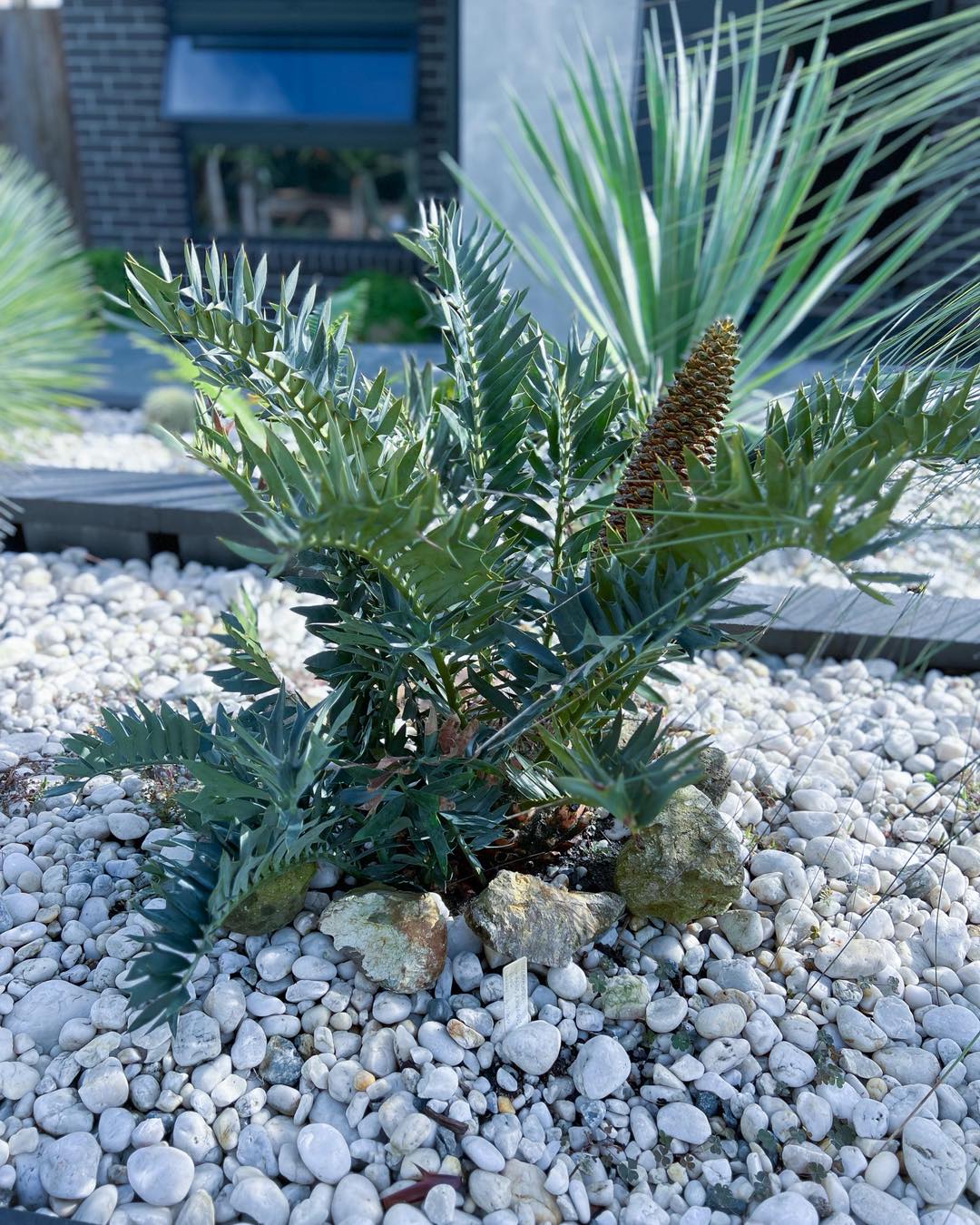
There are blue plants. And then there is Encephalartos horridus.
No other blue-leaved cycad rivals the intense blue of this cycad’s foliage. Not the similar-looking E. lehmannii. Not the E. trispinosus. Nothing in the cycad world — and very little in the entire plant kingdom — produces the same extraordinary silvery-blue coloration that a well-grown E. horridus delivers in full sun.
This guide covers everything: its origins, its biology, how to grow it, how to identify it, its conservation status, and why it belongs in every serious collector’s garden.
What Is Eastern Cape Blue Cycad – Encephalartos horridus?
Encephalartos horridus, commonly called the Ferocious Blue Cycad or Eastern Cape Blue Cycad, is a slow-growing, small to medium-sized, evergreen blue cycad native to rocky outcroppings, slopes and ridges in Eastern Cape Province, South Africa.
The species name horridus is Latin for “bristly” — after the plant’s stiff, spiny leaflets. The common name “Ferocious Blue Cycad” is equally apt: the leaves are armed with spines so rigid and sharp that the toughened foliage is used to form living livestock fences in southern Africa to keep predators at bay.
It belongs to the family Zamiaceae and the genus Encephalartos — a group of cycads found exclusively in Africa and among the most ancient plant lineages on Earth, predating the dinosaurs.
Where Does It Come From?
Naturally occurring Eastern Cape blue cycads can only be found around the Port Elizabeth and Uitenhage districts of Eastern Cape, South Africa — a region with a warm climate year-round, average annual rainfall of 250–600 mm, and summer temperatures up to 40°C (104°F).
It persists in a range of habitats including Karoo scrub, sourveld, deep fertile soil, and open rocky ridges — preferring full sunlight throughout.
This origin tells you everything you need to know about cultivation: this is a plant built for heat, drought, sharp drainage, and relentless sun. Replicate those conditions and it will reward you for decades.
The Blue Coloration — Why Is It So Vivid?
The blue coloration of E. horridus is its defining characteristic and the reason collectors around the world seek it out.
The iconic powdery-blue foliage is the result of a waxy surface coating on the leaflets that reflects light and reduces water loss — an evolutionary adaptation to the hot, dry conditions of its native Eastern Cape habitat.
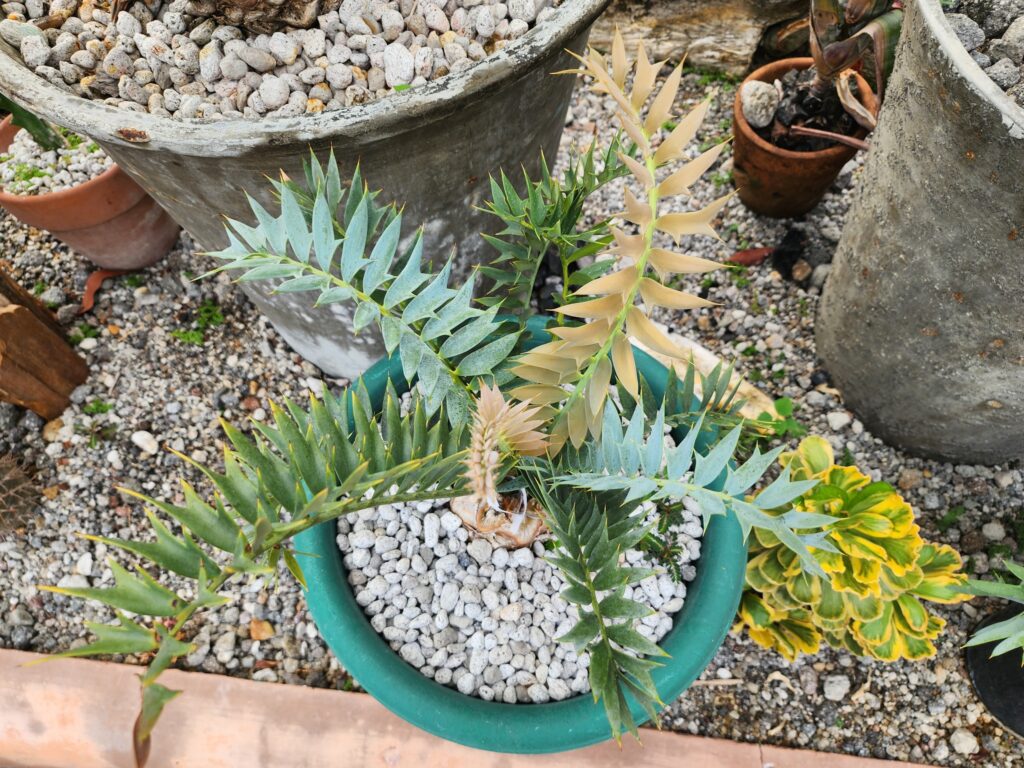
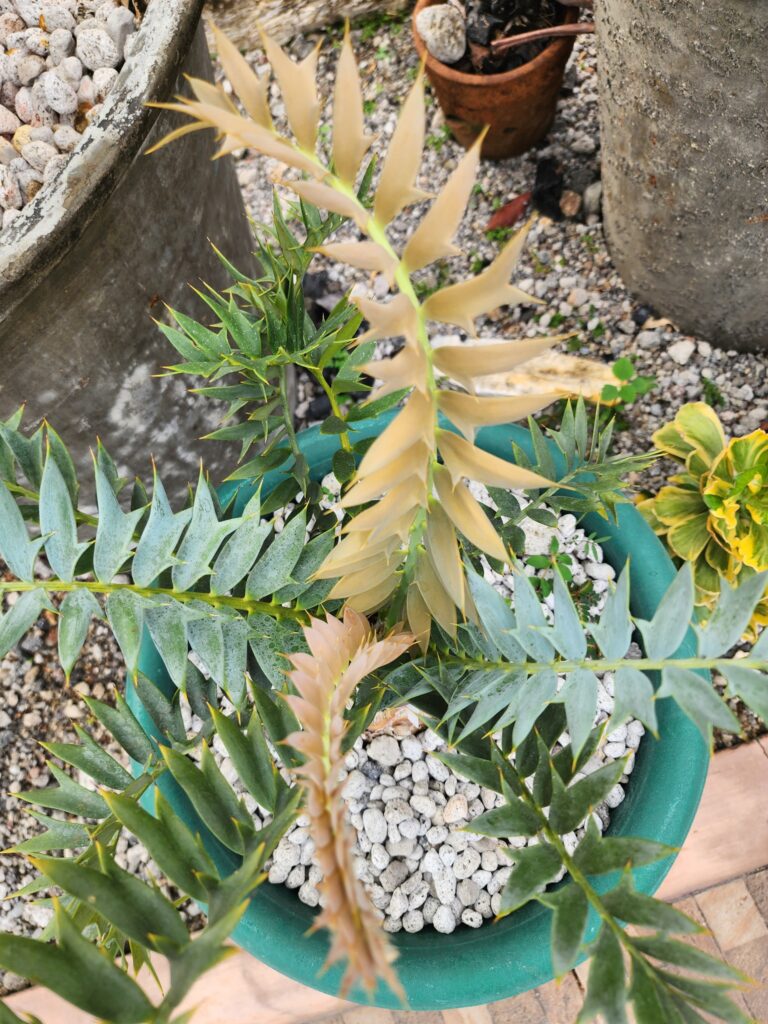
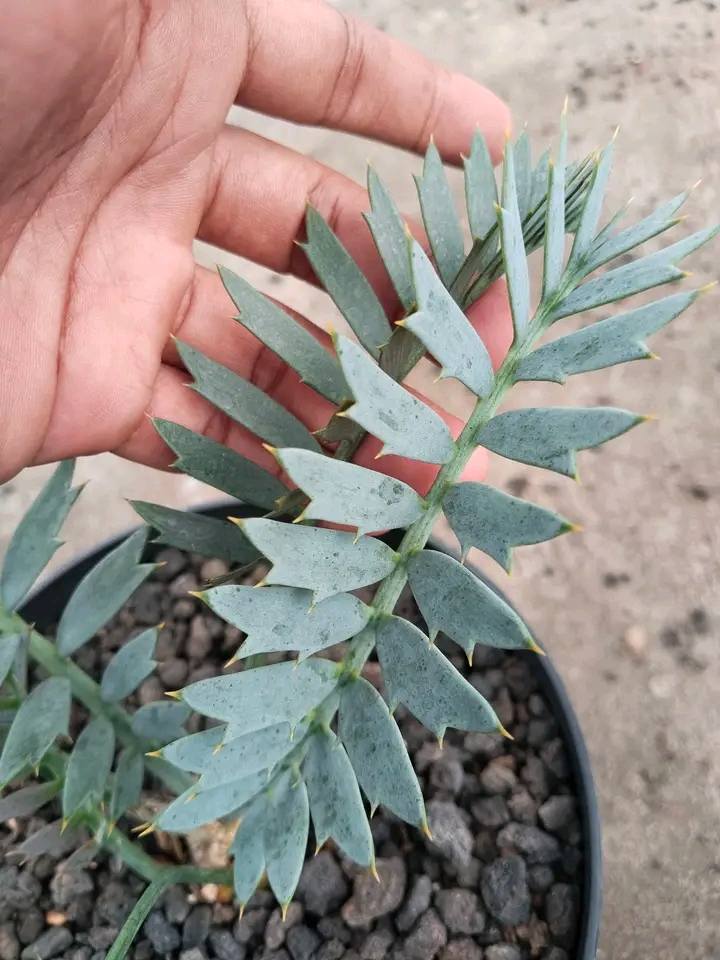
New leaves flush out pinkish when they first emerge, then mature to a striking silvery-blue color. The degree of blue varies with growing conditions — plants receiving at least 6–8 hours of direct sunlight daily develop the most intense coloration. In excessive shade, the blue tone fades and leaves turn deep green, greatly diminishing the plant’s visual impact.
This means that how blue your plant becomes is largely in your hands as a grower. Sun is the most powerful tool you have.
Physical Description
E. horridus is a small, low-growing cycad up to 800 mm long and 300 mm across. The trunks branch freely, forming dense clusters of overlapping and entangled blue-green foliage, with between 4 and 8 stems clustered together.
Mature plants have stems of between 0.5–1 m in length and 20–30 cm in diameter, with the majority of the stem growing below ground. Leaves are up to 1 m long and often sharply recurved towards the tip — stiff and spiny throughout.
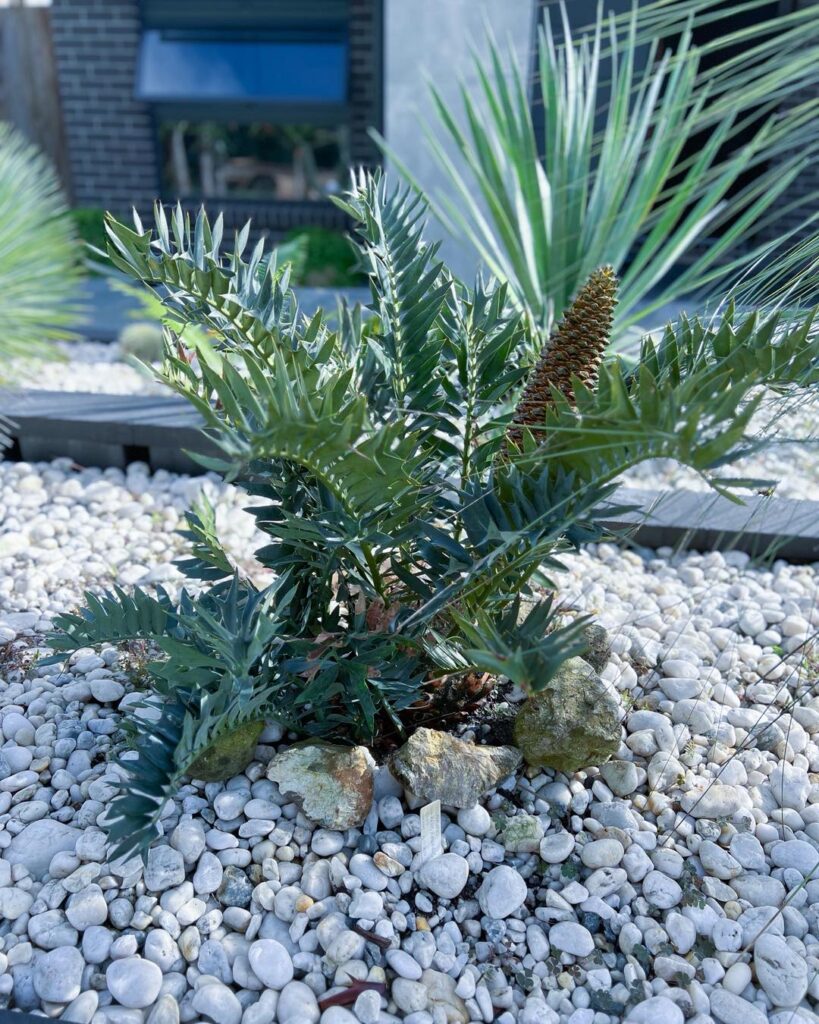
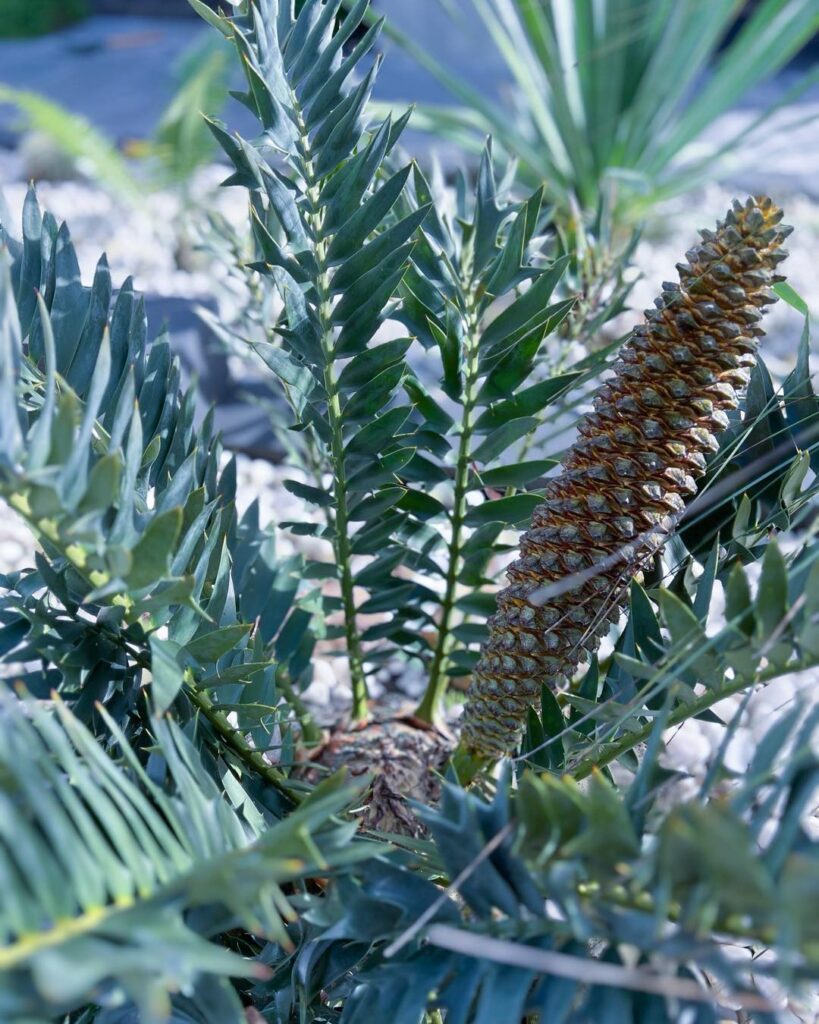
Cones are usually brownish- or blackish-red and single, with a dense layer of fine hair. The female cone is egg-shaped, up to 40 cm long and 20 cm in diameter; the male cone is largely cylindrical, narrowing towards the ends, up to 40 cm long and 12 cm in diameter. Seeds are roughly triangular with three flattened surfaces.
How to Identify Encephalartos horridus vs Similar Species
Three blue Encephalartos species are frequently confused: E. horridus, E. trispinosus, and E. arenarius (blue form). Here is how to tell them apart:
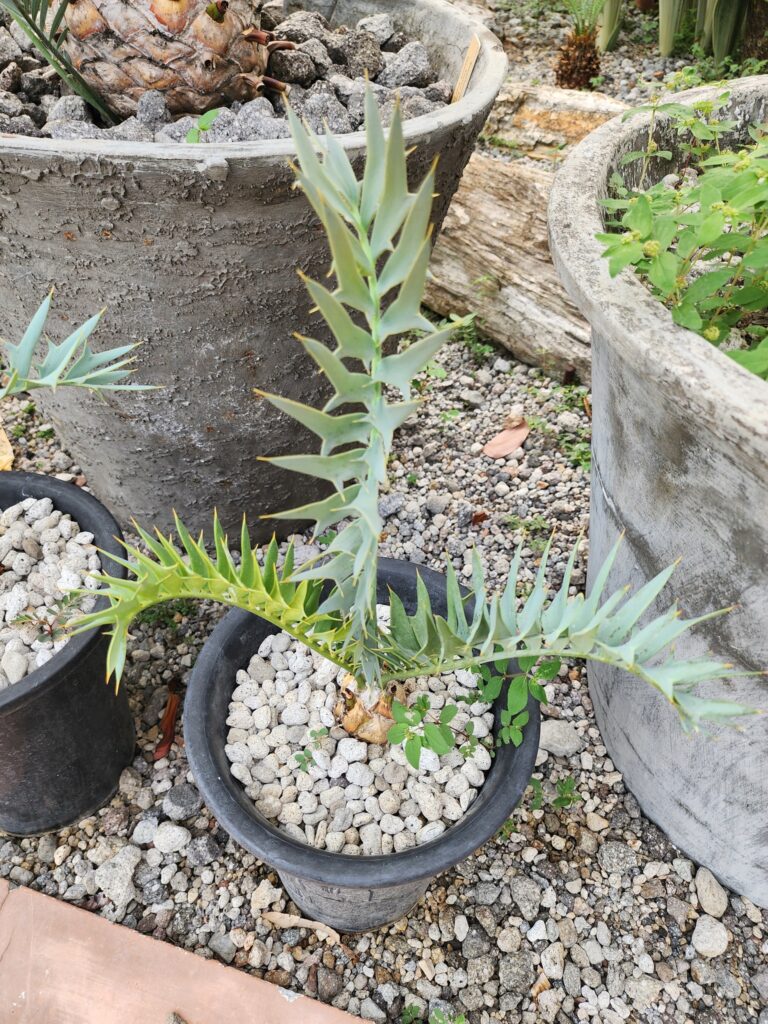
E. horridus leaves have a distinctive 90-degree twist that the other two do not tend to have. E. arenarius leaves are much wider with a lot more surface area, and the blue forms are quite blue, while E. horridus tends to be much whiter to pale blue-green — greener in humid climates. E. trispinosus leaves do not have the twist and usually have three spines, as opposed to four on E. horridus — though there are so many variations of each species that spine count alone is not always a reliable characteristic.
The 90-degree leaf twist is your most reliable identification marker — it is unique to E. horridus and present in virtually every specimen.
Conservation Status
Encephalartos horridus is listed as Endangered on the IUCN Red List — a change from its Vulnerable listing in 1997, reflecting continued pressure on wild populations.
E. horridus is now extinct in several parts of its former range where it has been totally eliminated by urban development. Substantial numbers have also been removed by collectors in the past 50 years — it is estimated as many as 50% of wild plants may have disappeared.
The good news: widespread availability in commercial nurseries has reduced some of the pressure on wild populations — historically over-collected, it is now available through legal channels without threatening remaining wild specimens.
Every plant at Variegated Plant Shop is legally sourced, CITES documented, and part of the solution — not the problem.
Complete Encephalartos horridus Care Guide
Light
Full, intense sunlight is the single most important factor in bringing out the plant’s signature blue coloration. Place it where it receives at least 6–8 hours of direct sunlight daily. South or west-facing aspects are ideal outdoors; a conservatory or south-facing window for container-grown specimens.
Watering
Think of it as a light-needy cactus rather than a tropical cycad — it needs excellent drainage and not too much water. Water moderately during the growing season (spring and summer), allowing the soil to dry between waterings. Reduce significantly in winter. Root rot from overwatering is the primary cause of failure in cultivation.
Soil
Well-draining, slightly acidic soil enriched with compost is ideal. Deep, fertile soil produces the best growth. A mix of coarse sand, perlite, and quality loam works well. Avoid clay-heavy soils entirely.
Temperature & Climate
Hardy and adaptable across temperate and subtropical regions — tolerates light to moderate frosts. Best in hardiness zones 9–11 outdoors year-round. In colder climates, grow in a large container and bring indoors for winter.
Fertilizing
Avoid high-nitrogen fertilizers, which intensify green coloration and reduce the desirable blue tone. A subtle slow-release palm or cycad fertilizer applied once in spring keeps the plant healthy without encouraging unnaturally fast or soft growth.
Pests & Disease
The main disease risk is Phytophthora cinnamomi — a fungal infection most often caused by poor drainage. A fast-draining soil mix and controlled moisture are the best defenses. Leaf parasites including moth larvae and plant lice can target new flushes when leaves are tender — manageable with contact insecticides applied at flush time.
Placement
Best not planted too closely to paths — the spines will catch clothing and skin. Gloves are essential when handling. Its compact size makes it exceptional in rock gardens, raised beds, large containers, and as a specimen planting among succulents and other drought-tolerant plants.
Propagation
Can be propagated from seeds or suckers. Suckers transplant readily but experience is needed — for a first plant, buying an established nursery specimen is strongly recommended as seedlings grow more easily and faster than plants grown from seed.
Encephalartos horridus in the Landscape
The combination of compact size, ferocious blue foliage, and ancient sculptural form makes E. horridus one of the most versatile collector plants available. It excels in:
- Rock and gravel gardens — the blue foliage against grey stone is a classic combination
- Mediterranean and drought-tolerant landscapes — pairs beautifully with agaves, aloes, and restios
- Container growing — one of the best Encephalartos species for large decorative pots
- Statement planting — a single mature specimen commands a garden bed entirely on its own
- Living fences and boundary planting — the ferocious spines make it a genuine security planting as well as a beautiful one
Frequently Asked Questions
Is Encephalartos horridus rare? Yes — it is listed as Endangered on the IUCN Red List, having been over-collected in the wild for decades. While now more widely available in cultivation, wild populations remain severely reduced.
How fast does it grow? It is a relatively slow-growing cycad — expect one new flush of leaves approximately once per year under good conditions. This slow growth is part of what gives cultivated specimens their value and longevity.
How long does it live? Like all cycads, E. horridus is extremely long-lived. Well-maintained specimens can survive for several hundred years. A plant you buy today could outlive your grandchildren.
Is there a dwarf form? Yes — two forms exist in nature: a dwarf form found around Port Elizabeth and a larger, more robust typical form. The only difference is in stem and leaf size, both shorter in the dwarf form.
Do I need CITES permits to buy one? Yes — E. horridus is listed under CITES Appendix I. International trade requires export and import permits, a phytosanitary certificate, and customs documentation. At Variegated Plant Shop, our team handles all of this for you.
Is it toxic? Yes — like all cycads, E. horridus is toxic to humans and animals if ingested. The seeds are particularly toxic. Keep out of reach of children and pets.
Own the Eastern Cape Blue Cycad
Encephalartos horridus is a plant you buy once and keep for life — a slow-growing, ancient, visually extraordinary piece of living natural history that becomes more valuable and more spectacular with every passing year.
👉 Buy Encephalartos horridus here 👉 Browse all rare Encephalartos cycads 👉 Read our guide to Encephalartos woodii — the rarest cycad in the world