
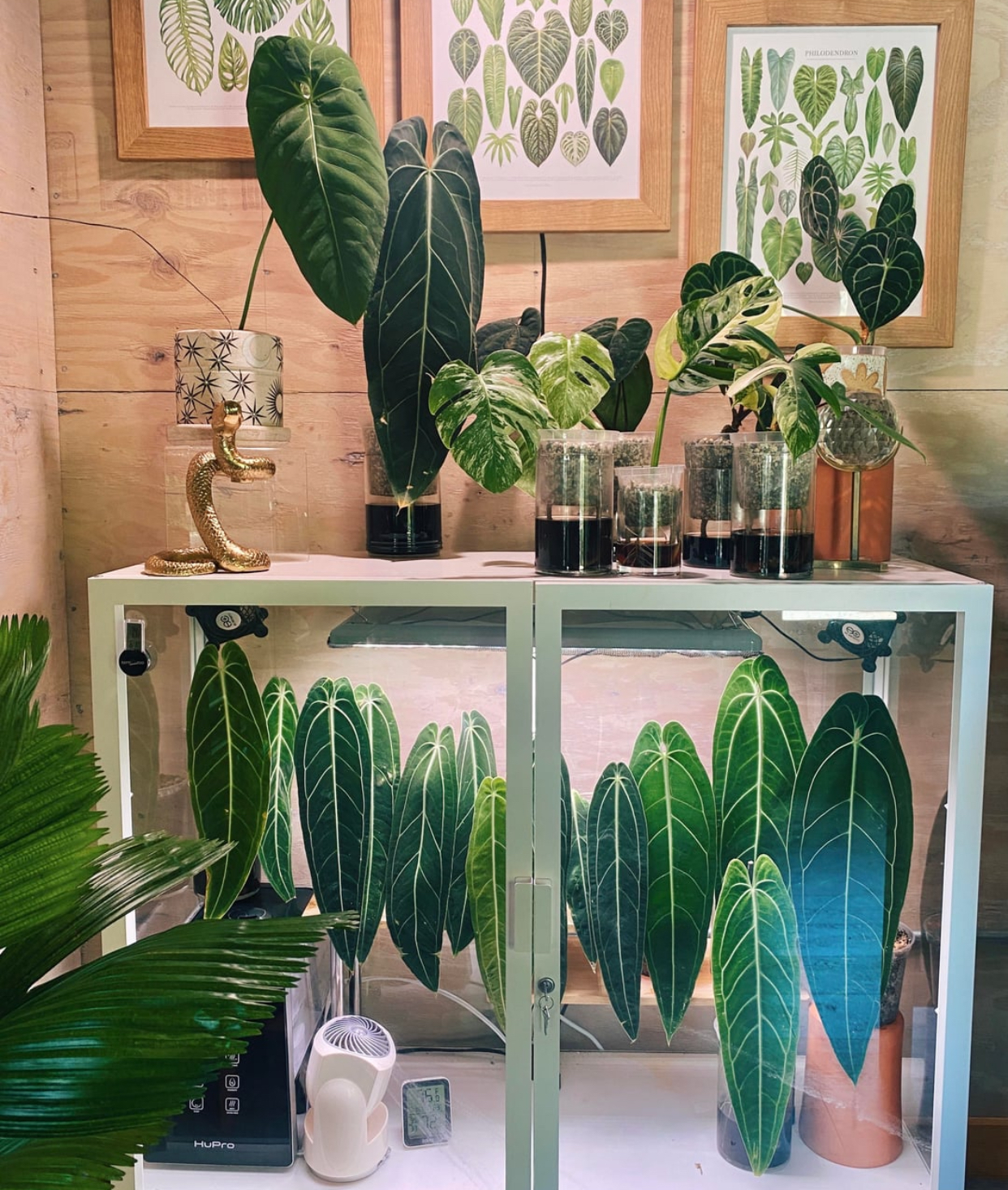
Velvet-leaf Anthuriums are the crown jewels of the aroid world. Their rich, tactile foliage and dramatic venation have captivated collectors since the 1800s — and in 2025, demand has never been higher. Whether you’re building your first serious collection or hunting for the next statement specimen, here are the 7 ultimate velvet-leaf Anthuriums every collector needs to know.
What Makes Velvet-Leaf Anthuriums So Special?
Unlike the common flamingo flower found in garden centres, velvet-leaf Anthuriums are cultivated entirely for their extraordinary foliage. Native to the cloud forests and tropical rainforests of Colombia, Peru, Panama, and Ecuador, these plants evolved in high-humidity understory environments — producing leaves so richly textured they look and feel like fine fabric.
The velvety surface is created by thousands of microscopic papillae on the leaf epidermis that catch and scatter light. Paired with contrasting silver or white venation, the effect is unlike anything else in the plant world. Add in their rarity, slow growth rate, and the fact that most are only available from specialist growers — and it becomes clear why serious collectors pursue them so obsessively.
These plants have been cultivated in European hothouses since the late 1800s. Today they represent some of the most coveted aroids on the planet — and some of the most rewarding plants you can grow.
🌿 1. Anthurium Crystallinum — The Classic Collector’s Anthurium
Native to: Colombia & Panama | Difficulty: Moderate | Collector Rating: ⭐⭐⭐⭐⭐
If there is one velvet-leaf Anthurium that belongs in every serious collection, it is Anthurium crystallinum. Its deep green, heart-shaped leaves are covered in a luxuriously velvety texture, with crystalline silver-white venation that shimmers brilliantly under light — exactly as the name suggests.
Leaves grow to 60cm or more on a mature plant. No two leaves are identical, and each new one unfurls slightly larger and more dramatic than the last — making it one of the most photographed aroids in the collector community. It also hybridises exceptionally well, producing offspring that often surpass either parent in visual impact.
Anthurium Crystallinum Care
- Light: Bright, indirect light — direct sun will fade the velvet texture
- Humidity: 70–85% for best growth — a humidifier is strongly recommended
- Soil: Chunky, fast-draining aroid mix: orchid bark, perlite, and quality potting soil
- Watering: Keep evenly moist but never waterlogged — allow the top inch to dry slightly between waterings
- Temperature: 18–29°C (65–85°F) — protect from cold drafts at all times
Our Anthurium Crystallinum × Magnificum hybrid combines the iconic crystalline venation of crystallinum with the bold, commanding size of Magnificum — an exceptional collector’s specimen available now.
🌿 2. Anthurium Warocqueanum — The Queen Anthurium
Native to: Colombia | Difficulty: Moderate–Advanced | Collector Rating: ⭐⭐⭐⭐⭐
Known universally as the Queen Anthurium, Anthurium warocqueanum is one of the most dramatic foliage plants on Earth. Its leaves are extraordinarily long and narrow — growing over a metre in length on mature specimens — with deep rich-green velvet surfaces and vivid contrasting venation running their full length.
The warocqueanum is not a beginner plant. But for collectors willing to meet its humidity demands, the reward is breathtaking. It grows slowly, which only adds to its rarity and collector value. It remains one of the most prestigious aroids any collector can own — and one of the most sought-after plants we carry.
Anthurium Warocqueanum Care
- Light: Moderate to bright indirect light — tolerates lower light better than most velvet-leaf species
- Humidity: 80%+ preferred — this is non-negotiable for healthy leaf development
- Soil: Very chunky, fast-draining mix — roots need excellent airflow as much as moisture
- Watering: Water when the top third of the soil is dry — overwatering is the most common mistake
- Support: Provide a moss pole or totem as the plant matures — it’s a natural climber
Browse our Anthurium Warocqueanum for sale — fully rooted, healthy specimens ready to ship worldwide from our nursery in Illinois.
🌿 3. Anthurium Magnificum — The Bold Statement Plant
Native to: Colombia | Difficulty: Moderate | Collector Rating: ⭐⭐⭐⭐½
Anthurium magnificum lives up to its name in every way. Its large, broadly heart-shaped leaves have a thick leathery velvet surface with pale greenish-white venation creating a bold geometric pattern across each leaf. Unlike the narrow warocqueanum, magnificum grows wide and commanding — a true architectural plant that fills a space with presence.
It is one of the more forgiving velvet-leaf species — tolerating slightly lower humidity than some relatives — which makes it a favourite among collectors who want maximum visual drama without the most demanding care requirements. New growth emerges with a striking burgundy-bronze flush before maturing to deep green.
Anthurium Magnificum Care
- Light: Bright, filtered light — an east or north-facing window is ideal
- Humidity: 60–80% — more forgiving than warocqueanum or regale
- Soil: Well-draining aroid mix with plenty of orchid bark and perlite
- Watering: Allow the top inch to dry between waterings — consistent but never soggy
- Feeding: Monthly balanced liquid fertiliser at half strength during the growing season
Our Crystallinum × Magnificum hybrid carries the best traits of both parent species — available now while stock lasts.
🌿 4. Anthurium Papillilaminum — The Rarest Velvet Anthurium
Native to: Panama | Difficulty: Moderate | Collector Rating: ⭐⭐⭐⭐⭐
Anthurium papillilaminum is considered one of the most desirable velvet-leaf Anthuriums in the entire collector world. Native to Panama, it produces deep green, elongated heart-shaped leaves with a luxuriously thick velvet surface and striking pale venation. The name refers to the papillae — the tiny surface projections that give the leaf its extraordinary texture — and on papillilaminum, that texture is especially pronounced.
As the plant matures, leaves grow progressively larger and more dramatic. It is almost never found in mainstream nurseries and is typically only accessible through specialist aroid growers — making a rooted, established specimen a genuinely exceptional find.
Anthurium Papillilaminum Care
- Light: Bright indirect light — sensitive to direct sun on the velvet surface
- Humidity: 75–85% for optimal leaf development
- Soil: Loose, chunky, fast-draining aroid mix — root aeration is critical
- Watering: Moist but never wet — thick white roots need air as much as water
- Potting: Keep slightly root-bound — oversized pots dramatically increase rot risk
We carry the Anthurium Papillilaminum Hybrid with Red Stem — one of the most striking velvet anthurium variants available, with dramatic red petioles contrasting against the deep velvet foliage. A collector’s piece in every sense.
🌿 5. Anthurium Regale — The King of Velvet Anthuriums
Native to: Peru | Difficulty: Advanced | Collector Rating: ⭐⭐⭐⭐⭐
If warocqueanum is the Queen, Anthurium regale is the King — and nothing about it is understated. This Peruvian species produces some of the largest leaves of any velvet-leaf Anthurium, with deeply velvety dark green surfaces and broad silver-white venation forming an almost architectural pattern across leaves that can exceed 1.5 metres in length on mature specimens.
The regale is for serious collectors with the conditions to match its ambitions. It is slow to grow, demanding of humidity, and unforgiving of mistakes — but for those who can provide what it needs, it becomes the undisputed centrepiece of any collection. Few plants inspire the same reverence among serious aroid collectors worldwide.
Anthurium Regale Care
- Light: Bright filtered light — dappled jungle canopy light is the ideal to replicate
- Humidity: 80–90% — a dedicated grow tent or plant cabinet makes this achievable
- Soil: Extremely well-draining mix: equal parts orchid bark, perlite, and sphagnum moss
- Watering: Allow soil to dry significantly between waterings — less forgiving of overwatering than other species
- Space: Mature leaves are enormous — give this plant the room it deserves to unfurl fully
Browse our full Anthurium collection to find the right specimens for your setup and experience level.
🌿 6. Anthurium Clarinervium — The Best Starter Velvet Anthurium
Native to: Mexico | Difficulty: Beginner–Moderate | Collector Rating: ⭐⭐⭐⭐
Anthurium clarinervium is often the entry point into the velvet-leaf Anthurium world — and for very good reason. Its thick, dark green, heart-shaped leaves are unmistakably velvety, with bold white venation that stands out dramatically against the deep foliage. It stays compact compared to most relatives, making it ideal for smaller spaces.
Unlike the warocqueanum or regale, the clarinervium is notably more tolerant of typical indoor humidity — meaning it can thrive without a dedicated grow setup. It is one of the few velvet anthuriums accessible to collectors at every level while still delivering genuine visual drama and collector credibility.
Anthurium Clarinervium Care
- Light: Bright indirect light — tolerates slightly lower light reasonably well
- Humidity: 50–70% — the most humidity-tolerant velvet anthurium species
- Soil: Well-draining mix with bark and perlite — keep it loose and airy
- Watering: Allow the top two-thirds of the soil to dry before watering thoroughly
- Potting: Slightly root-bound is preferred — performs better under-potted than over-potted
The clarinervium makes an excellent companion to our Crystallinum × Magnificum and Warocqueanum — together they represent three very different expressions of the velvet-leaf family.
🌿 7. Anthurium Crystallinum × Magnificum Hybrid — The Collector’s Ideal
Available at: Variegated Plant Shop | Difficulty: Moderate | Collector Rating: ⭐⭐⭐⭐⭐
The Anthurium Crystallinum × Magnificum hybrid is what happens when two of the most iconic velvet-leaf species are crossed — combining the crystalline, shimmering venation of crystallinum with the broad, commanding leaf shape of magnificum. The result is a plant that many collectors consider superior to either parent alone.
Hybrids like this often benefit from hybrid vigour — growing faster, adapting more readily to indoor conditions, and proving more resilient than either parent species. For collectors who want maximum visual impact with somewhat more tolerant growing requirements than the pure species, this hybrid is an outstanding choice. It is one of our most consistently popular specimens.
Crystallinum × Magnificum Hybrid Care
- Light: Bright, indirect light — consistency keeps the venation vivid
- Humidity: 65–80% — a small humidifier nearby makes a visible difference
- Soil: Chunky aroid mix: orchid bark, perlite, and quality potting mix in equal parts
- Watering: Water when the top inch is dry — consistent moisture without waterlogging
- Feeding: Balanced liquid fertiliser at half strength, monthly during the growing season
Buy Anthurium Crystallinum × Magnificum here → Rooted, personally inspected, and shipped worldwide from New Baden, Illinois.
Velvet Anthurium Care — The Four Rules That Apply to Every Species
Despite their differences in size, shape, and rarity, all seven velvet-leaf Anthuriums on this list share the same core care requirements. Get these four things right and you will succeed with any of them.
1. Humidity Is Non-Negotiable
All velvet anthuriums come from tropical environments with near-constant humidity. Aim for a minimum of 60% relative humidity indoors — and 70–85% for faster, larger growth. A small ultrasonic humidifier placed near your collection is the single most impactful investment you can make. Avoid misting directly onto velvet leaves — water sitting on the surface can cause spotting and fungal issues.
2. Soil Must Drain Fast
Root rot from poorly draining soil is the leading cause of velvet anthurium failure indoors. Never use standard potting mix alone. Always blend in orchid bark, perlite, horticultural charcoal, or pumice to create a chunky mix that holds some moisture but drains freely. Their thick, white roots need both moisture and air to stay healthy.
3. Bright Indirect Light — Not Direct Sun
In their native rainforest habitat, velvet anthuriums grow under a canopy of taller trees, receiving filtered, dappled light. Recreate this indoors with a bright spot shielded from direct sun. An east or north-facing window is ideal. A south or west-facing window works if the plant is positioned further back or behind a sheer curtain. Direct sun fades and scorches the velvety leaf surface.
4. Keep Them Slightly Root-Bound
Resist the urge to pot velvet anthuriums into large containers. They actively prefer slightly cramped root conditions — a pot only 1–2cm wider than the current root ball is ideal. Oversized pots hold excess moisture that roots cannot process, dramatically raising the risk of root rot. When you do repot, go up only one size at a time and refresh the soil mix completely.
❓ FAQ — Velvet-Leaf Anthurium Questions Answered
Are velvet-leaf Anthuriums hard to care for?
They are more demanding than common houseplants but very manageable once you understand their needs. Humidity and well-draining soil are the two most critical factors. The clarinervium is the most beginner-friendly; the regale and warocqueanum are best for experienced collectors.
How much humidity do velvet Anthuriums need?
Most species do best at 65–85% relative humidity. Clarinervium will tolerate 50% in typical indoor conditions. Warocqueanum and regale prefer 80%+. A small ultrasonic humidifier is the most practical solution for home growers.
Why are velvet Anthuriums so expensive?
They are slow-growing, difficult to propagate at scale, and only available through specialist growers. Each plant takes months or years to reach a saleable size, and collector demand consistently exceeds supply — especially for rare species like papillilaminum and regale.
Can velvet Anthuriums grow in low light?
They tolerate lower light better than many houseplants, but will grow slowly and produce smaller leaves. For maximum leaf size, vivid venation, and faster growth, bright filtered light is strongly recommended.
Are velvet Anthuriums toxic to pets?
Yes. Like all Anthuriums, velvet-leaf species contain calcium oxalate crystals which are toxic to cats, dogs, and humans if ingested. Keep them out of reach of pets and children.
What is the easiest velvet-leaf Anthurium to grow?
Anthurium clarinervium is the most forgiving and beginner-friendly velvet-leaf species. The Crystallinum × Magnificum hybrid is also an excellent choice — hybrid vigour gives it better adaptability than either pure species parent.
How do I know when my velvet Anthurium needs repotting?
Roots visibly emerging from drainage holes, or the plant drying out much faster than usual, are the clearest signs. Move up only one pot size at a time and refresh the soil mix completely when repotting.
Ready to Add a Velvet-Leaf Anthurium to Your Collection?
At Variegated Plant Shop, every specimen is fully rooted, personally inspected, and shipped worldwide with specialist packaging from our nursery in New Baden, Illinois. We don’t sell cuttings or bare-root plants — only established, healthy specimens ready to grow from the moment they arrive.
Currently available from our Anthurium collection: