
Alocasia Dragon Scale Care Guide — Light, Water & Humidity
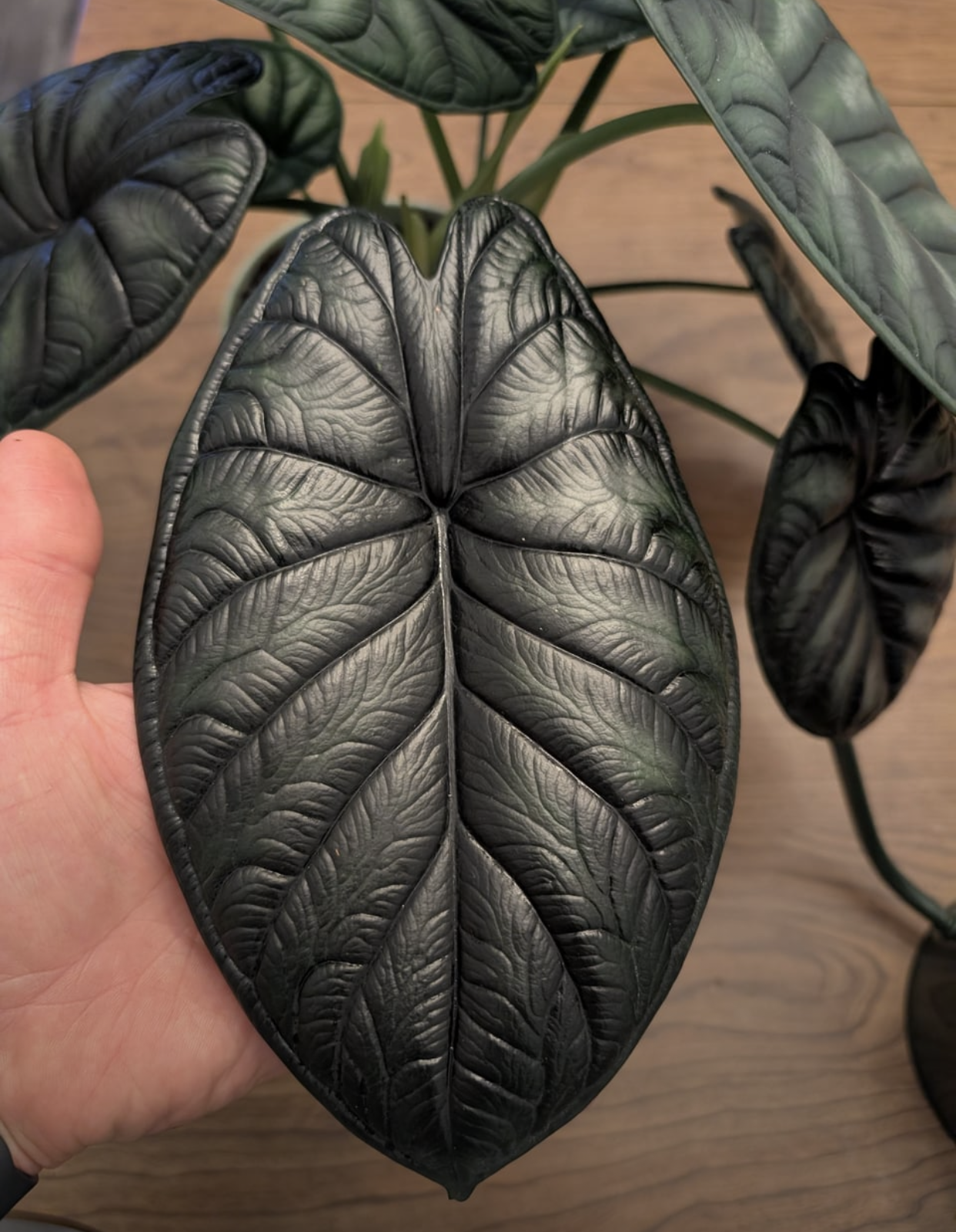
The Alocasia Dragon Scale is one of the most visually extraordinary plants in the aroid world. Its thick, leathery leaves — patterned with raised silver-green veining that genuinely resembles dragon scales — make every other foliage plant in the room feel ordinary by comparison. But as with most jewel Alocasias, getting the Alocasia Dragon Scale care right takes some specific knowledge.
This guide covers everything you need to know: light, watering, humidity, soil, feeding, seasonal dormancy, and the most common problems growers run into. Whether you just received your first Dragon Scale or you have been growing Alocasias for years, there is something here for you.
What is the Alocasia Dragon Scale?
The Alocasia Dragon Scale is a cultivar of Alocasia baginda, native to the tropical understory forests of Borneo in Southeast Asia. In the wild it grows on the shaded forest floor under a dense canopy, receiving bright but heavily filtered light, consistently high humidity, and warmth year-round — conditions that translate directly into its indoor care requirements.
It belongs to the jewel Alocasia category alongside the Alocasia Cuprea and Black Velvet — compact, slow-growing plants prized for their extraordinary foliage texture rather than their size. The Dragon Scale grows from a rhizome and produces one or two new leaves at a time, with each leaf taking weeks to unfurl fully. This slowness is not a problem — it is the nature of the plant, and part of what makes each new leaf an event.
It is considered a moderately challenging plant to keep. The two most common reasons Dragon Scales fail indoors are overwatering and insufficient humidity — both entirely avoidable with the right setup. Our broader guide to rare variegated plants covers how the Dragon Scale compares to other collector aroids.
Like all Alocasias, the Dragon Scale contains calcium oxalate crystals and is toxic if ingested. Keep it out of reach of children, cats, and dogs. Wear gloves when repotting as the sap can irritate skin.
Light requirements
Getting light right is the single most important factor in Alocasia Dragon Scale care. As a forest understory plant, it evolved under filtered canopy light — never direct sun, but never deep shade either.
The more pronounced the silver scale patterning on your Dragon Scale’s leaves, the more likely it is getting the right light. Dull, washed-out patterning is almost always a light issue — move the plant closer to a window before adjusting anything else.
Watering — the most common mistake
Overwatering is the number one cause of Alocasia Dragon Scale decline. The plant is sensitive to waterlogged roots and will develop root rot quickly if kept in soggy soil — but it is equally intolerant of completely dry soil, which causes the leaves to droop and edge-brown.
The goal is consistently moist but never saturated. Think of it like a wrung-out sponge — damp throughout, but not wet.
A drooping Dragon Scale is either underwatered or overwatered — the symptoms look identical. Check the soil first: if it is dry, water immediately. If it is wet, hold off and improve drainage. A moisture meter takes the guesswork out entirely.
Humidity and temperature
Humidity is where most Dragon Scale owners struggle, particularly in temperate climates or centrally heated homes. This is a plant from the rainforests of Borneo — it evolved in permanently humid air and it shows in its care requirements.
Soil and potting mix
Standard potting compost is too dense and moisture-retentive for an Alocasia Dragon Scale. It needs a chunky, well-aerated mix that drains freely while holding just enough moisture at the root zone.
A good Dragon Scale aroid mix contains: perlite (30%) for drainage and aeration, orchid bark (30%) for structure and air pockets, and a base of peat-free potting compost or coco coir (40%) for moisture retention and nutrients. The pot must have drainage holes — no exceptions. Terra cotta pots are excellent for Dragon Scales as they allow the soil to breathe and dry more evenly.
Repot in spring when the plant has outgrown its container or when you notice roots circling the bottom. Move up only one pot size at a time — too large a pot increases the risk of waterlogged soil around the roots. For a deeper explanation of why aroid soil mix matters, our Philodendron White Wizard guide covers the same principles in detail.
Feeding and fertilising
The Alocasia Dragon Scale is a moderate feeder. It does not need heavy fertilising, but consistent feeding during the growing season makes a noticeable difference in leaf size and the depth of its scale patterning.
- Use a balanced liquid fertiliser (NPK 20-20-20 or similar) diluted to half the recommended strength
- Feed every 2–4 weeks during spring and summer
- Stop feeding entirely from October through February — the plant is in or approaching dormancy and cannot use the nutrients effectively
- Flush the soil with plain water every 2–3 months to prevent fertiliser salt build-up, which causes brown leaf edges
Dormancy — what to expect in winter
One of the most alarming things about owning an Alocasia Dragon Scale for the first time is winter dormancy. The plant slows dramatically, may drop leaves, and can appear to be dying. It is not dying. It is resting.
During dormancy, maintain warmth and humidity but allow the soil to dry more between waterings. Do not fertilise. Do not repot. Do not move the plant to a darker spot. When light and warmth return in spring, new growth will emerge from the rhizome. Patience here pays off significantly.
Common problems and how to fix them
| Symptom | Most likely cause | Fix |
|---|---|---|
| Yellow leaves | Overwatering or natural leaf turnover | Check soil moisture. If waterlogged, allow to dry out and improve drainage. One yellowing leaf as a new one emerges is normal. |
| Brown leaf edges | Low humidity or fluoride in tap water | Raise humidity above 60%. Switch to filtered or rainwater. Flush soil to remove salt build-up. |
| Drooping leaves | Underwatering or overwatering | Check soil: dry = water thoroughly. Wet = hold off and improve drainage. |
| Faded leaf patterning | Insufficient light | Move closer to a bright window or add a grow light. The scale pattern depends on adequate light. |
| Dark spots on leaves | Fungal infection or bacterial leaf spot | Improve air circulation. Remove affected leaves. Treat with diluted neem oil or a fungicide. Avoid wetting leaves. |
| No new growth | Dormancy or root bound | If winter: normal. If spring/summer: check roots are not pot-bound and that light and humidity are adequate. |
| Mushy stems or roots | Root rot from overwatering | Unpot, trim all dark mushy roots with sterilised scissors, dust with cinnamon or sulphur, repot in fresh dry mix. Do not water for one week. |
Pests to watch for
The Dragon Scale’s high humidity requirements make it more susceptible to certain pests than drier-growing plants. Check the undersides of leaves regularly — that is where most infestations begin.
- Spider mites — fine webbing on undersides of leaves, stippled leaf surface. Treat with diluted neem oil spray weekly for 4–6 weeks. Raise humidity — mites hate it.
- Fungus gnats — tiny flies hovering around the soil, larvae damage roots. Allow the top layer of soil to dry more between waterings. A layer of coarse sand or perlite on the soil surface deters egg-laying.
- Mealybugs — white cottony clusters at leaf nodes and petioles. Remove manually with rubbing alcohol on a cotton swab, then treat with neem oil.
- Scale insects — brown bumps on stems. Remove manually and treat with insecticidal soap.
Keeping your soil healthy: springtails for jewel Alocasias
Here is a piece of advice that experienced Alocasia collectors consistently recommend and beginners rarely hear about: inoculate your Dragon Scale’s pot with springtails.
Springtails are microscopic, harmless soil-dwelling organisms that consume decaying organic matter, fungal growth, and mould before it gets established in your substrate. In a high-humidity setup like the Dragon Scale requires, mould and fungus gnat larvae can become a persistent problem — springtails are the biological answer that requires no chemicals, no traps, and no intervention once established.
Springtails Culture Shop supplies live springtail cultures specifically for tropical plant collections and terrarium setups. Add a culture directly to your Dragon Scale’s aroid mix when potting or repotting — they establish quickly and maintain themselves naturally as long as the substrate stays moist. For any rare aroid kept at high humidity, springtails are one of the most effective and low-effort long-term maintenance tools available.
Springtails are especially valuable in terrariums and humidity chambers where Dragon Scales thrive. In an enclosed environment, fungal and mould pressure is higher — a healthy springtail colony keeps the substrate clean without any chemical intervention.
Add an Alocasia Dragon Scale to your collection
Browse our current Alocasia collection — rooted jewel Alocasias inspected and packed with care, shipped worldwide from New Baden, Illinois.
Shop Alocasia Request PhotosWhere to buy a healthy Alocasia Dragon Scale
The Alocasia Dragon Scale is one of the more widely available jewel Alocasias, but quality varies significantly between sellers. When buying online, always confirm:
- The plant is fully rooted — not a division or rhizome section without established roots
- You can see real photos of the actual plant before purchasing
- The seller has experience with specialist packaging for tropical plants
- Worldwide tracked shipping is included
At Variegated Plant Shop, our Alocasia Dragon Scale plants are sourced from verified growers in Southeast Asia and the US, rooted, hardened, and personally inspected before shipping. We ship worldwide from Illinois with specialist heat/cold pack packaging where needed. You can request real-time photos of your exact plant before you commit to a purchase — just email sales@variegatedplantshop.com.
If you are building a jewel Alocasia collection, also explore the rest of our Alocasia range including the Alocasia Cuprea and Black Velvet — each one a striking companion to the Dragon Scale in a high-humidity setup.
Related reading from our blog
Final thoughts
The Alocasia Dragon Scale is one of the most rewarding aroids you can grow indoors — but it rewards growers who pay attention to the fundamentals. Get the humidity right. Water consistently but never excessively. Give it bright, filtered light. Let it rest in winter. And if you are serious about keeping your substrate healthy long-term, add a springtail culture when you pot it up.
Do those things and this plant will produce some of the most extraordinary foliage in your entire collection — each new leaf a little larger, a little more dramatic, and more deeply patterned than the last.
Rooted, verified, and shipped worldwide with care from New Baden, Illinois. Request real-time photos of your exact plant before purchasing.
variegatedplantshop.com/alocasia ·
sales@variegatedplantshop.com