
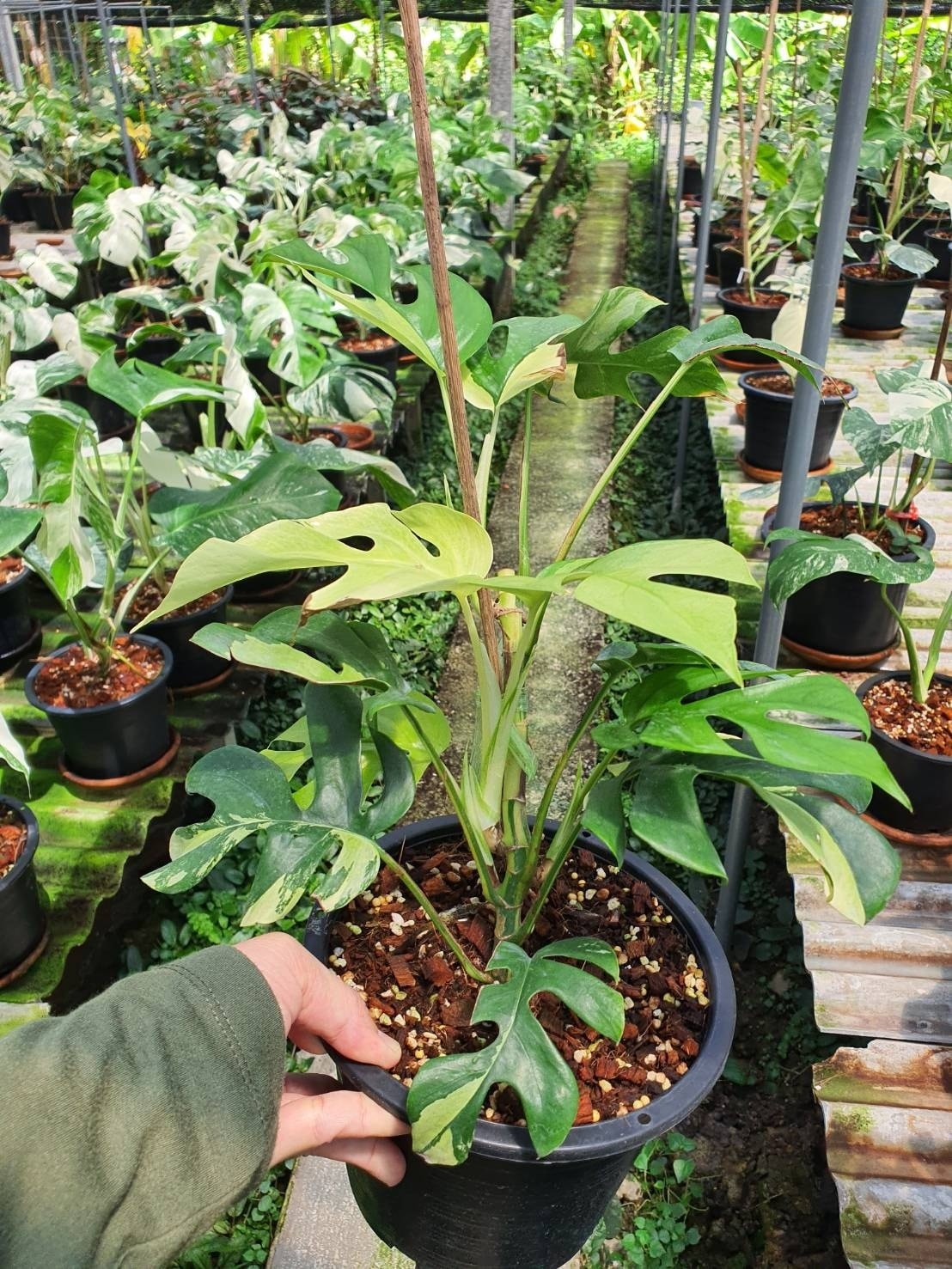
Rare Variegated Plants for Sale Online — How to Avoid Getting Scammed
The market for rare variegated plants for sale online has never been bigger — and neither has the number of people being burned by it. If you have ever paid good money for a plant that arrived dead, looked nothing like the photos, turned out to be a common variety with a false label, or simply never arrived at all, you are not alone. This guide is here to make sure it never happens to you again.
We are a specialist rare plant shop. We sell these plants every day, ship them worldwide, and we see the same complaints from new customers repeatedly: they were scammed somewhere else, often badly, before they found us. This guide is everything we would tell a friend before they spent serious money on a rare variegated plant online.
Why the rare plant market attracts scammers
The houseplant boom of the early 2020s created a market where certain rare plants — a Monstera Thai Constellation, a Philodendron White Wizard, an Alocasia Dragon Scale — can command hundreds or even thousands of dollars. That kind of price point, combined with buyers who may not have seen the real thing in person, is a perfect environment for fraud.
The problem has only grown in 2026. AI image generation tools can now produce photorealistic pictures of plants that do not exist. Social media marketplaces make it trivially easy to set up a seller account, take money, and vanish. And the passion that drives collectors — the excitement of finding the plant you have been hunting for months — is exactly what scammers exploit by engineering urgency and scarcity.
The good news is that every scam tactic has tells. Once you know what to look for, they become remarkably easy to spot.
The new threat: AI-generated plant listings
The fastest-growing category of plant scam in 2025 and 2026 is AI-generated imagery. Tools like Midjourney and Stable Diffusion can produce polished, photorealistic images of plants that simply do not exist in nature — iridescent rainbow succulents, perfectly symmetrical neon-blue Monsteras, impossible colour combinations on familiar species.
Five years ago, spotting these fakes was easy because the editing was obvious. Today, AI images are good enough to fool experienced collectors on a quick scroll. The listings use real species names, real-sounding care descriptions, and prices that feel just believable enough.
Look for: unnaturally perfect symmetry in leaf patterns, soft blurry backgrounds with no environmental context (no bench, no soil, no hands), colours that look like a screen rather than a plant, and identical variegation patterns copied across multiple leaves. Real variegated plants are always slightly asymmetrical — that is what makes them beautiful.
A reverse image search (covered below) is your fastest tool for exposing AI listings. If the image returns no other results online, that is suspicious — genuine plants from real sellers appear in multiple places. If it returns dozens of identical results from unrelated sellers, someone has stolen a real seller’s photos.
9 scam tactics to recognise immediately
These are the most common tactics targeting buyers searching for rare variegated plants for sale in 2026. Each one has a tell. Each one is avoidable.
A rooted Monstera Thai Constellation for $20. A White Wizard for $35. Prices this far below market rate mean one of three things: it is an unrooted cutting misrepresented as a plant, it is a different and cheaper species with a misleading label, or it will never arrive. Real rare plants have real costs — propagation, rooting, hardening, specialist packaging, and years of grower expertise. There are no bargains here.
Selling “Monstera Albo seeds” or “Thai Constellation seeds” for a few dollars. Stable variegation in these species does not reliably come from seed — it comes from tissue culture or chimeral propagation. Anyone selling rare variegated plant seeds is almost certainly sending you something completely different or nothing at all. This is one of the oldest and most persistent plant scams online.
Scammers take real photos from legitimate plant sellers’ websites or Instagram accounts and use them to advertise plants they do not have. The listing looks authentic. The photos are real — they just belong to someone else. Reverse image searching any listing photo takes ten seconds and exposes this immediately.
You pay for a Philodendron White Wizard and receive a common Heartleaf Philodendron. You pay for an Alocasia Dragon Scale and receive a standard Alocasia. The seller then claims it is the correct plant and that you simply do not recognise it. This is why knowing what the plant actually looks like — stem colour, leaf texture, variegation pattern — before you buy is essential.
Some unscrupulous sellers use chemicals to temporarily bleach or alter leaf colouring to make a common plant appear variegated. The effect fades within weeks of arrival. The “variegated” Philodendron you received is a standard green plant that has been chemically treated to look rare. Always ask for multiple photos taken at different times and request a video of the plant.
“Only 2 left — selling in the next hour.” “Three people are looking at this right now.” Genuine rare plant sellers do not need pressure tactics. Scammers use them to stop you from doing the checks that would expose them. Any seller engineering urgency is a seller who does not want you to think clearly. Pause. Breathe. Do the checks.
The listing says “rooted plant.” What arrives is a fresh-cut stem with no roots, or at best a few strands of water roots that will not survive being potted into soil. This is technically fraud but extremely common. Always ask for a photo of the roots specifically — not the leaves — before purchasing. Any legitimate seller will provide this.
Brand-new marketplace account. No reviews. No social media presence. No verifiable business address. Takes your money via bank transfer or an unprotected payment method — and disappears. Always pay with buyer-protected methods (PayPal Goods and Services, credit card) and check a seller’s history before purchasing from a marketplace.
A seller claims to have an entirely new cultivar unavailable anywhere else. No scientific name. No provenance. No verifiable origin. Real new cultivars have paper trails — growers, labs, botanical society recognition, and documented parent plants. If a “new” rare plant exists only in one seller’s listing and nowhere else on the internet, it almost certainly does not exist at all.
Which platforms carry the most risk?
| Platform | Risk level | What to watch for |
|---|---|---|
| Facebook Marketplace / Groups | High | No seller verification. Easy to create fake accounts. No purchase protection on direct transfers. Check group reputation and seller history carefully. |
| Instagram DMs | High | Zero purchase protection. No recourse if the plant does not arrive. Only buy from sellers with extensive, verified post history and community reputation. |
| Etsy | Medium | Buyer protection exists but enforcement is inconsistent for live plants. Check reviews carefully — read text, not just star ratings. Avoid sellers with fewer than 50 reviews. |
| eBay | Medium | Buyer protection is stronger. Seller history is visible. Still has mislabelling issues. Use Money Back Guarantee listings only. |
| Specialist plant shops (own website) | Low | Accountable business with verifiable history, contact details, and reputation to protect. Still do your checks — but this is the safest category. |
| Amazon / AliExpress | Very high | Third-party sellers with almost no verification. Seed scams are rampant. Almost never a legitimate source for rare collector plants. |
5 questions to ask before you buy
Before transferring any money to any seller for a rare variegated plant, ask these five questions. A legitimate seller will answer all of them without hesitation. A scammer will dodge, deflect, or disappear.
- Can you send me real-time photos of the exact plant I will receive today? Not representative photos. Not stock images. The specific plant, taken right now, showing leaves and roots clearly.
- Is this plant fully rooted? Ask for a photo of the root system specifically. White or tan, firm, established roots. No mushy, dark, or threadbare strands.
- Where was this plant grown or propagated? Tissue culture lab, verified specialist grower, or their own mother plant with documented history. “I don’t know” is not an acceptable answer for a plant at this price point.
- What is your return or replacement policy if the plant arrives damaged or not as described? Any professional seller has a clear, written policy. Vagueness here is a red flag.
- How will you package the plant for shipping and what carrier will you use? Specialist packaging, moisture control, heat or cold packs where needed, tracked shipping. If the answer is “standard postal box,” reconsider.
Never pay for a rare plant via direct bank transfer, Zelle, Venmo Friends and Family, or Cash App to an unknown seller. These methods offer zero buyer protection and zero recourse if the seller disappears. Always use PayPal Goods and Services or a credit card — both offer purchase protection and chargeback rights.
What a legitimate rare plant seller looks like
After years of scam exposure, knowing what fraud looks like is only half the equation. You also need to be able to recognise the genuine article. Here is what a trustworthy seller of rare variegated plants for sale actually looks like in practice:
- They have a verifiable online presence — a real website, active social media with consistent post history, and a physical location or business address you can look up
- They can provide real-time, individualised photos of any plant before purchase — and they offer this proactively without being asked
- They know where their plants come from and can tell you clearly — tissue culture lab, verified grower, specific country and source
- They describe their packaging process in specific detail, including how they handle heat, cold, and transit stress
- They have a clear, written policy for damaged or incorrect arrivals — and they honour it
- Their pricing is consistent with the actual market — not suspiciously low, and with clear reasons for any premium pricing
- They respond to pre-purchase questions in a timely, knowledgeable, and specific way — not generic deflection
- They have genuine customer reviews that mention specific plants, specific details, and specific experiences — not generic “great seller!” five-star clusters
How to reverse image search a plant listing
This takes ten seconds and can save you hundreds of dollars. Here is how to do it:
- On desktop: right-click any photo in the listing and select “Search image with Google” (Chrome) or “Search image” (Firefox). Google will show every other place that image appears online.
- On mobile: take a screenshot of the listing photo, then open Google Images, tap the camera icon, and upload the screenshot.
- What you are looking for: if the same image appears on multiple unrelated seller accounts, it has been stolen. If it appears on a legitimate specialist plant shop’s website with a different seller now using it — that is fraud. If it returns no results at all, that is either a very recent listing or an AI-generated image — both warrant extra caution.
Cross-reference any seller’s plant photos against established plant communities like Reddit’s r/RareHouseplants or specialist Facebook groups. Experienced collectors can immediately tell you whether a photo matches a known legitimate seller or has been stolen. The rare plant community is tight-knit and protective of its members — use it.
What to do if you have already been scammed
If you have already paid for a rare plant that has not arrived, arrived dead, or arrived as something entirely different, here are your options in order of effectiveness:
- PayPal Goods and Services: open a dispute immediately through the Resolution Centre. Document everything with photos and screenshots. PayPal’s buyer protection covers significantly misrepresented items.
- Credit card chargeback: contact your card issuer directly and dispute the transaction as “item not as described.” Most card issuers will investigate and reverse the charge.
- Etsy or eBay dispute: use the platform’s built-in dispute process. Both have buyer protection policies for significantly misrepresented items.
- Report the listing: report the seller to the platform, to the Internet Crime Complaint Center (IC3) at ic3.gov if money was involved, and post a detailed warning in relevant plant community groups. This protects other buyers.
- Bank transfer / Venmo / Cash App: unfortunately your options are very limited here. Contact your bank immediately to try to recall the transfer, but recovery rates are low. This is why protecting your payment method upfront matters so much.
Where to buy rare variegated plants safely
The safest place to buy rare variegated plants for sale online is always from a specialist shop with a verifiable track record, transparent sourcing, and genuine customer reviews — ideally one where you can request photos of your exact plant before paying.
At Variegated Plant Shop, we built our business on exactly the principles outlined in this guide. Every plant we sell is fully rooted — never a cutting misrepresented as a plant. Every plant is sourced from verified tissue-culture labs and specialist growers in Thailand, Indonesia, and the United States. We provide real-time photos of your specific plant on request, describe our packaging in detail, and stand behind every shipment with a clear arrival guarantee.
We also published a dedicated guide on how to spot fake rare plants online — which covers additional verification techniques specifically for the species we carry. Our About Us page explains our sourcing philosophy in full, because we believe transparency is the baseline standard for any serious rare plant seller.
Ready to buy with confidence?
Browse our full collection of rooted, verified rare variegated plants — Monstera, Philodendron, Alocasia, Anthurium, and more. Real photos. Transparent sourcing. Worldwide shipping.
Browse the Shop Ask Us AnythingRelated guides from our blog
Final thoughts
The rare plant market is full of genuinely extraordinary plants — and genuine, passionate sellers who care deeply about the plants they grow and ship. Scammers exist in any high-value market. They are not the norm, but they are present, and they are increasingly sophisticated in 2026.
The defences are simple: slow down, ask the right questions, verify photos, protect your payment method, and buy from sellers with a track record you can verify. None of this requires expertise — just a few minutes of due diligence before you hand over your money.
The right plant from the right seller is worth every penny. Make sure you are getting both.
Before buying any rare variegated plant online, do this: search the seller’s name + “scam” or “review” in Google. If nothing comes up — good sign. If warnings come up — there is your answer. Five seconds. It works every time.