Top Variegated Plants for Sale
If you are on the hunt for variegated plants for sale, especially rare variegated plants and showpiece indoor plants, you’ve landed in exactly the right place.
At the Variegated Plant Shop, we curate an exceptional selection of collector-grade, healthy rooted, and rare plants, all of which are geared to become the centrepiece of your home or plant collection. (See home page) variegatedplantshop.com
In this in-depth article we will:
- introduce the concept of variegated plants and why they’re so highly sought after;
- walk through each of the major plant categories you’ll find in our shop;
- describe why each category is a must-have for your space;
- provide internal links to our blog posts and relevant product pages;
- answer FAQs about variegated plants; and
- offer tips to care for them so you get the best out of your purchases.
Let’s dive in.
Why Variegated Plants?
Before we jump into the specific categories, let’s talk about why variegated plants are so desirable, and what they add to a home or collection.
Variegated plants are plants whose foliage (or sometimes stems) display more than one colour — typically green plus cream, white, yellow, pink, or even red.
This variegation is due to genetic variation (such as a chimera), pigment distribution, or occasionally viral or environmental factors. The Spruce+1
Some of the benefits of variegated plants in a home include:
- Aesthetic impact: The contrasting colours create visual interest far beyond a plain green leaf.
- Collector value: Some variegated plants (especially rare variegated plants) are highly sought after, appreciate in value, and become conversation pieces.
- Design versatility: Whether you want a dramatic large-leaf variegated specimen or a small trailing variegated plant, you can fit them into many spaces.
- Unique plant identity: Because many variegated forms are relatively rare compared to their solid-green counterparts, you’re getting something special.
However, worth noting: variegated plants also often require more light and care than fully green plants, because the non-green parts of the leaves have less chlorophyll, meaning they produce less energy. The Spruce+1
Now, let’s get into the categories we carry at our shop.
1. Large Statement Specimens (Collector Grade)
At the top end of our selection are large, showpiece plants that you might call “collector grade.”
These are plants that dominate a room, attract attention, and offer a strong visual and monetary value. They are perfect for plant enthusiasts who want something outstanding.
Example Plants:
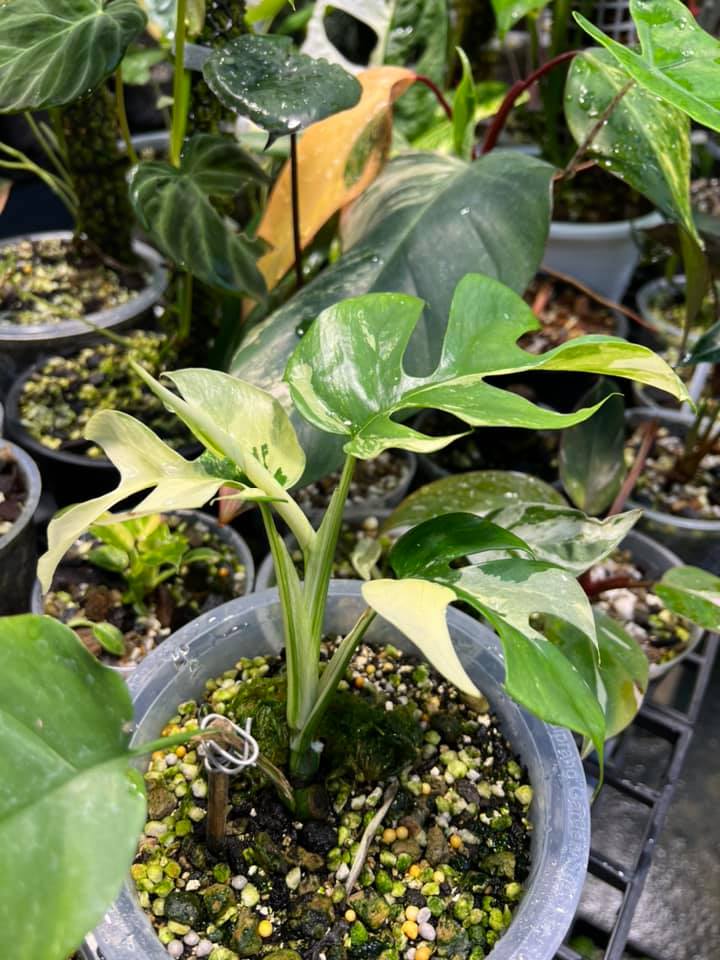
- Variegated monsteras (large leaf, dramatic fenestration)
- Rare variegated philodendrons with large leaves and bold variegation
- Other premium aroids with variegated foliage
These plants are often sought after as rare plants by serious collectors. For example, we have blog posts like “Top 10 Rare Variegated Plants 2025” which showcase such specimens.
Why they’re must-haves:
- They serve as focal points in a room — you don’t need many decorative items when you have one of these.
- They tend to have strong variegation patterns (white/cream/yellow) which contrast beautifully with darker green leaves.
- Because of their rarity and size, they often appreciate in value (especially if well maintained).
- They elevate the perceived value of your collection or home interior.
Things to consider / care tips:
- These plants typically require bright, indirect light, and more space (ceiling height, floor space).
- Because the variegation reduces energy production, growth may be slower, so patience is needed.
- Proper watering, humidity and well-draining substrate are key to keep them healthy.
If you’re new to variegated plants, you might browse our blog post “Rare Variegated Philodendrons – Types 2025” for inspiration.
2. Mid-Size Designer Variegated Plants
Next, we offer a wide range of mid-sized variegated plants — perfect for decorative placement on shelving, side tables, or as part of a group.
These are accessible, beautiful and impactful without needing the scale (or budget) of the large statement pieces.
Example Plants:
- Variegated pothos, philodendrons, hoyas, and similar indoor plants with attractive variegation.
- Trailing or climbing plants with variegated leaves that work in hanging baskets or on bookcases.
- Variegated plants that offer a mix of colour (white/cream, pink, yellow) and form (leaf shape, growth habit).
Why they’re must-haves:
- They add texture and colour variety into your plant arrangement.
- They are more approachable in size and often care level than the large collector specimens.
- They provide an opportunity to enjoy variegation in everyday spaces (living room, bedroom, home office).
- Because they are slightly more common than the rare giant pieces, they can be a good entry point into variegated plant collecting.
Care tips:
- Ensure they still receive enough light — variegated plants often revert (lose variegation) if light is too low. The Spruce
- Use drainage-friendly substrate, moderate watering (avoid soggy soil) and good humidity if possible.
- Train trailing plants (for example on a moss pole or trellis) if they’re climbers, to show off their form and variegation.
We have relevant content for mid-size variegated plants on our blog; you might check out our overview article of “Best Rare Plants for Collectors 2025” which touches on value and variety.
3. Beginner-Friendly Variegated Plants
If you’re looking to explore beginner-friendly variegated plants, you’re in luck!
At Variegated Plant Shop we carry a versatile selection of variegated indoor plants from classic aroids like monsteras and philodendrons to striking alocasias, anthuriums, and easy indoor cactuses.
Below we’ll dive into each of these categories, talk about why they’re excellent choices for someone starting out (or expanding) their variegated plant collection, and highlight how to care for them so you can succeed.
1. Variegated Monsteras (Entry-Friendly Aroids)
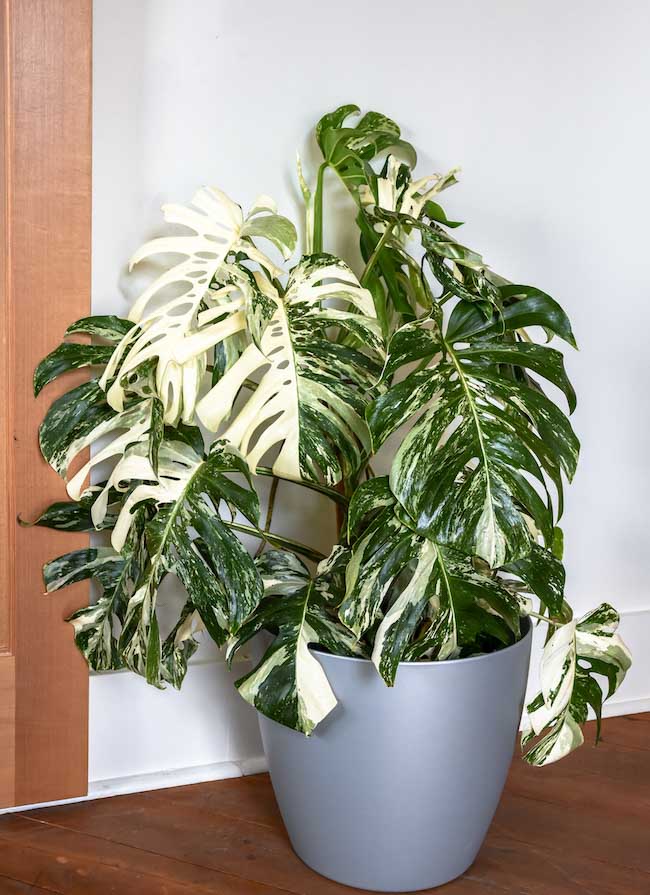

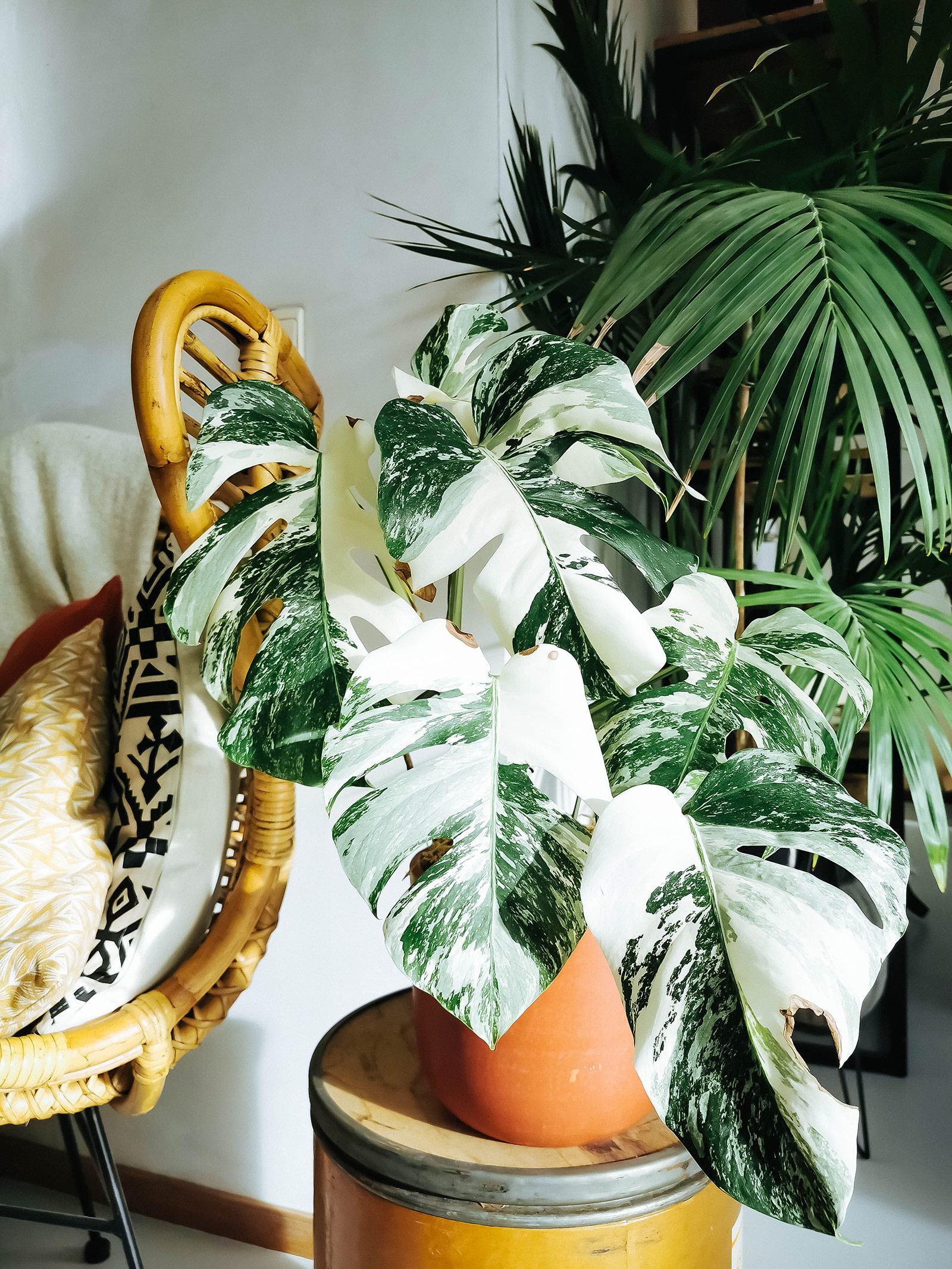
Monsteras are one of the most popular indoor plants and their variegated versions bring extra visual impact with the striking multi-toned or cream-splashed foliage.
While some monsteras are ultra-rare and collector-grade, there are more accessible variegated monsteras that beginners can manage.
Why they’re good for beginners
- They typically tolerate a variety of indoor conditions (provided you give them good light) and have vigorous growth habits.
- Variegated leaves create a dramatic focal point with minimal styling effort.
- At the shop we cover a range—from “showpiece” pieces to more manageable sizes—so you can pick something that fits your space and experience level.
- Our blog outlines how to care for monsteras: e.g., the “Monstera Obliqua vs Adansonii” post shows how easier monsteras (like Adansonii) contrast to ultra-rare ones which require high-end care.
What to look out for & basic care
- Light: Bright, indirect light is ideal. Too little light reduces variegation and slows growth.
- Soil: A well-draining aroid mix. Monsteras like to have airflow in the roots and don’t like to sit soggy.
- Watering: Allow the top portion of soil to dry before watering again. Variegated leaves often mean the plant produces less chlorophyll, so growth can be slower—less frequent watering is fine.
- Support: Many monsteras will benefit from a moss pole or stake if they climb.
- Variegation health: Check that the variegation is stable, and if you see a lot of all-green leaves emerging, it may mean the conditions aren’t optimal.
Best picks (at our shop)
While we don’t list individual SKUs here, you can browse our “Shop Monstera” category for variegated monsteras from beginner‐friendly to rare specimens.
Also refer to our blog “Top 10 Rare Variegated Plants 2025” to see what collector pieces look like (and thereby appreciate what a beginner version of a variegated monstera can look like).
2. Variegated Alocasias (Striking & Manageable)

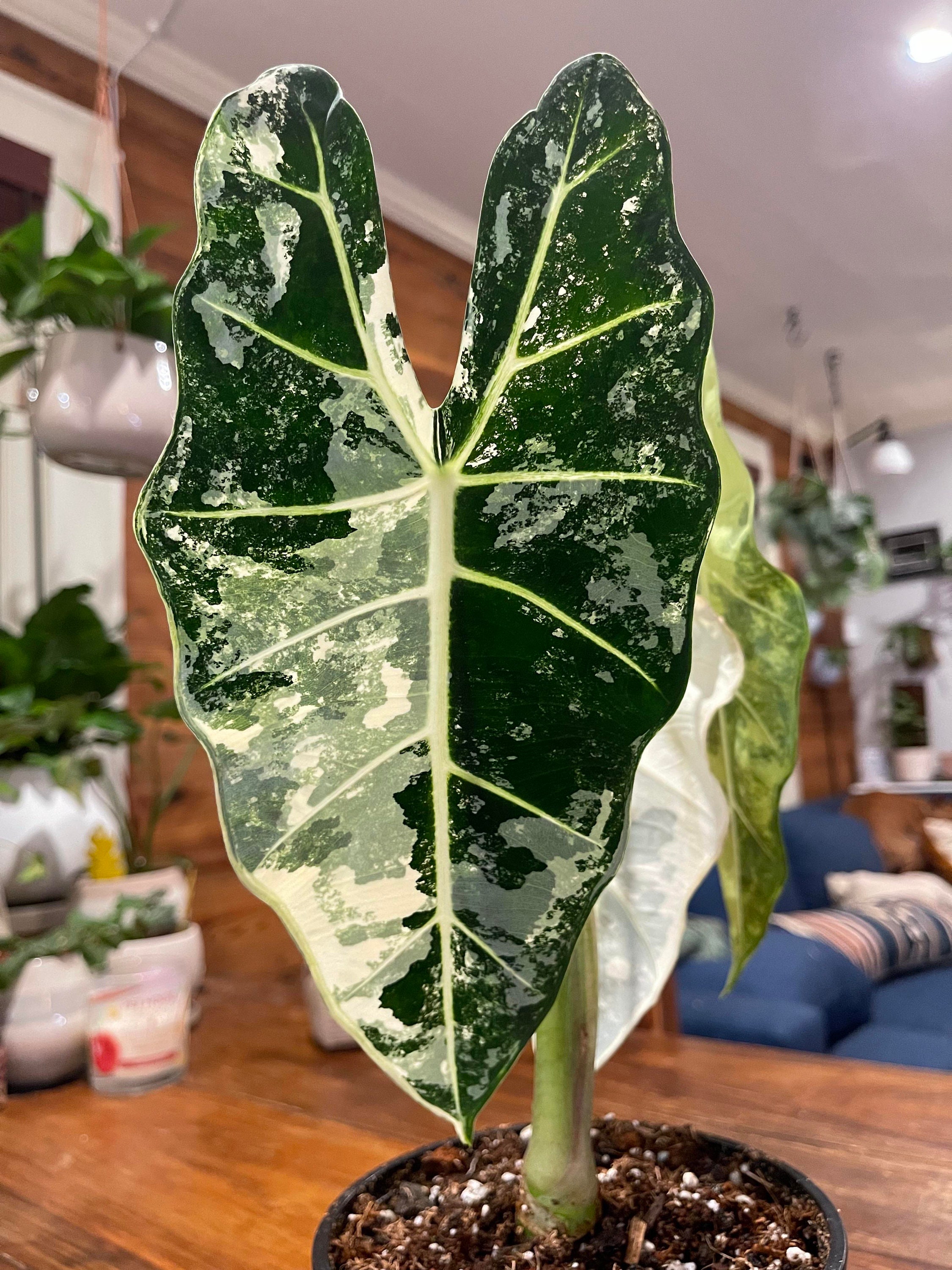
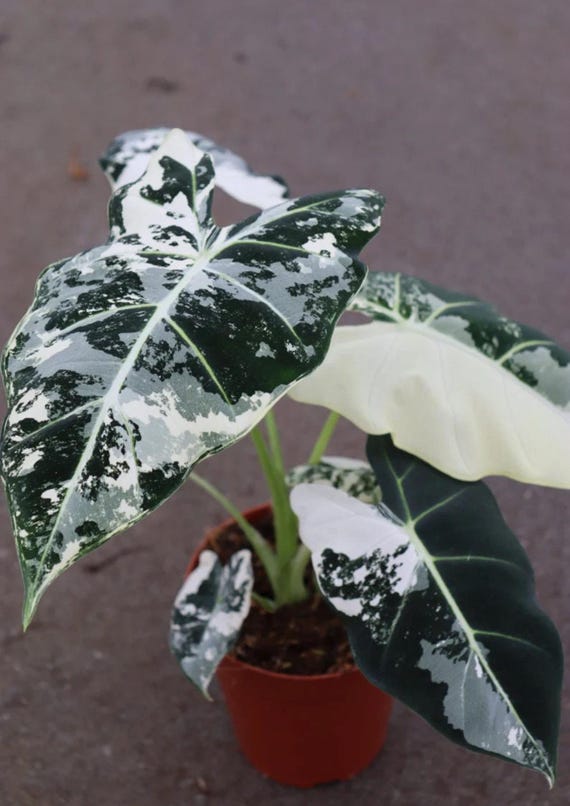
Alocasias are tropical plants known for their dramatic leaves often thick, textured, ribbed, striking shapes.
When variegated, they add an extra design element. While some alocasias can be more demanding, there are beginner-friendly variegated alocasias at our shop.
Why they’re great for beginners who want a bit more flair
- They bring a “tropical resort” look to an indoor space, thanks to their bold foliage.
- A variegated alocasia acts as a statement plant even when sized moderately.
- We stock a variety of alocasias, including more accessible ones. For example, our listing for “Alocasia Scalprum” details an alocasia that’s sized for indoor use (40-60 cm) and describes moderate care.
- Our “How to Care for Alocasia Plants” blog gives further guidance.
Care tips focused on variegated alocasias
- Light: Bright indirect light is important; they tolerate less light than some other houseplants, but too much direct sun can scorch.
- Humidity: These plants appreciate higher humidity (often 60 %+). You can group plants, use a pebble tray, or a humidifier.
- Soil & drainage: Use a chunky mix (with orchid bark, perlite) so that the roots aren’t water-logged.
- Watering: Keep the soil lightly moist but never soggy. Drying out completely can stress the plant and affect variegation.
- Placement: Because alocasias often have dramatic leaves, give them a spot where foliage can be viewed (rather than tucked in a corner).
Recommended beginner-friendly alocasias on our site
- We have compact alocasias (see “Alocasia Scalprum” description above) which are well-sized for indoor homes.
- Browse our “Shop → Alocasia” category to find variegated or patterned alocasias, and select individuals whose size and price fit your beginner status.
3. Variegated Philodendrons (Versatile & User-Friendly)
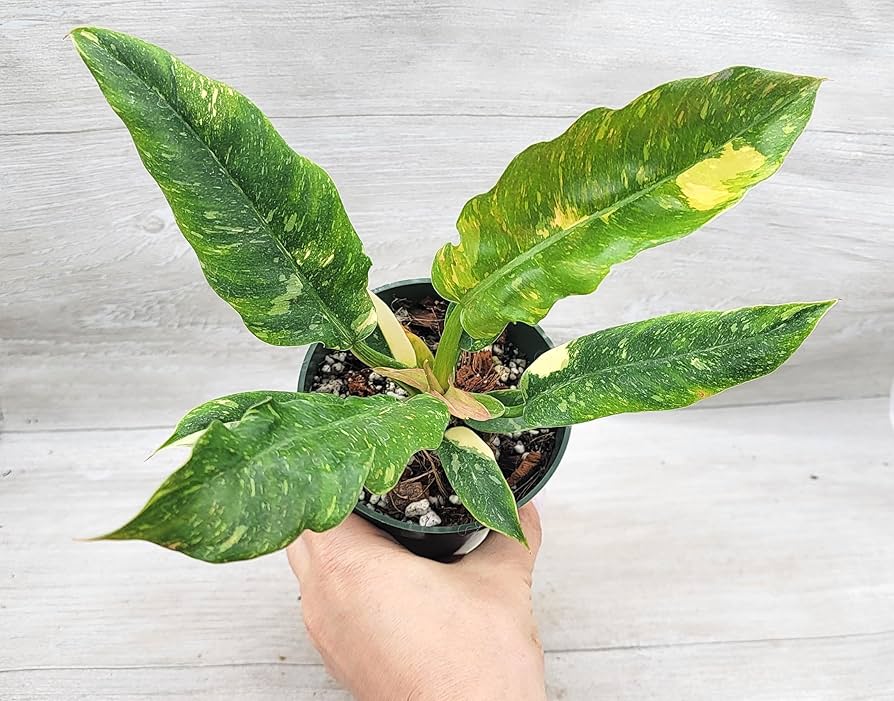

Philodendrons are among the most user-friendly indoor aroids.
Their variegated forms are increasingly popular. At our shop we have many philodendrons; many of which are variegated (even if not all ultra-rare).
Why they’re particularly good for beginners
- Tolerant of a range of indoor conditions (light, humidity) compared to some highly sensitive plants.
- Many have climbing or trailing habits, so they are very flexible in display options (shelves, hanging, trellis).
- Variegation adds an extra level of visual interest without necessarily dramatically increasing care difficulty (depending on the cultivar).
- We offer beginner-friendly varieties (and you can scale into rarer ones later). For example, although our blog talks about “Rare Variegated Philodendrons,” it provides context so you can identify which are more advanced.
Care tips specifically for variegated philodendrons
- Light: Bright, indirect light helps maintain variegation. Avoid very low light, which may favour green leaves.
- Watering & soil: Use a well-draining mix; allow the top part of the soil to dry before watering again. Overwatering is a common issue.
- Support/training: For climbing types, use a moss pole or stake to encourage upright growth and show off the leaves.
- Variegation monitoring: If you notice new leaves are mostly green, consider improving lighting or reviewing care conditions.
Here’s a guide on how to care for philodendron species.
Good beginner picks
- While we don’t yet link a specific beginner variegated philodendron SKU here, you can explore our “Shop → Philodendrum” category for accessible variegated options.
- Use our “Explore Rare Variegated Philodendrons Types” blog post to see what to look for and how to assess beginnerability.
4. Variegated Anthuriums (Stylish & Growing Friendly)
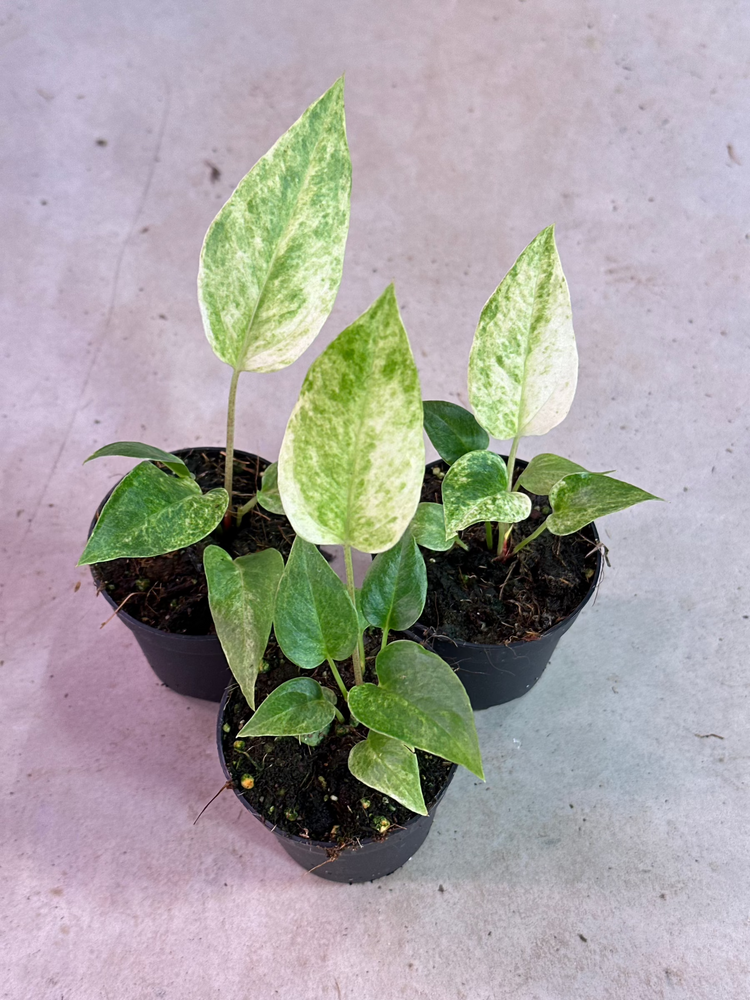


Anthuriums often get associated with collector-level plants (especially rare velvet-leaf or variegated hybrids), but there are anthurium species and forms that are surprisingly manageable and make for stylish additions in a home.
Our blog “How to Care for Anthurium Plants” covers detailed care.
Why they’re a great beginner-friendly pick
- Many anthuriums boast lush foliage and attractive form, so even modest specimens look premium.
- If you pick a species that doesn’t demand extreme conditions (not necessarily the ultra-rare trophy plants), you can enjoy the variegation and form without overwhelming maintenance.
- Good for indoor spaces with moderate humidity; you don’t always need exotic greenhouse conditions if you select wisely.
Care cues for variegated anthuriums
- Light: Bright, indirect light is ideal. Avoid direct midday sun, which can fade leaves or scorch variegation.
- Soil & drainage: Use an airy, loose mix (e.g., incorporating orchid bark, perlite) so that roots get oxygen.
- Watering: Allow the top inch or so of soil to dry before watering again; avoid water-logging.
- Humidity & temperature: While many anthuriums appreciate humidity, many beginner variegates can do well in typical home humidity (40–60 %), provided light is good.
- Maintenance: Remove any leaves that have reverted (too green) or fully green sectors if you want to maintain variegation contrast.
Shop pointers
- Our “3 Ultimate Velvet-Leaf Anthuriums | Care & Collector Guide” explains which forms are more advanced vs more accessible.
- If you see an anthurium with moderate size and variegation (rather than ultra-rare), that’s a good beginner entry point.
- Browse our “Shop → Anthurium” category to view offerings.
5. Variegated (or Easy) Indoor Cactuses
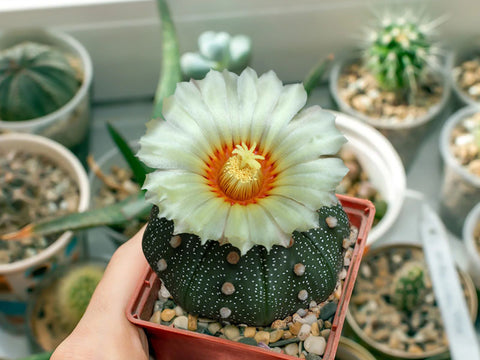

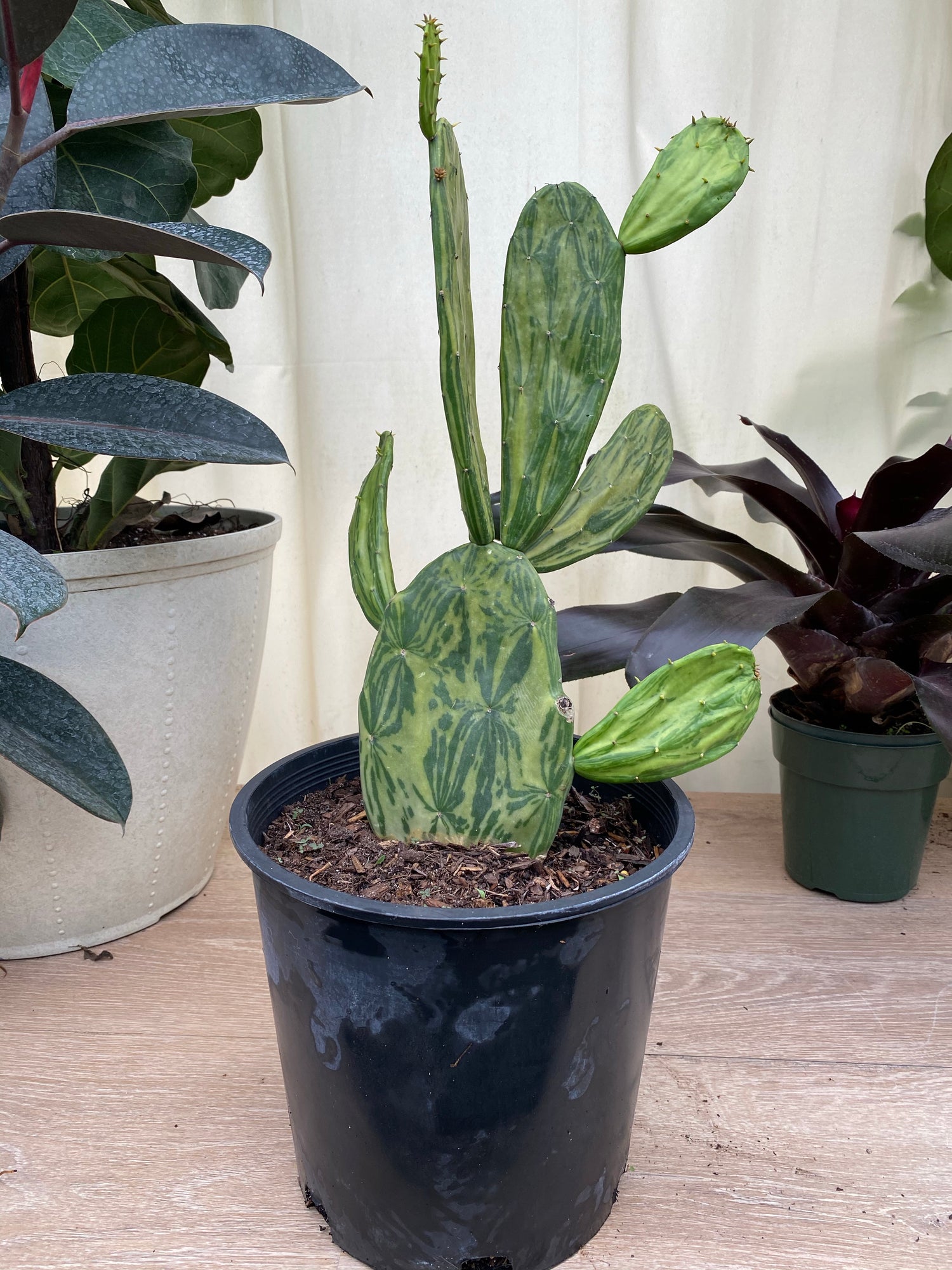
While cactuses might not immediately spring to mind when you think “variegated plants”, we do offer a range of indoor cactuses (and low-maintenance plants) at our shop under “Indoor Cactuses”.
Why cactuses are great for beginners (even when variegated or patterned)
- They generally require less frequent watering and are more tolerant of dry indoor air.
- Variegated or patterned cactus varieties offer interesting texture and design contrast—think spiky forms, twisting stems, unusual colour streaks.
- Because they’re lower-maintenance, they are great “set-and-forgive” plants for beginners who might still be learning rhythms of indoor plant care.
How to incorporate variegated/interesting indoor cactuses
- Light: Cactuses typically prefer bright light—some direct sun is okay if your window allows—but ensure they don’t burn.
- Soil: Use a cactus or succulent mix that drains extremely well; avoid moisture retention.
- Watering: Allow soil to dry out deeply between waterings. Overwatering is the biggest risk for cactuses.
- Placement: Because cactuses can tolerate drier ambient conditions, they’re good for spaces where humidity isn’t high (e.g., offices, living rooms with heating).
- Variegation or rarity: Some indoor cactuses may have variegation or unusual forms—be sure to check that the variegation is stable and that care needs are not overly demanding.
Beginner-friendly cactus picks on our site
- Our “Indoor Cactuses” category shows some good entry-points for easy‐care cactus plants.
- The blog “Best Cactus for Indoors 2025 | Low Maintenance Guide” is helpful to understand what beginner cactus care looks like.
Choosing the Right Plant & Fit for You
Before you purchase any variegated plant from our inventory, here are some criteria to help you match plant → space → experience level.
Ask yourself:
- How much light does my space receive? If you have a bright window (east or west) or a room with good indirect light, you can choose more dramatic variegated plants. If light is limited, pick a more forgiving variety (e.g., variegated philodendron rather than ultra-rare alocasia).
- What size will the plant grow to? Some beginner variegated plants can still grow large. Make sure you have space for future growth or select a smaller specimen for now.
- How much time and maintenance can I commit? If you’re busy, go for lower-maintenance plants like anthuriums that aren’t ultra-rare or indoor cactuses that require fewer interventions.
- Do you want climbing/trailing vs upright form? For shelves or hanging baskets, trailing plants (like variegated philodendrons or monsteras) can be great. For a floor plant, upright forms like alocasias or larger monsteras might suit.
- Are you comfortable with moderate risk of reversion? Variegated plants may revert (lose variegation) if conditions aren’t ideal. Choosing plants with stable variegation or better light helps.
- What is your budget? Some variegated plants (especially rare forms) come with premium pricing. If you’re just starting, a more affordable variegated plant is wise.
Good beginner “combo” suggestions:
- Start with a variegated philodendron in a hanging basket (easy to maintain, adjustable light).
- Add a small variegated alocasia to your collection for that tropical flair, but place it where humidity is moderate.
- Incorporate one indoor cactus with variegation or unique form to round out your collection with low maintenance.
- As you gain confidence and your indoor plant space/conditions improve, you can graduate to larger statement plants (such as a big variegated monstera) or rarer forms.
Why they’re must-haves:
- Accessible price point, care level and size.
- They allow you to experience the beauty of variegation without needing to commit to large scale or high-maintenance plants.
- They provide opportunities for propagation and growth as you gain confidence — a stepping stone into more advanced specimens.
- They still make an impact visually, even if they don’t dominate a room.
Care tips:
- Pay attention to light: even beginner variegated plants need more light than their fully green counterparts.
- Choose potting soil/substrate appropriate for indoor plants (well-draining).
- Water on a schedule but avoid overwatering: many variegated plants are more susceptible to root issues because of slower growth.
- Keep an eye on revert-signs (when variegation disappears) and prune and propagate to maintain the variegation lines.
If you’re looking for a beginner’s guide, you might follow our blog link “Top 10 Rare Variegated Plants 2025” for ideas and how to think about collecting.
4. Trailing & Hanging Variegated Plants
Trailing or hanging variegated plants are a special category; they combine the appeal of variegated foliage with an interesting growth habit (trailing, cascading, climbing).
These are highly versatile: perfect for hanging baskets, shelves, plant walls, or elevated spots.
Example Plants:
- Variegated pothos (hanging basket)
- Variegated hoya vines
- Variegated creeping/climbing aroids (when available)
Why they’re must-haves:
- They add dimension and layers to plant displays: you can place them higher and let foliage cascade, drawing the eye.
- Variegation on trailing plants often shows off the leaves from multiple angles, enhancing the visual impact.
- These plants can fill vertical space or corners in a way that upright specimens cannot.
- They are great for mixing with other plants (solid-green, flowering) to create contrast.
Care tips:
- Make sure hanging/trailing variegated plants receive sufficient light (often indirect but bright).
- Avoid letting them dangle in very low light corners, which may reduce variegation over time.
- Keep trailing stems “full” rather than bare: regular pruning and possible propagation encourages bushier growth.
- Make sure the pot/hanging basket has proper drainage and that you don’t overwater.
You’ll find many of our hanging varieties in the “Variegated Plants” collection on the shop page.
5. Specialty & Rare Variegated Plants (Collector Spectrum)
This is the most exciting category for serious collectors: specialty or rare variegated plants often limited-edition, high-value, unusual forms, or plants with intermediately high difficulty to propagate.
These are true gems for the plant lover.
What qualifies as a “rare variegated plant”?
- Variegation forms that are unstable or occur infrequently (therefore more desirable).
- Species or cultivars that are seldom available in the market.
- Variegated versions of popular plants (e.g. a major cultivar) that are very limited in number.
- Plants whose variegation patterns are particularly striking, unusual, or unconventional.
Our blog entry “Rare Variegated Philodendrons – Types 2025” gives a deep dive into these.
Also “Best Rare Plants for Collectors 2025” gives the broader context of rarity.
Why they’re must-haves:
- For the enthusiast, they represent the next level of plant collecting: uniqueness, prestige, and visual distinction.
- They often hold or increase value over time (for example in the collector market).
- They become conversation pieces and centrepieces of any plant display.
- They allow you to curate a truly uncommon indoor garden.
Care tips & considerations:
- Because many are rarer, they may be more sensitive to light, humidity, watering, or propagation conditions.
- You may need to invest in better substrate, humidity management, or boutique plant supplies.
- Monitor for reversion (where variegated leaves revert to solid green) — once reverted, it’s hard to reverse.
- Treat these as premium plants: plan for their space, lighting, and future growth.
If you are browsing our shop, the “Shop – Rare & Exotic Plants” section under the home page summarises how we position these pieces.
How to Choose the Right Variegated Plant for Your Home
When shopping for variegated plants for sale, here are the key factors to consider to ensure you pick the right plant for your space and lifestyle:
- Light Conditions
Variegated plants often require more bright, indirect light than fully green plants. If your home has low light, you may consider beginner-friendly variegated plants or supplemental light. - Space & Scale
Consider the mature size of the plant: a large statement variegated plant needs space (floor area, height) and clearance. Trailing/hanging varieties may require height rather than floor space. - Growth Habit
- Upright vs. trailing/climbing: Do you want a plant that stands tall or hangs/cascades?
- Foliage vs. variegated leaves versus variegated stems: Some plants have variegation on leaves, others on stems or patterning.
- Rate of growth: Many variegated plants grow slower because of reduced chlorophyll; patience is key. The Spruce+1
- Care Level & Maintenance
- How comfortable are you with watering, humidity, substrate selection?
- Will you propagate or maintain the plant long-term?
- Do you have pets? Some plants may be toxic and variegated forms are no exception (check species).
- Visual Style & Design Fit
- Does the plant’s variegation pattern, leaf shape, colour palette fit your interior design?
- Does the plant mesh with your existing collection or will it stand out as a unique piece?
- Collector Value / Rarity
- If you’re aiming for rarity and value, look for limited-edition variegated plants or special cultivars.
- For first time buyers, selecting a mid-size variegated plant may be more practical.
By applying these filters, you’ll be better positioned to find the variegated plant for sale that best suits your space—and that you’ll cherish for years to come.
Care & Maintenance Tips for Variegated Plants
Having purchased your variegated plant, here are essential care tips to keep it thriving and retain its beautiful variegation:
Light
- Provide bright, indirect light for most variegated plants.
- Avoid harsh direct midday sun for delicate leaves, unless the species thrives in that condition.
- Avoid extremely low-light conditions: variegation may fade or revert to green. The Spruce
Soil & Potting
- Use a high quality, well-draining potting mix (especially for aroids or monsters).
- Make sure the pot has drainage holes; avoid water-logging.
- Consider repotting when root-bound, but many variegated plants grow slower, so don’t rush.
Watering & Humidity
- Water when the top 1-2 inches of soil feel dry (depending on species).
- Avoid letting the plant sit in water — many variegated plants are prone to root issues.
- Many variegated specimen appreciate higher humidity (50 % or more) though they will survive in normal indoor conditions if light is sufficient.
- Mist or provide a humidity tray if your home is dry, especially in winter.
Pruning & Propagation
- Remove any fully green leaves (if desired) to maintain the variegated look — though some green leaves help the plant produce energy.
- If you propagate from variegated plants, try to select stems/leaves that show good variegation for better chances of keeping the trait.
- Keep an eye out for “reversion” — when variegated leaves turn fully green. If that happens, prune those stems and propagate the best variegated parts.
Common Issues
- Leaf drop, browning edges: may indicate low humidity, overwatering, or lack of light.
- Loss of variegation: often due to too low light, nutrient issues, or stress.
- Pests: Variegated plants (like all indoor plants) can attract pests such as spider mites, mealybugs — regular inspection helps.
- Slow growth: Normal for many variegated plants because of their lower chlorophyll content. Don’t judge purely by speed; judge by health and vibrant foliage.
Special Tip for Rare/Collector Variegated Plants
- Treat them like your star pieces: consider stable conditions, avoid relocating often, and track their growth and health more carefully.
- Document growth: take photos, record variegation over time to monitor consistency.
- Consider plant insurance: if a very rare plant is in your collection, note provenance, document its condition, and care.
Why Buying from Variegated Plant Shop
When you are looking for variegated plants for sale — especially rare or collector grade — buying from a reputable specialised source is key. Here’s why choosing the Variegated Plant Shop is a smart move:
- We specialise exclusively in variegated and rare indoor plants (not just a generic plant shop).
- Our inventory is curated for quality: rooted, healthy and collector-grade specimens.
- We offer a broad range: from beginner friendly to rare high-value pieces (so you can grow into your collection).
- We support learning: our blog posts (such as “Top 10 Rare Variegated Plants 2025”) give you context, care tips and inspiration.
- Internal linking helps you explore deeper (as seen in this article) and we provide direct access to browse our catalogue.
- When you buy from us, you’re investing in plants that have visual impact, design value and collector potential.
Summary – Putting It All Together
- Variegated plants are highly desirable because of their eye-catching foliage, rarity, and potential collector value.
- At the Variegated Plant Shop you can find a full spectrum: large statement specimens, mid-size designer plants, beginner-friendly variegated plants, trailing/hanging forms, and rare collector pieces.
- Selecting the right plant involves assessing your light, space, design vision and care capability.
- Proper care (light, substrate, watering, pruning) will keep your variegated plant looking vibrant and healthy.
- Buying from a specialist source ensures you get true variegated, collectible specimens rather than generic offerings.
- Throughout your plant journey, link into other blog posts and product pages to deepen your knowledge and explore more plant options.
Whether you’re just getting started with variegated plants for sale or you’re a seasoned collector seeking the next rarity, our shop and resources are built to guide you.
Let your indoor garden shine with the beauty of variegation.
Frequently Asked Questions (FAQ)
Q1: What does “variegated” mean in plants?
A1: Variegated means a plant’s leaves (or sometimes stems) display more than one colour or pattern — typically green plus white, cream, yellow, pink or other shades. This is due to variations in chlorophyll distribution or genetic tissue differences (chimeras) among other causes. The Spruce+1
Q2: Are variegated plants harder to care for than solid-green ones?
A2: Generally yes — because variegated leaves have less chlorophyll (so less energy production), these plants often require brighter light, more attentive care and may grow slower. The Spruce+1
Q3: Will the variegation fade or revert to green?
A3: It can. If the plant is under low light, stressed, or improperly cared for, the variegation may fade or the plant may revert (grow mostly green leaves). Good lighting and healthy environment help maintain variegation. The Spruce
Q4: Which variegated plants are best for beginners?
A4: Look for hardy, accessible plants that don’t require huge space or perfect conditions. Beginner-friendly variegated pothos, snake plants, or simple variegated foliage plants are good choices. Avoid starting with ultra-rare, high-maintenance specimens if you’re new.
Q5: What should I consider when buying a variegated plant for sale?
A5: Consider the light your space receives, the size of the plant and its mature habit, your willingness to care for a variegated specimen, your design goals, and whether you desire a rare/collector plant or something simpler. Also check the plant’s health, variegation stability, and quality of the root system before purchase.
Q6: Are rare variegated plants worth the investment?
A6: For many collectors, yes — rare variegated plants have unique colours/patterns, limited availability and potential to hold or increase value. However they also often require more care and investment (in time, space, money) so it depends on your goals.
Q7: How can I explore all the variegated plants available at your shop?
A7: Visit our Shop page Variegated Plant Shop – Shop to browse our full catalogue of variegated plants for sale. You can also read our blog articles such as Top 10 Rare Variegated Plants 2025 and Rare Variegated Philodendrons – Types 2025 for deeper inspiration.
We hope this guide helps you confidently explore the world of variegated plants for sale, understand the categories, choose the right plants for your home, and care for them long-term.
If you need help selecting the perfect plant, don’t hesitate to reach out via our blog or contact page. Happy plant collecting!