
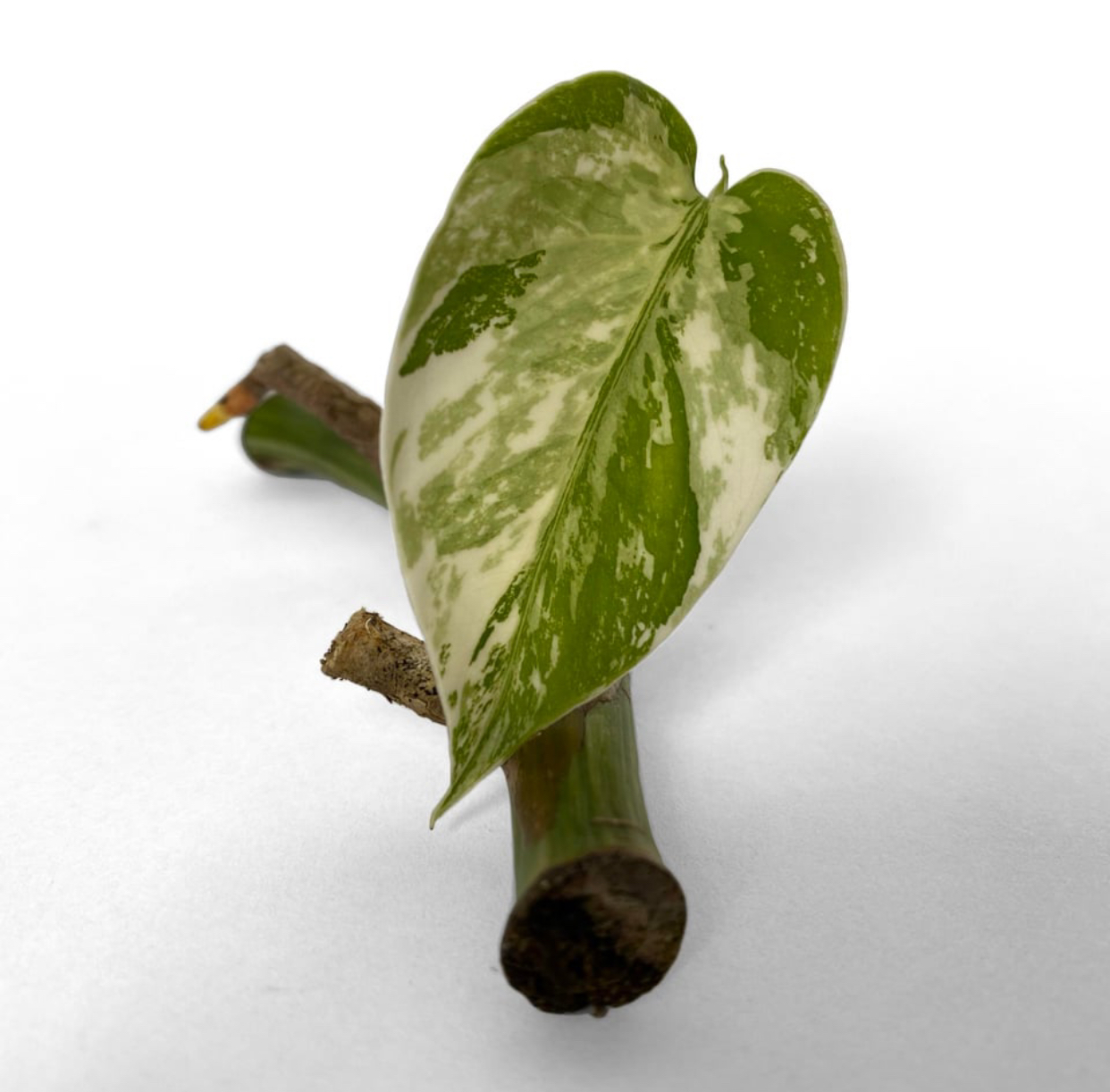
Introduction – How to Propagate Houseplants
Every plant parent remembers their first successful propagation — a little cutting that transforms into a thriving plant.
It’s a magical process that connects us more deeply with nature while expanding our collections without extra cost.
Propagation is more than just multiplying plants; it’s about preserving rare genetics, sharing plants with friends, and even rescuing struggling specimens.
Whether you’re rooting a Pothos cutting in water on your windowsill, or carefully air layering a Monstera Albo, propagation is at the heart of the indoor plant hobby.
In this ultimate guide, we’ll explore:
- The different propagation methods with plant-specific examples.
- A step-by-step Monstera and Philodendron propagation diary.
- Best practices, common mistakes, and troubleshooting tips.
- A FAQ section with real user-style questions.
Ready to start your own propagation journey? Explore our Rare Monstera Collection and find plants worth multiplying.
Why Propagation Matters
Propagation is not just about saving money. It serves a much larger purpose:
- Multiply Your Jungle: One healthy Monstera node can grow into a new plant.
- Preserve Rare Varieties: Propagation helps keep plants like Philodendron Florida Beauty and Thai Constellation thriving outside labs.
- Sustainability: Growing your own reduces reliance on wild-collected plants.
- Plant Parenthood: Watching roots emerge is satisfying and strengthens your bond with plants.
- Sharing the Love: Propagated cuttings make great gifts and build plant communities.
Essential Tools for Propagation
Before starting, gather the right tools:
- Sharp, sterilized scissors or shears (to prevent infections).
- Rooting hormone (optional, speeds up rooting).
- Glass jars or propagation stations (for water rooting).
- Sphagnum moss & perlite (for moss propagation).
- Well-draining soil mix (essential for transplanting cuttings).
- Humidity dome or plastic bag (for tropical cuttings).
- Plant labels (to track propagation dates).
Pro Tip: Always sterilize cutting tools with rubbing alcohol before use. Dirty blades spread disease.
Methods of Propagation (with Plant Examples)
1. Stem Cuttings
This is the most common method — simply cut below a node and let roots form.
Best For: Monstera, Philodendron, Pothos, Tradescantia, Syngonium.
Example: Monstera Deliciosa & Monstera Albo
- Select a vine section with at least 1 node and 1 leaf.
- Cut just below the node using clean shears.
- Place in water (to watch roots grow) or sphagnum moss (for faster root development).
- Keep in bright, indirect light.
- After 4–6 weeks, roots should reach 2–3 inches — ready for potting.
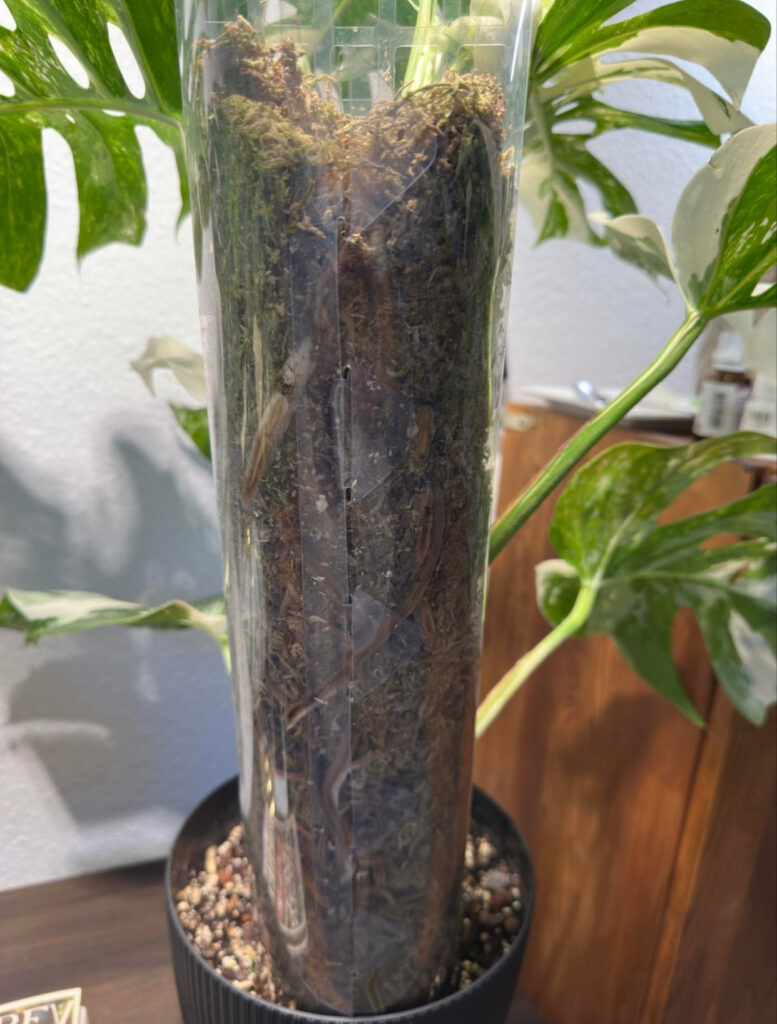
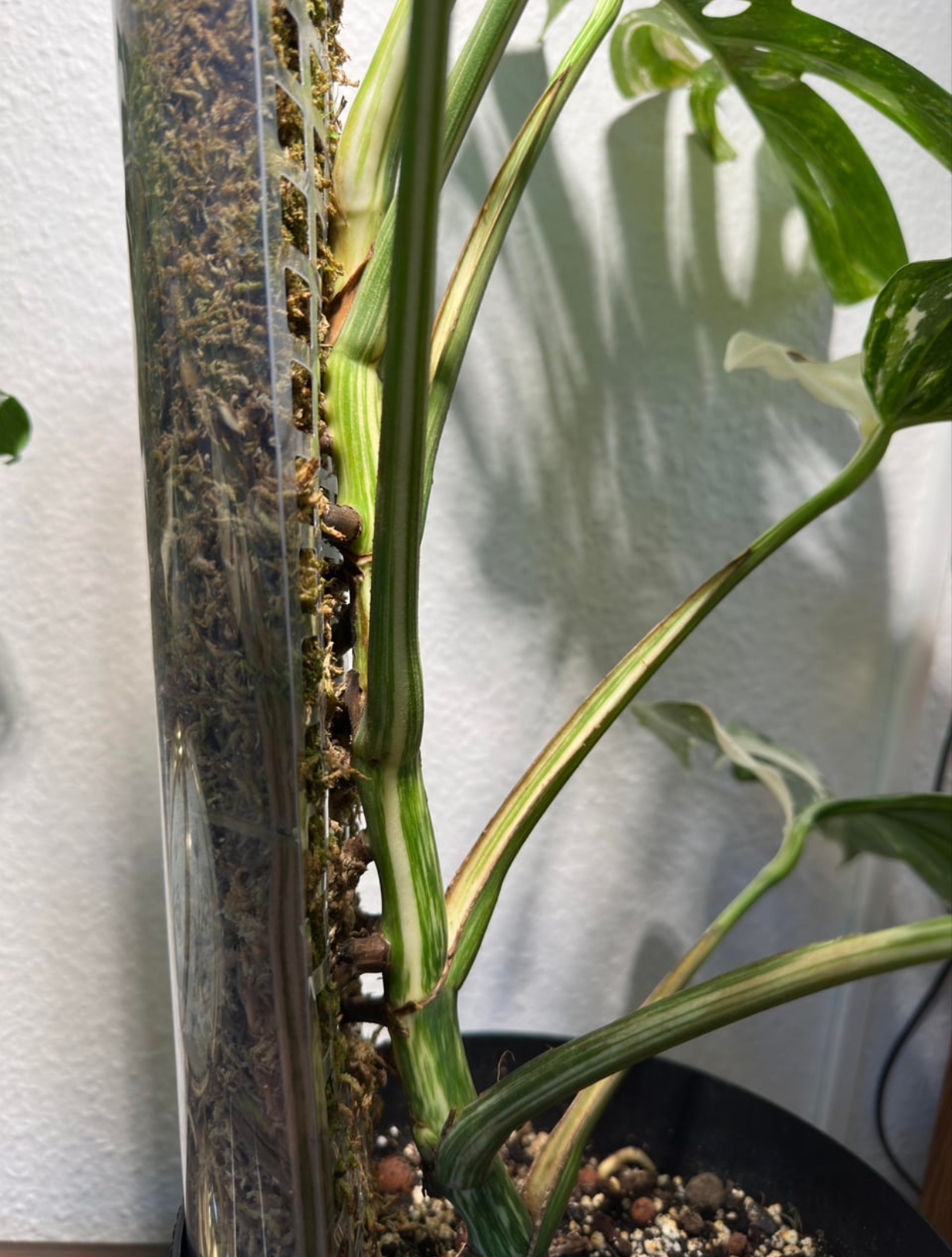
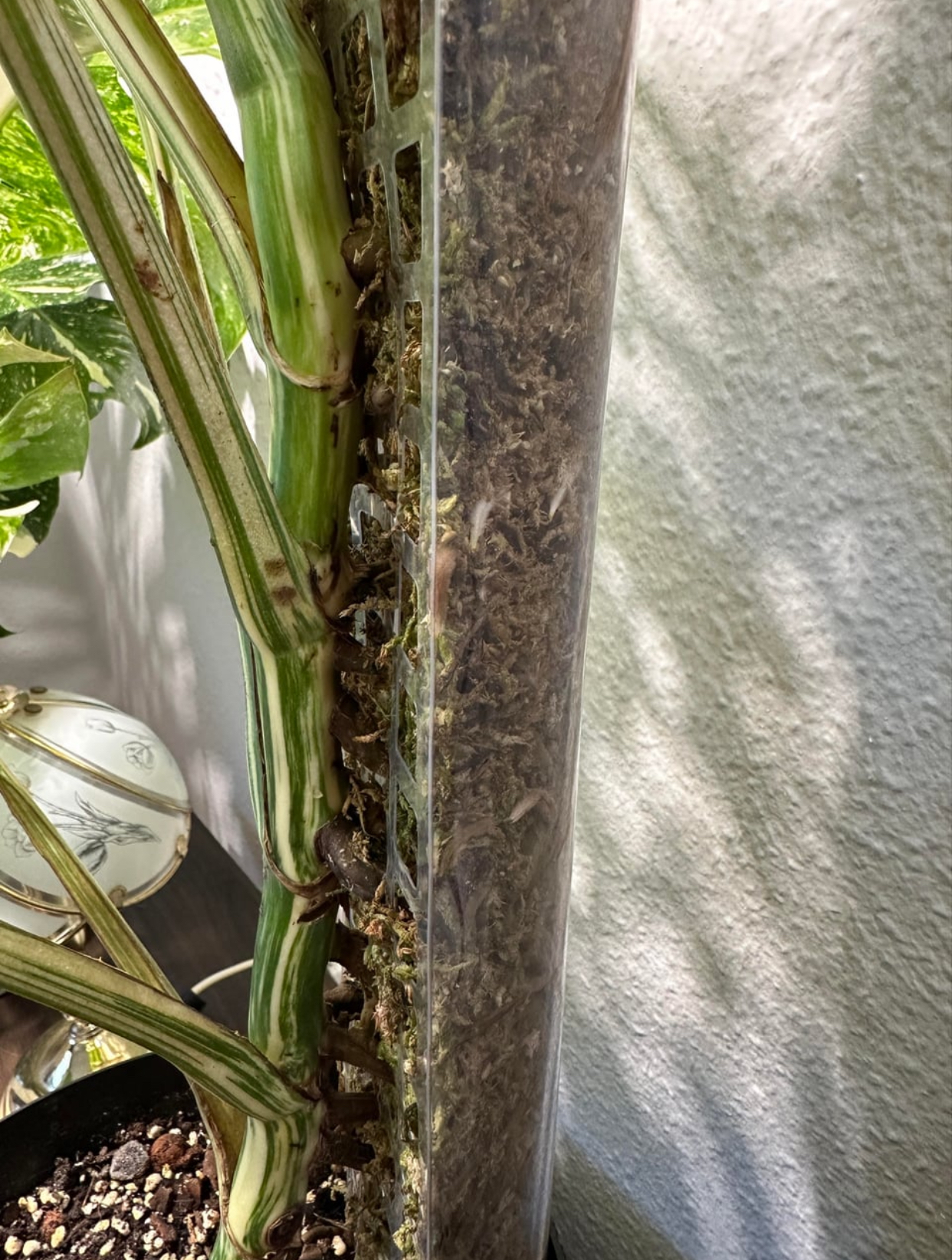
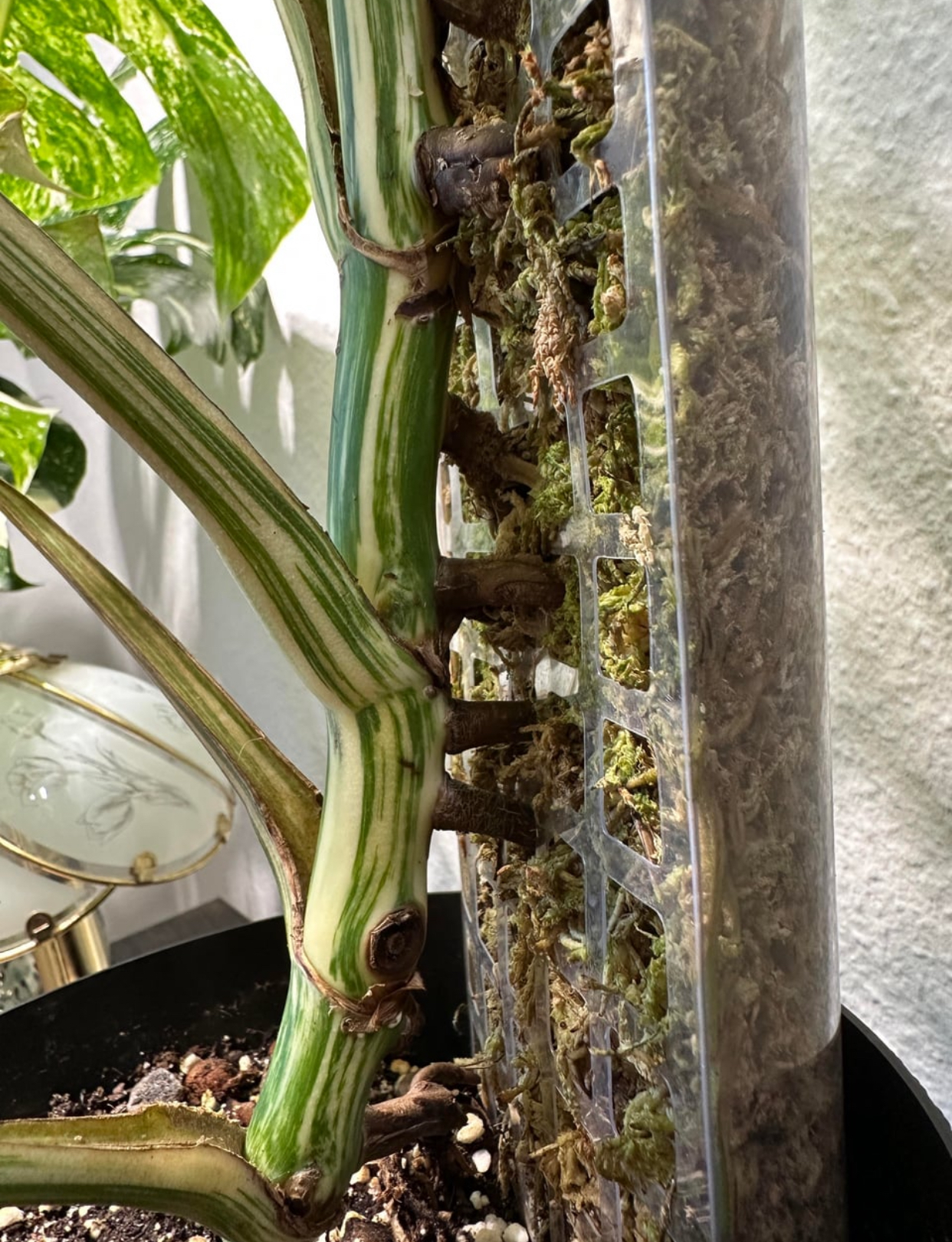
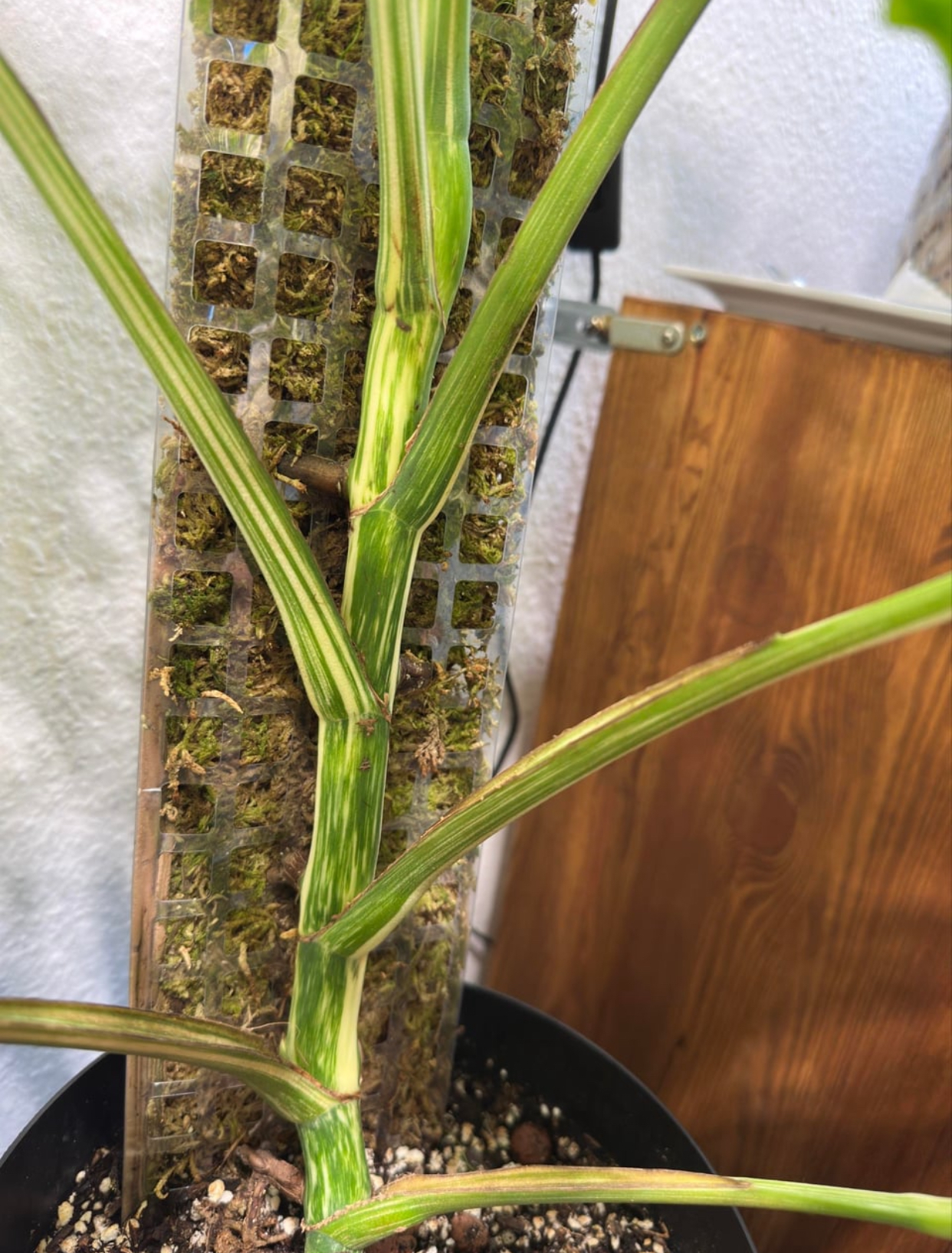
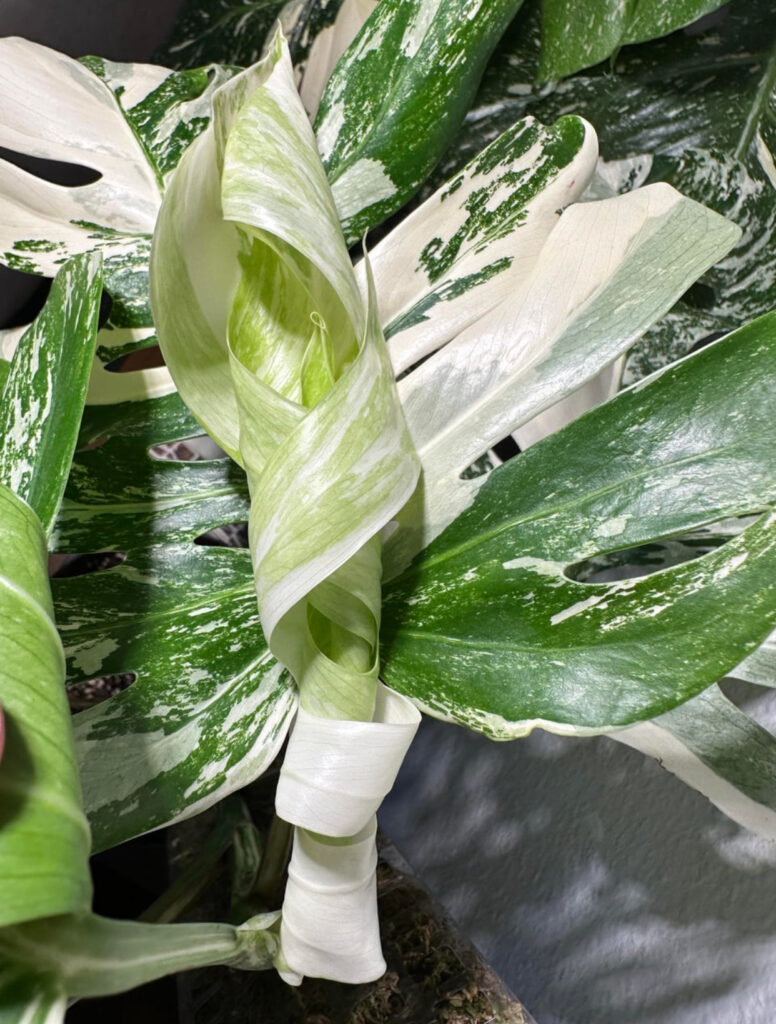
Warning for Variegated Monstera (Albo): Avoid cuttings with all-white leaves — they lack chlorophyll and will die.
Example: Philodendron Florida Beauty
- Take a cutting with a single node and healthy variegation.
- Root in water, moss, or LECA.
- Transition to soil once roots are strong.
- Maintain 70% humidity for best results.
2. Leaf Cuttings
Some plants can regenerate from just a leaf or section of leaf.
Best For: Snake Plant, Peperomia, African Violets.
Example: Snake Plant (Sansevieria)
- Cut a healthy leaf into 3–4 inch sections.
- Insert the cut end into moist soil.
- Place in bright, indirect light and wait for roots.
- New pups eventually sprout at the base.
Pro Tip: If you propagate a variegated Snake Plant, leaf cuttings may revert to all-green. For guaranteed variegation, use division.
3. Division
Best for plants that naturally grow in clumps or rhizomes.
Best For: ZZ Plants, Peace Lilies, Ferns, Calathea.
Example: ZZ Plant
- Remove from pot and brush away soil.
- Separate the thick underground rhizomes.
- Pot each division separately in well-draining soil.
- Water lightly until established.
4. Offsets (Pups)
Some plants produce baby plants naturally at their base or on runners.
Best For: Spider Plants, Aloe Vera, Succulents.
Example: Spider Plant
- Detach spiderettes when they develop small roots.
- Pot directly in soil or root in water first.
- Within 2–3 weeks, they establish into new plants.
5. Air Layering
This technique roots part of a stem before it’s cut from the parent plant.
Best For: Rubber Plants, Fiddle Leaf Figs, Monstera.
Example: Monstera Albo via Air Layering
- Make a small vertical cut below a node.
- Wrap moist sphagnum moss around the cut.
- Cover with plastic wrap to hold moisture.
- Check weekly for root development.
- Once roots are strong, cut below and pot.
Pro Tip: This is the safest way to propagate rare, expensive plants like Monstera Albo — ensuring survival before separation.
6. Seed Propagation
Less common indoors, but possible for certain species.
Best For: Palms, Hoyas, Monstera.
Example: Monstera from Seeds
- Use fresh seeds (old ones lose viability).
- Sow in a sterile, moist seed-starting mix.
- Maintain warmth (24–28°C) and high humidity.
- Germination takes 2–4 weeks.
- Seedlings grow slowly but steadily.
For details on hand pollination, see our Monstera Albo Flowering & Pollination Guide.
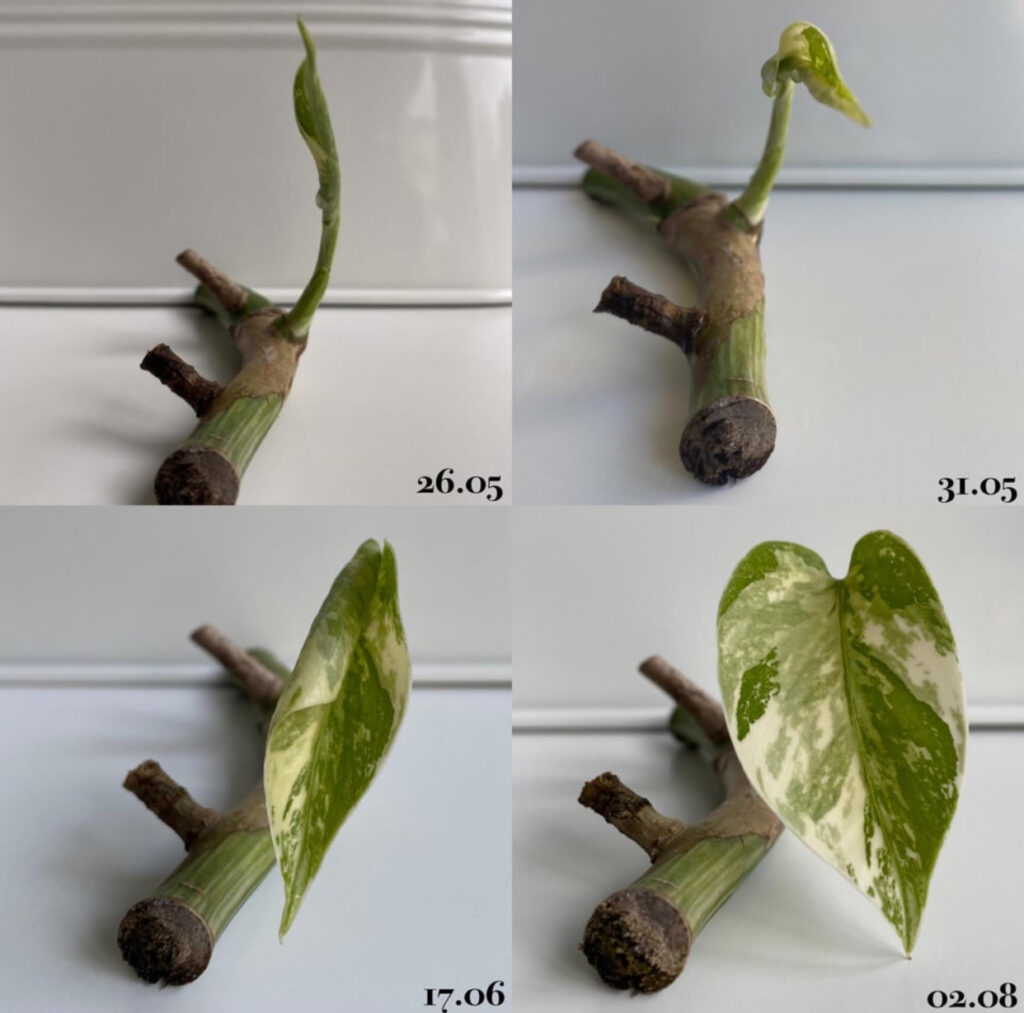
Propagation Diary Example (Monstera Albo & Philodendron)
Day 1: Cutting the Monstera Albo
- Took a 2-node cutting with one variegated leaf.
- Placed in clear jar of water, changed water daily.
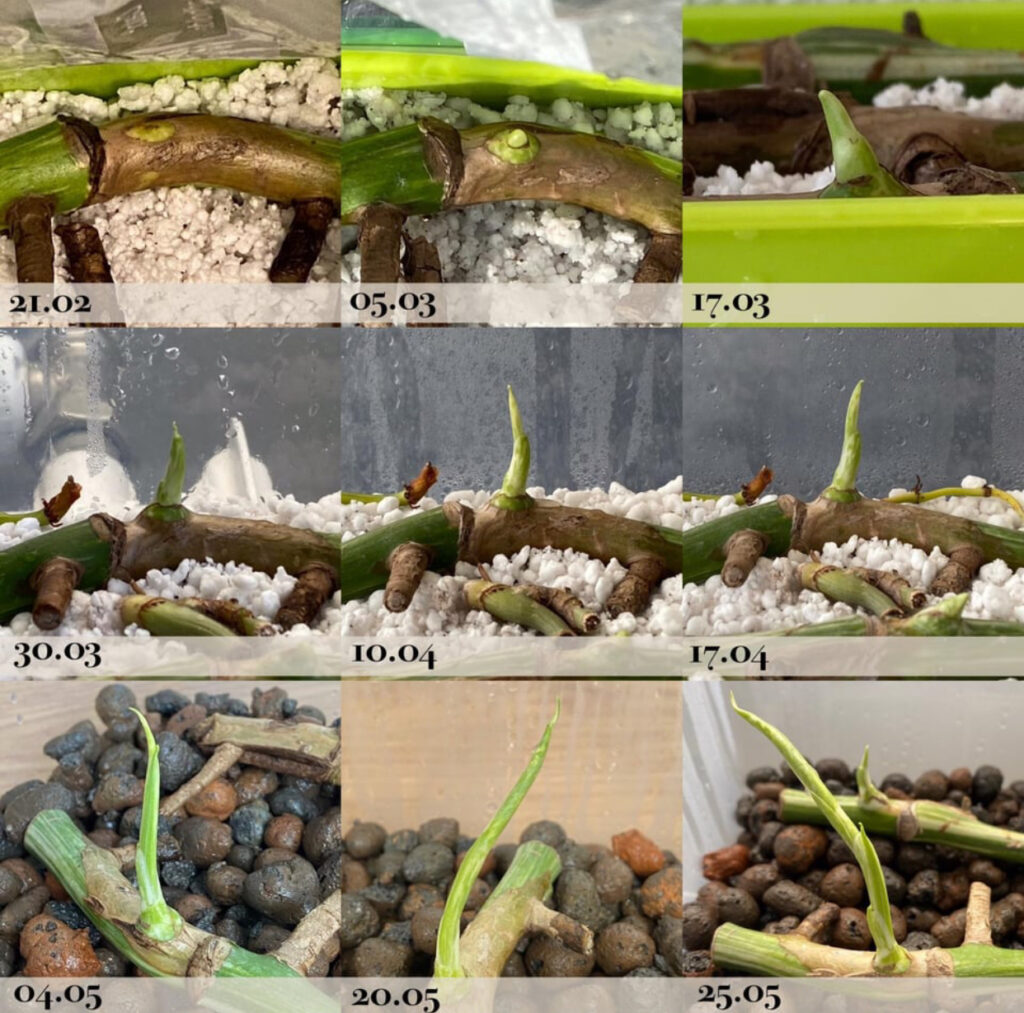
Day 7: Roots Appearing
- Tiny white root nubs forming at the node.
- Added liquid seaweed fertilizer drop to water.
Day 14: Transitioning
- Roots now 1 inch long.
- Prepared pot with chunky aroid mix (orchid bark, perlite, soil).

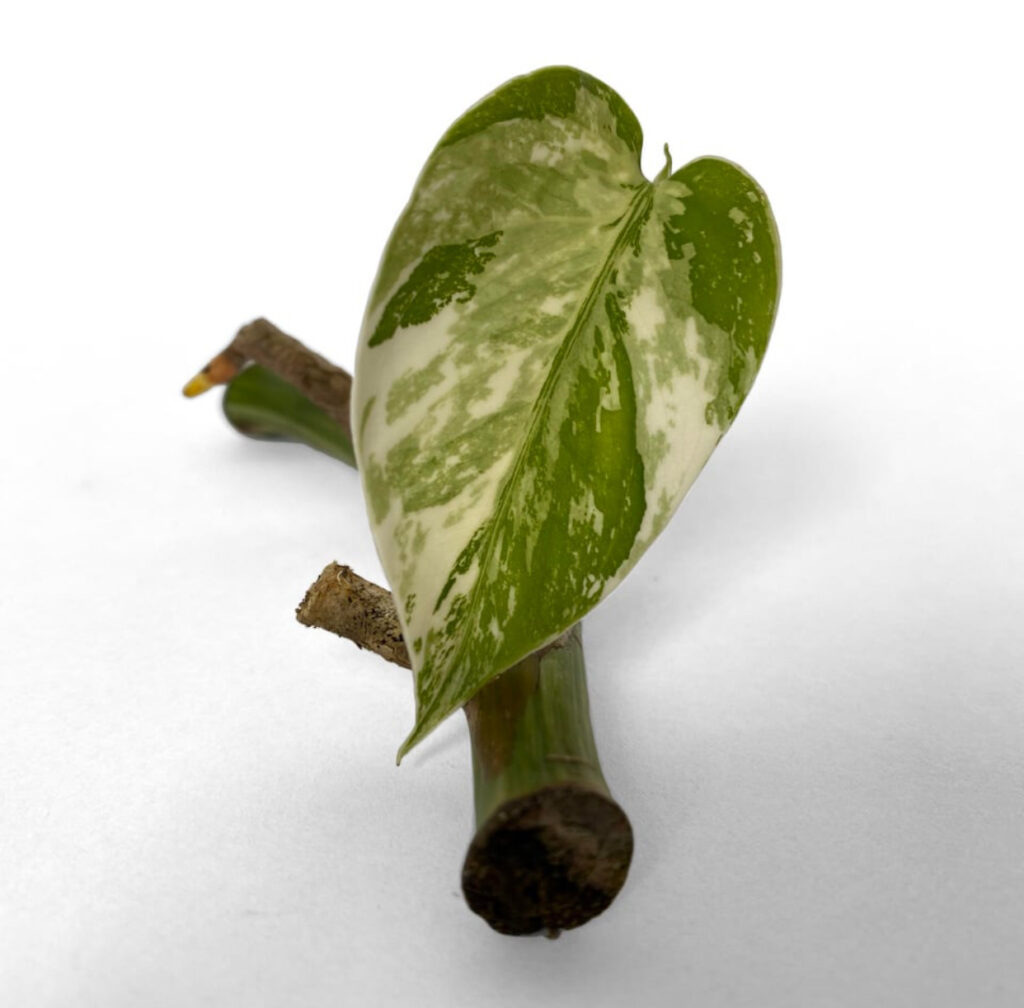
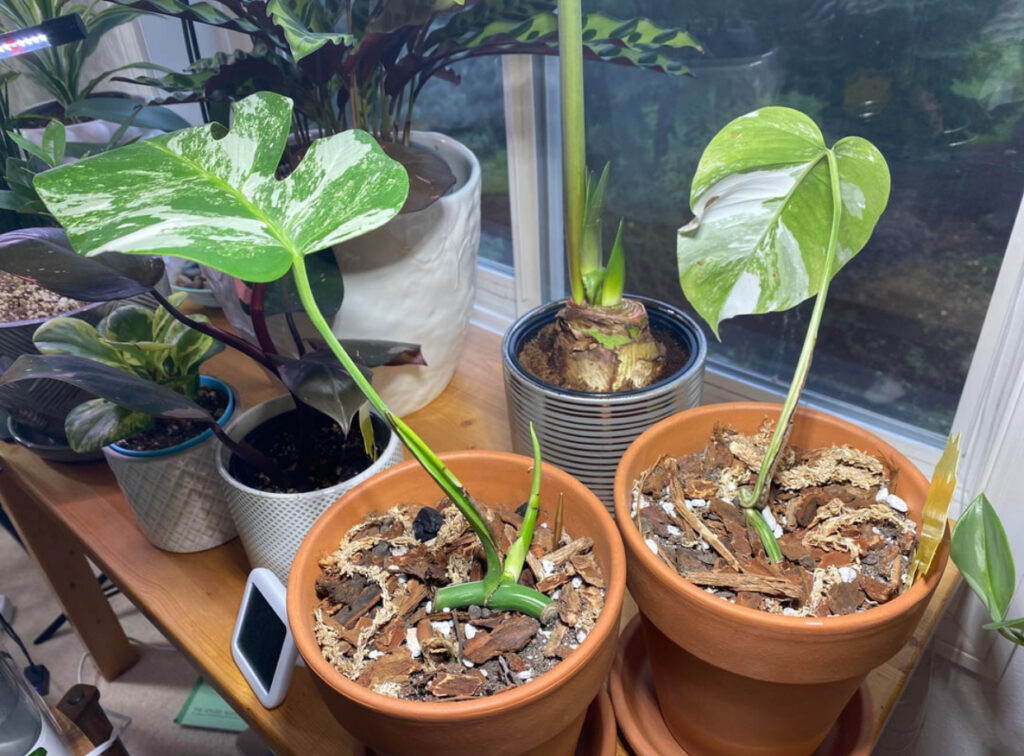
Day 30: Potted in Soil
- Cutting successfully transferred.
- Leaf still healthy, new growth emerging.
Philodendron Florida Beauty Cutting Log
- Cuttings rooted in sphagnum moss in 4 weeks.
- Kept in clear plastic box for humidity.
- Transferred to soil after roots were 3 inches long.
Water vs Soil Propagation
| Feature | Water Propagation | Soil Propagation |
|---|---|---|
| Root visibility | Yes | No |
| Beginner-friendly | Very easy | Slightly harder |
| Transition to soil | Can shock roots | Smooth growth |
| Best for | Monstera, Pothos | Philodendron, ZZ |
Tip: Start in water for confidence, then move to soil for long-term success.
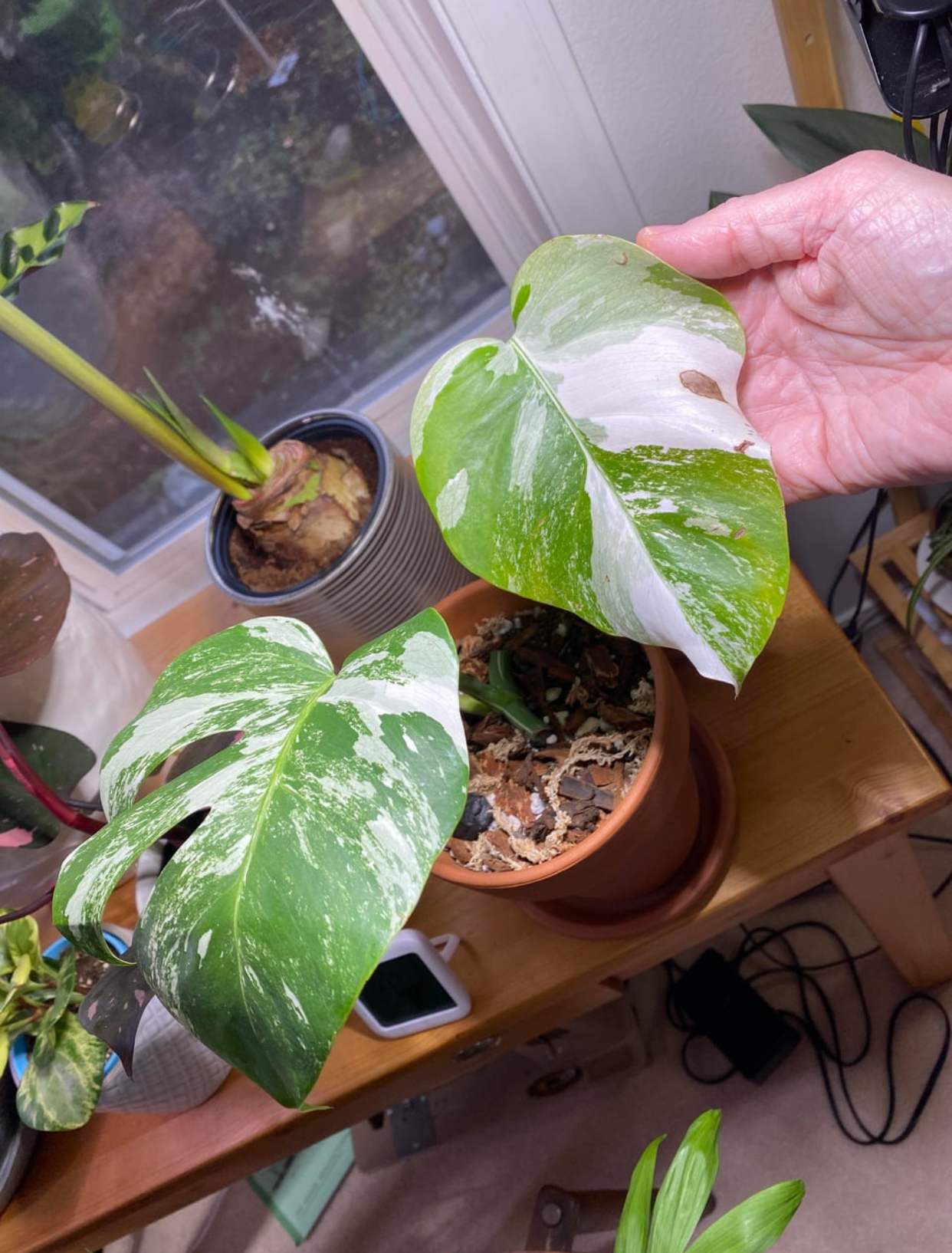
Aftercare for Propagated Plants
- Transplant when roots reach 2–3 inches.
- Use smaller pots at first (too large = overwatering risk).
- Provide bright, indirect light.
- Mist to keep humidity high.
- Begin feeding with diluted fertilizer once new leaves form.
Troubleshooting
- Roots rotting in water? → Change water every 2–3 days.
- Cutting not rooting? → Ensure node is submerged or in contact with soil.
- Leaves yellowing? → Too much direct sun or water stress.
- Mold in moss? → Improve airflow and sterilize media.
Start your own propagation journey today! Browse our Rare Monstera and Philodendron Collection, check our Monstera Care Guide, and grow your indoor jungle with confidence.
FAQ Section
Q1: Can Monstera be propagated from just a leaf?
A1: No — you need a node. Leaves alone cannot root.
Q2: How long does Philodendron take to root?
A2: Typically 3–6 weeks, faster in moss than soil.
Q3: Do I need rooting hormone?
A3: Optional, speeds rooting for woody stems like Fiddle Leaf Fig.
Q4: What’s the easiest plant to propagate?
A4: Pothos, Spider Plant, and Tradescantia.
Q5: Can I propagate in winter?
A5: Yes, but growth slows; spring/summer is ideal.
Q6: Why are my cuttings rotting?
A6: Too much water, poor hygiene, or no airflow.
Q7: How do I keep variegation when propagating Monstera?
A7: Choose a cutting with a balanced green + white node.
Q8: Can propagation harm the mother plant?
A8: If done carefully, no — pruning often stimulates new growth.
Q9: How long before I see new leaves?
A9: Usually 4–8 weeks after rooting.
Q10: Is water or soil better for propagation?
A10: Water is easier for beginners, soil produces stronger long-term roots.